
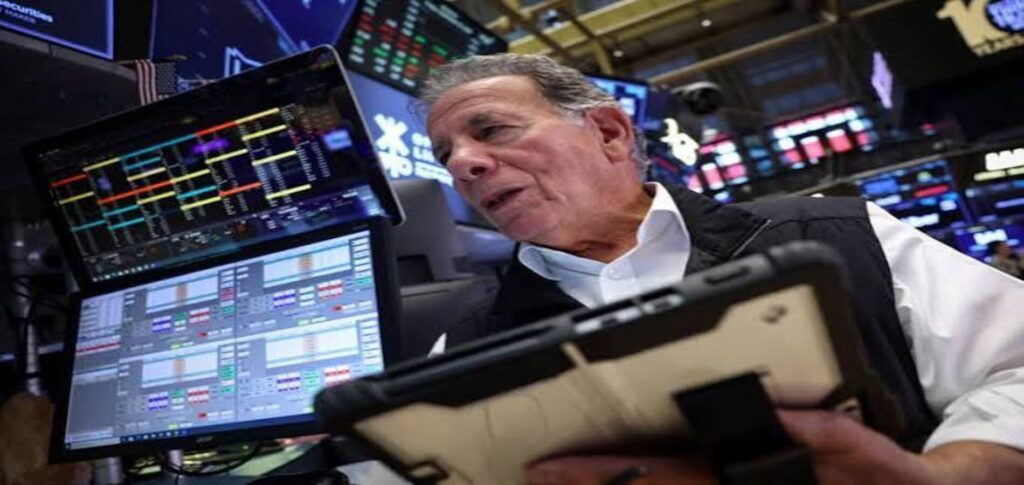
Wall Street ended lower on Monday after President Donald Trump rejected an Iranian proposal aimed at easing the conflict.
The decision pushed oil prices higher and renewed concerns about inflation.
Higher energy costs also lifted U.S. Treasury yields. As a result, investors grew more cautious about the Federal Reserve’s interest-rate path.
The Trump Iran peace proposal dispute added fresh uncertainty to already tense financial markets.
However, expectations of further talks through Qatari mediation helped limit some of the early losses.
Oil Prices Jump as Iran Talks Face Uncertainty
Crude prices initially surged more than $4 a barrel after Trump rejected Iran’s proposal to reopen the Strait of Hormuz.
Prices later gave back much of those gains as investors looked ahead to possible talks between Washington and Tehran.
Brent crude settled at $105.28 a barrel, while U.S. West Texas Intermediate crude ended at $92.60.
The rise in energy prices has become a major concern for investors because higher fuel costs can increase inflation.
Art Hogan, chief market strategist at B. Riley Wealth, said continued energy pressure could influence the Federal Reserve’s rate decisions.
Major U.S. Indexes Move Lower
At the opening stage of trading, the Dow Jones Industrial Average fell 245 points, or 0.47%.
The S&P 500 declined 0.46%, while the Nasdaq Composite dropped 0.65%.
By the end of the session, the three major indexes had fallen further. The Dow lost about 0.7%, while the S&P 500 and Nasdaq dropped around 0.8% and 0.9%, respectively.
Consumer discretionary stocks were among the weaker performers.
DoorDash and Carvana both posted significant declines during the session.
Nvidia Bucks the Market Downturn
Nvidia moved in the opposite direction.
The chipmaker gained after announcing a record $150 billion expansion of its share repurchase authorization.
The new authorization pushed Nvidia’s total available buyback capacity to about $235 billion through fiscal 2028.
The announcement gave Nvidia shares a boost even as most major technology stocks declined.
The company’s move also highlighted investor attention on artificial intelligence spending and the strong cash generation of leading chipmakers.
Treasury Yields Rise on Inflation Concerns
The oil rally also affected the U.S. bond market.
Long-term Treasury yields climbed to multi-year highs as investors considered the potential inflation impact of higher energy prices.
The 30-year Treasury yield reached its highest level since May 2004. Meanwhile, the 10-year yield reached its highest point since June 2007.
Higher yields can put additional pressure on stocks because they increase borrowing costs and can reduce the appeal of riskier investments.
Federal Reserve Rate Outlook in Focus
Investors are now watching upcoming economic data for clues about the Federal Reserve’s next moves.
The August Personal Consumption Expenditures index and September employment report are among the key releases expected this week.
Federal Reserve officials, including Michelle Bowman, Lisa Cook and Thomas Barkin, are also scheduled to speak.
Markets are increasingly pricing in the possibility of another interest-rate increase in October as inflation pressures remain a concern. Reuters reported that traders were assigning roughly a 70% probability to another hike.
Tesla and Meta Shares Fall
Several major technology companies also declined.
Tesla shares fell after J.P. Morgan lowered its price target, citing concerns about third-quarter deliveries.
Meta Platforms also slipped after recording a strong gain during the previous week.
The broader market remained sensitive to rising energy costs, interest-rate expectations and geopolitical developments.
Trade Tensions Offer Some Relief
Investors received some positive news from the trade front.
The United States and China concluded their latest summit with agreements aimed at reducing tariffs on billions of dollars in goods.
The two countries also agreed to extend their trade truce.
That development offered some relief as investors balanced trade improvements against renewed uncertainty surrounding the Trump Iran peace proposal.
Markets Remain Focused on Iran and Oil
The outlook for Wall Street now depends partly on developments between the United States and Iran.
Qatari mediators are expected to continue efforts to bring the two sides into talks.
Meanwhile, oil prices remain sensitive to any developments affecting supplies and shipping through the Strait of Hormuz.
For investors, the combination of higher oil prices, rising Treasury yields and possible Federal Reserve tightening remains a key market concern.