
France has formally blamed Iran’s Revolutionary Guards for last month’s supermarket fridge cyberattack, which disabled cooling systems in hundreds of French stores. Foreign Minister Jean-Noël Barrot summoned Iran’s ambassador and said France will push for European sanctions. Tehran, however, rejects the accusation as “baseless”.
The dispute is one of the sharpest diplomatic clashes between Paris and Tehran this year. It also shows how the Iran war is spreading into the digital world. This report is current as of 6 AM PKT on 11 November.
What happened in the supermarket fridge cyberattack
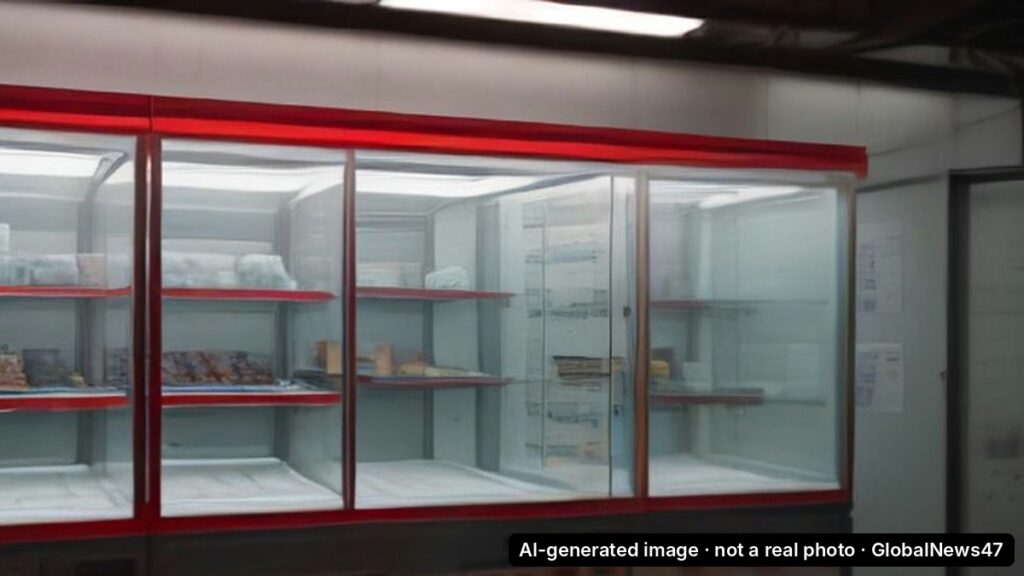
The attacks hit French supermarkets on 11 and 12 October, France 24 reported. French authorities put the number of affected supermarkets and businesses at about 700, Iran International said, while Al Jazeera reported more than 1,000 stores. Hackers took control of temperature settings on commercial fridges and freezers. As a result, stores had to throw away large amounts of food.
According to Reuters, as cited by NBC News, some units got so hot that they caught fire. Staff threw out spoiled meat and melted ice cream. One supermarket owner estimated the total cost could reach tens of millions of euros across France.
The company behind many of the affected units said several were old or ran outdated software. That may have made them easier to break into, Reuters reported. Experts said the attack did not appear technically difficult.
Global News 47 first covered the incident as a wave of freezer hacks across Europe. A second wave in November hit more than 100 sites, including fridges at French blood banks.
France names the Revolutionary Guards
Barrot made the accusation on Monday. “I can confirm that this attack was carried out by the Islamic Revolutionary Guard Corps of the Islamic Republic of Iran,” he said, as quoted by Al Jazeera. He also called it “the first large-scale cyberattack carried out for sabotage purposes on French soil”.
On Tuesday morning, France summoned Iran’s ambassador, Iran International reported. Barrot said France would “rule nothing out”, including measures it may never make public, according to France 24.
However, Barrot did not explain how France reached its conclusion. He said only that France had established it “with certainty”. Reuters said it could not independently confirm how investigators made the link.
Prosecutors target an IRGC cyber unit
Separately, Paris prosecutor Laure Beccuau has opened an investigation into a unit called Shahid Kaveh. French authorities describe it as an offensive cyber unit of the Revolutionary Guards. Her office has requested international arrest warrants for senior figures in the unit, including its alleged leader, according to Reuters.
Meanwhile, the European Union signalled support. EU spokesman Anouar El Anouni said the bloc was ready to give a “swift and united response”, France 24 reported. Officials have not released details of new sanctions or a timeline.
Iran rejects the claims
Iran’s foreign ministry said it “categorically rejects” the accusations as “baseless and one-sided”. It warned it would take “necessary and appropriate measures” to protect its interests.
Foreign Minister Abbas Araghchi also responded on X. He accused the French government of shifting blame for its own failures. Iran routinely denies carrying out cyberattacks abroad.
Why this case matters
Security experts have long warned that connected devices in shops and factories are easy targets. Fridges, freezers and heating systems are often linked to the internet. Yet many run old software that is rarely updated.
In this case, the damage was mainly financial. Still, the second wave reached medical cold storage, which raises the stakes. Blood and medicines need storage within strict temperature limits.
Reuters also noted a similar case in the United States. In August, fridges failed at no fewer than six US military commissaries. The Pentagon is investigating it as a suspected cyberattack. So far, it is unclear whether the incidents are linked.
For businesses, the lesson is practical. Experts advise updating firmware, changing default passwords and keeping critical systems off the open internet. Next, attention turns to Brussels, where EU ministers will consider France’s call for sanctions.
Related on Global News 47: Iran War Talks: Trump Meets Qatar’s PM as Rubio Calls Tehran’s Terms ‘Outrageous’ · Binance Hack: Record $6.3bn Crypto Theft Linked to North Korea
Sources & References
- Reuters (via NBC News): France accuses Iran’s Revolutionary Guards of hacking supermarket refrigerators
- France 24: France vows sanctions for supermarket hacks as Iran rejects ‘baseless accusations’
- Iran International: France warns Iran of retaliation over IRGC hack of supermarket freezers
- Al Jazeera: France accuses Iran of cyberattack on supermarket fridges