
Heavy fighting near a hospital in eastern Congo has forced Ebola responders to shelter “for their lives”, the World Health Organization (WHO) says. The clashes in Ituri province came as the Ebola outbreak in DR Congo passed 11,700 confirmed cases. According to figures released on 20 November 2026, the outbreak has caused 11,762 confirmed cases, including 5,775 deaths.
The outbreak is caused by the Bundibugyo virus. Unlike the more common Zaire strain, it has no approved vaccine or specific treatment.
Responders trapped in a maternity ward
WHO Director-General Tedros Adhanom Ghebreyesus said on Sunday, 22 November, that WHO staff and Ebola responders had taken cover in a hospital maternity ward. They were trapped there for more than 24 hours, UN News reported.
Tedros said WHO was working with partners to evacuate the staff safely. He also demanded safe passage for them and protection for the hospital, its staff and its patients.
The incident happened close to where the outbreak was first detected. WHO has confirmed over 87 attacks on health services in Congo this year.
How big the Ebola outbreak in DR Congo has become
The scale of this epidemic is unusual. WHO’s latest Disease Outbreak News, with data to 17 November, counted 11,613 confirmed cases, 5,678 deaths and 3,148 recoveries. That gives a crude case fatality rate of 48.9%. Three days later, the total had risen to 11,762 cases, UN News said.
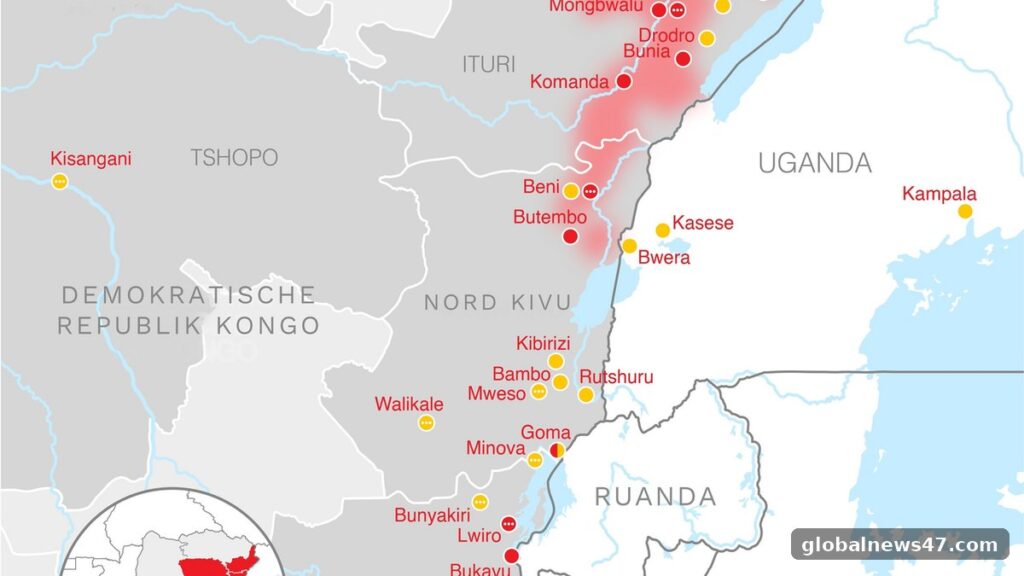
Cases have been confirmed in 68 health zones across eight provinces. Of these, 48 zones reported at least one new case in the previous 21 days. In that same 21-day window, the country recorded 1,417 new confirmed cases.
Ituri remains the hardest-hit province. It has more than 8,000 confirmed cases and 3,791 deaths. North Kivu is the second worst affected, and it reported the highest number of new cases in the week to 17 November, with a 40% rise on the week before.
For comparison, our September report noted the outbreak had just passed 7,000 cases.
Why violence is slowing the response
WHO has warned repeatedly that insecurity is one of the main obstacles to stopping the virus. Armed groups, including the Allied Democratic Forces (ADF), have attacked villages across southern Ituri and North Kivu.
Earlier this month, the UN’s senior Ebola response coordinator, Julien Harneis, said ADF fighters had killed more people than the virus in recent days. Speaking in Geneva on 13 November, he said tracing contacts where the ADF operates was “very hazardous”.
The problem shows up in the data. On average, only 81% of contacts were seen each day over the two weeks to 17 November, WHO said. The target is 95%. In addition, a high share of deaths still happen in communities rather than treatment centres, especially among young children. That suggests many infections are found too late.
Cases outside Congo
Since the outbreak was declared on 15 May 2026, cases have been reported in five countries: DR Congo, France, Kenya, Nigeria and Uganda. France and Uganda brought their outbreaks under control in August.
Kenya has reported nine cases, including two deaths, all linked to one imported case. It discharged its last patient on 11 November and has begun a 42-day countdown to declare the outbreak over. Nigeria’s single imported case was evacuated to Switzerland, where the patient recovered.
Meanwhile, the United Kingdom said on 18 November that a medically evacuated health worker had recovered and left hospital.
Still a global health emergency
On 17 November, WHO’s emergency committee met for the third time on the outbreak. Following its advice, Tedros agreed that it remains a public health emergency of international concern.
WHO rates the risk inside DR Congo as very high. For countries with strong links to affected areas, or with weaker health systems, the risk is high. For most other countries, it remains low. Even so, WHO advises against travel or trade restrictions.
What happens next
WHO says the next phase must focus on reach and quality, not only scale. Early detection, good care, contact tracing and community trust remain critical. Above all, responders need safe access to affected areas.
Without that access, the outbreak is likely to keep spreading. Even the vaccination drive for health workers that began in September cannot replace basic tracing and isolation.
This article is for general information and is not medical advice. Travellers should follow official guidance from health authorities.
Sources & References
- UN News: Heavy fighting in Ituri traps DR Congo Ebola responders: WHO (23 Nov 2026)
- World Health Organization: Disease Outbreak News: Ebola disease caused by Bundibugyo virus – Democratic Republic of the Congo, Kenya and Nigeria (data to 17 Nov 2026)