
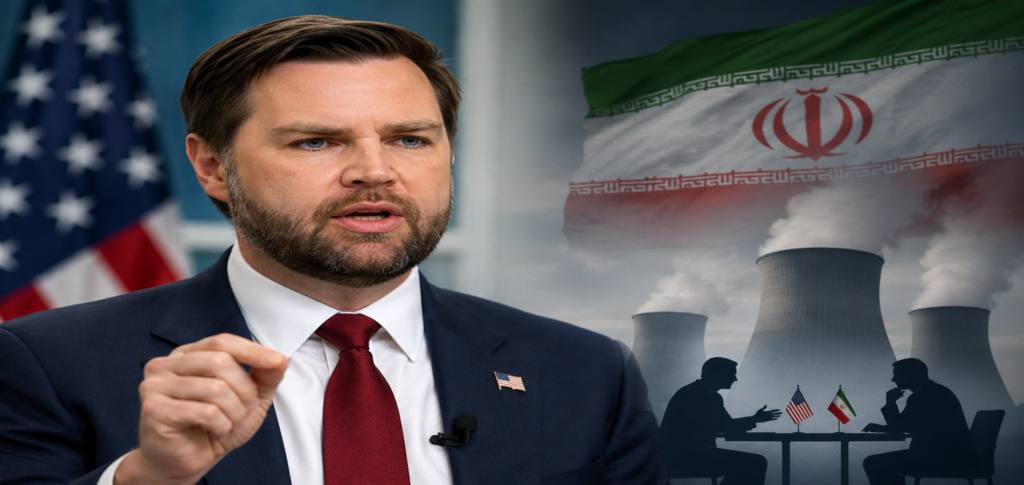
Iran nuclear talks are expected to be lengthy and challenging, according to US Vice President JD Vance. He said Washington will need patience as it negotiates with Tehran and works toward a long-term agreement.
Speaking to Fox News, Vance acknowledged that negotiations with Iran are unlikely to deliver immediate results. However, he expressed confidence that the United States can eventually achieve its main security objectives through diplomacy.
JD Vance Expects Difficult Iran Nuclear Talks
Vance described the negotiations as complicated because Iran’s political system includes multiple centers of influence.
He said Iranian leaders can hold different positions on major issues, making discussions more difficult for US officials.
Despite those challenges, Vance said the administration remains focused on protecting American interests while seeking a stable and lasting agreement.
“Our job is to navigate through that and get the best outcome for the American people,” Vance said.
Vance Says Negotiations Could Be “Messy”
The vice president warned that the diplomatic process could remain unpredictable for some time.
According to Vance, negotiations require careful planning because different political factions can influence Iran’s major policy decisions.
As a result, progress could take longer than some observers expect.
Vance urged Americans and international observers not to judge the negotiations too quickly, arguing that complex diplomatic agreements often require extended discussions.
US Wants to Prevent Iran From Developing Nuclear Weapons
Preventing Iran from obtaining nuclear weapons remains one of Washington’s central security objectives.
Vance said any future agreement must ensure that Tehran cannot develop a nuclear arsenal.
The US administration believes achieving that goal could reduce the risk of a wider conflict and contribute to greater stability across the Middle East.
Oil Prices Could Fall if Diplomacy Advances
Vance also discussed the potential economic consequences of successful negotiations.
He said oil prices had recently traded around $79 per barrel and suggested prices could decline if diplomatic progress reduces geopolitical uncertainty.
Lower energy prices could ease inflationary pressures and provide relief for consumers and businesses.
However, energy markets remain highly sensitive to developments involving Iran, particularly because of the country’s importance to regional oil supplies and the strategic Strait of Hormuz.
White House Pursues a Long-Term Strategy
The Trump administration continues working with regional partners while monitoring developments involving Iran.
Although negotiations remain difficult, US officials view diplomacy as an important tool for reducing tensions and preventing another escalation.
Vance emphasized that lasting agreements require time, particularly when negotiations involve major security and geopolitical concerns.
Global Markets Closely Monitor Iran Nuclear Talks
Financial markets are watching developments in the Iran nuclear talks because any breakthrough could influence oil prices, international trade and geopolitical stability.
A successful agreement could reduce concerns about disruptions to energy supplies. On the other hand, stalled negotiations could increase uncertainty and place additional pressure on energy markets.
What Happens Next in Iran Nuclear Talks?
The next phase of negotiations will depend on whether Washington and Tehran can bridge their differences over nuclear restrictions and broader security concerns.
Vance has made clear that the process may be slow and complicated. However, the administration says its objectives remain unchanged: prevent Iran from obtaining nuclear weapons, protect US national security and promote greater stability in the Middle East.
For now, the Iran nuclear talks remain a closely watched diplomatic process, with both governments facing pressure to achieve progress without triggering another major regional crisis.