

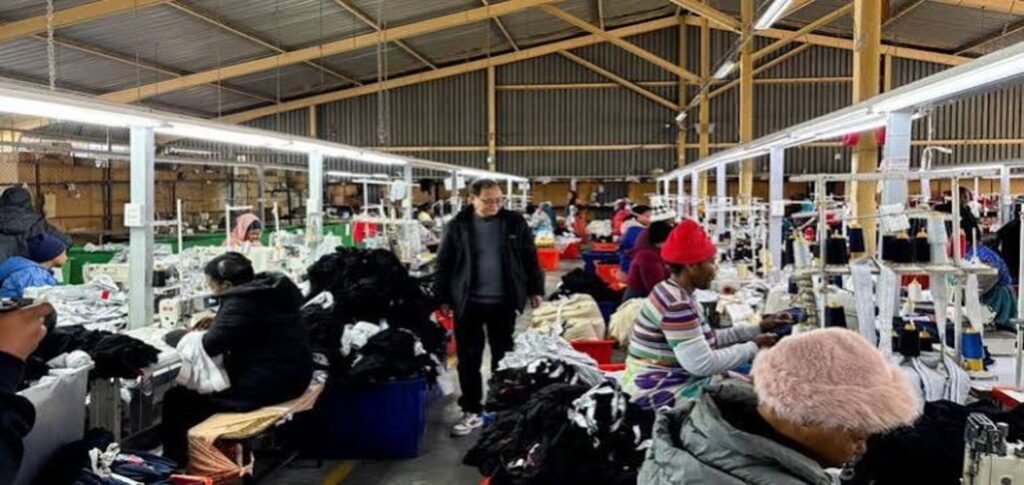
South African clothing factories are facing growing labour shortages after thousands of migrant workers left their jobs following anti-immigration protests. Factory owners say production has slowed, skilled sewing positions remain vacant, and many local workers are unwilling to accept the low-paying manufacturing jobs.
The situation has raised fresh concerns about the future of South Africa’s textile industry and the broader impact on employment.
South African Clothing Factories Lose Skilled Workers
Several factories in Newcastle, a major clothing manufacturing centre in KwaZulu-Natal, reported losing between 12% and 19% of their workforce after migrant employees departed.
Owners say many of those workers possessed specialised sewing skills that are difficult to replace quickly.
As a result, some production lines have slowed while machines remain unused because there are not enough trained operators.
Anti-Immigration Campaign Triggered Worker Exodus
The departures followed a campaign led by the anti-immigration movement March and March, which demanded undocumented migrants leave South Africa.
The group argues that removing migrant workers would create more employment opportunities for South Africans, where unemployment remains among the highest in the world.
However, manufacturers say replacing experienced workers has proven far more difficult than expected.
Industry Faces Recruitment Challenges
Factory owners insist they already employ mostly South Africans and rely on a limited number of experienced workers from neighbouring countries such as Lesotho and Eswatini.
Some businesses have started training new local employees, but they say financial pressures limit how many workers they can prepare.
Industry representatives estimate that roughly 15% of Newcastle’s garment workforce left during the protests.
Union Questions Skills Shortage
The Southern African Clothing and Textile Workers’ Union disputes claims that skilled workers are unavailable.
Union officials argue the real problem is low wages, which discourage South Africans from taking factory jobs.
Many garment workers earn per completed item, meaning only the fastest workers reach South Africa’s national minimum wage.
Long travel distances and limited career opportunities also make factory work less attractive.
Factories Under Financial Pressure
Most clothing factories in Newcastle manufacture garments for South African retailers.
Owners say retailers pay extremely low prices for clothing, making it difficult to increase employee salaries.
The industry also suffered after government inspections earlier this year uncovered labour law violations at several factories, leading to reduced retail orders.
Some factory owners now warn that continued labour shortages and declining business could force closures, putting even more South Africans out of work.