
The European Union has imposed sanctions on five people linked to Russia’s military-industrial complex following recent Russian air strikes on Ukraine.
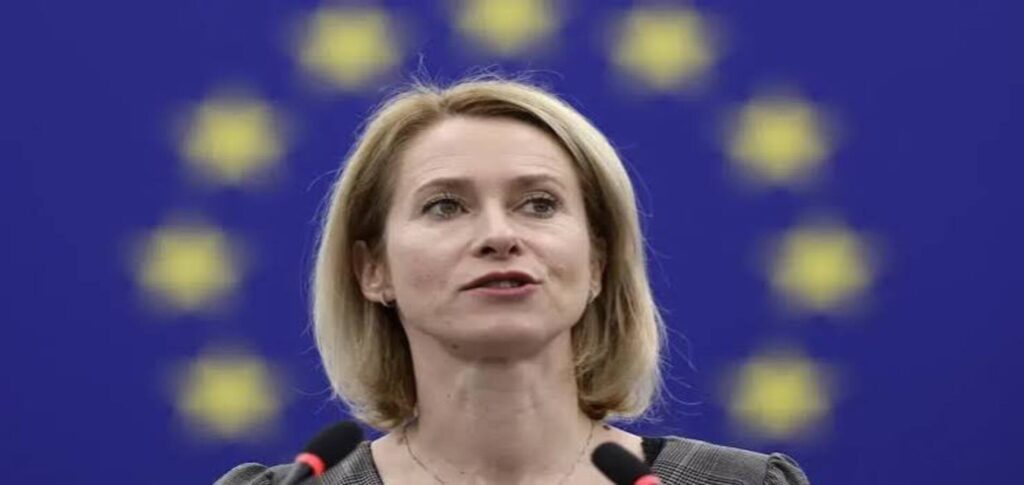
EU foreign policy chief Kaja Kallas announced the new measures on Friday. She accused Moscow of increasing attacks on civilians while Russian forces remain stalled on the battlefield.
“Each new attack on Ukraine is another reason for Europe to tighten the screws on Russia,” Kallas said in a post on X.
EU Sanctions Five People Over Russia’s Military Industry
The new sanctions took effect on August 7 in response to recent Russian strikes.
However, Kallas did not identify the five individuals or provide details about the specific restrictions that the EU imposed on them.
The targets have links to Russia’s military-industrial complex, which supports the country’s war effort.
Kallas said Russia was intensifying its attacks despite making limited progress on the battlefield.
“With its army stalled on the battlefield, Moscow is further escalating its campaign of terror against civilians,” she said.
She also called for continued European pressure until Russia ends its war in Ukraine.
EU Expands Pressure on Russia
The latest measures came just over two weeks after EU governments approved the bloc’s 21st sanctions package against Russia.
The package took effect on July 23 and added 48 individuals and 170 entities to the EU sanctions list.
It marked the largest round of new listings since Russia launched its full-scale invasion of Ukraine.
The measures target several important parts of Russia’s economy.
These include the financial, energy and military-industrial sectors. The EU has also targeted cryptocurrency networks and the shadow fleet that Moscow uses to bypass restrictions on Russian oil exports.
New EU Sanctions Target Russia’s War Economy
The previous sanctions package included 56 listings linked to Russia’s military-industrial complex.
Among those targets, 37 individuals and entities had connections to the production and supply chain of long-range drones.
The EU says these measures aim to restrict the resources available to Russia’s war economy.
At the same time, European governments have continued efforts to close loopholes that allow Moscow to maintain access to international markets.
Greece Secured LNG Exemption
The latest sanctions package also included a concession for Greece.
Greece secured an annually renewable exemption that allows companies to continue shipping Russian liquefied natural gas to countries outside the European Union.
The arrangement helped clear the way for an agreement on the wider sanctions package.
Meanwhile, EU officials continue to call for stronger economic pressure on Moscow as the war in Ukraine continues.
The latest EU sanctions signal that Brussels intends to maintain pressure on Russia despite ongoing diplomatic and military developments.