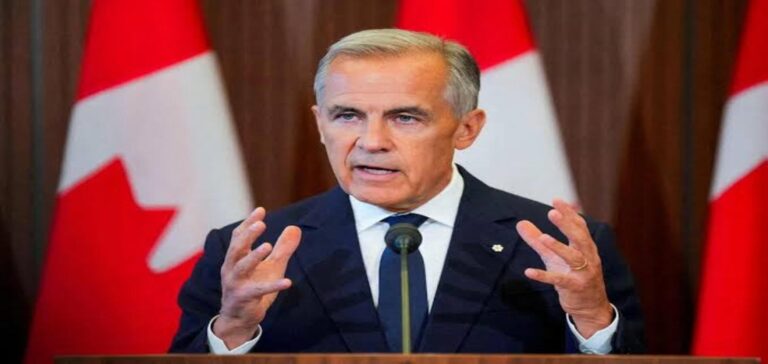

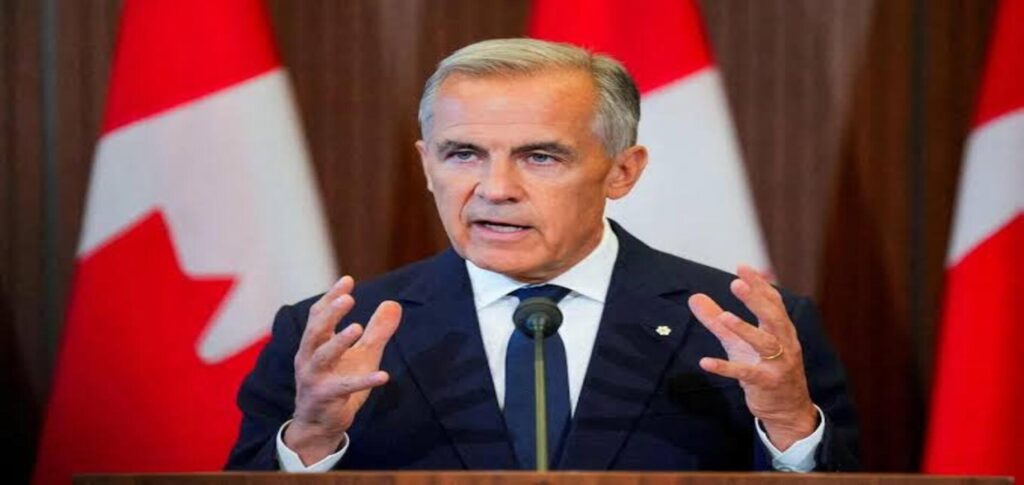
Canadian Prime Minister Mark Carney is exploring a closer relationship with the European Union, including the possibility of an “associate membership” arrangement.
The Wall Street Journal reported that Canadian and European officials are considering a new status that could bring Canada closer to the EU without full membership.
The idea comes as Canada faces worsening trade tensions with the United States. As a result, Ottawa is looking for stronger economic partnerships elsewhere.
Carney Pushes Canada Toward Europe
Carney has held discussions with several European leaders about expanding Canada’s relationship with the bloc.
According to the reports, his government wants to explore options that fall short of full EU membership or joining the bloc’s single market.
European and Canadian officials are already examining possible areas for deeper cooperation. These include energy, artificial intelligence, defence and critical minerals.
Canada Seeks Greater Access to EU Markets
The proposed arrangement could make it easier for Canadian goods and services to enter European markets.
Officials are also discussing ways to improve the movement of workers involved in important supply chains.
In addition, Canada and the EU are considering cooperation on underwater cables, data centres, cloud infrastructure and satellite networks.
These projects could strengthen links between the two economies while reducing Canada’s dependence on the US market.
Visa-Free Work in Europe Also Discussed
Carney has also discussed the possibility of allowing Canadians to live and work in Europe with fewer visa restrictions.
French President Emmanuel Macron has reportedly been one of the key European leaders involved in the discussions.
Carney and Macron are scheduled to meet later this month. The meeting could provide another opportunity to discuss Canada’s growing relationship with Europe.
US Trade War Drives Canada’s European Pivot
Canada’s interest in closer EU ties comes against the backdrop of a worsening trade dispute with Washington.
Relations between Canada and the United States have deteriorated since Donald Trump returned to the White House in 2025.
The dispute has resulted in tariffs affecting tens of billions of dollars in cross-border trade.
Therefore, Ottawa has increased efforts to diversify its trade relationships and reduce its exposure to the US economy.
Canada EU Associate Membership Faces Challenges
Despite the ambitious proposal, Canada EU associate membership would not be easy to establish.
The European Union has traditionally maintained strict rules around membership and market access.
Even the existing Canada-EU trade agreement, known as CETA, has faced ratification problems. Several EU countries have yet to fully approve the agreement more than a decade after it was signed.
That history shows how difficult it could be to create a much deeper Canada-EU relationship.
Canada and Europe Explore Strategic Cooperation
The proposed partnership goes beyond traditional trade.
Canada has significant supplies of critical minerals and energy resources. Europe, meanwhile, wants to strengthen supply chains and reduce strategic dependence on other countries.
Both sides could also benefit from closer cooperation in artificial intelligence, defence and advanced infrastructure.
For Canada, stronger European ties could provide new markets. For Europe, Canada could become a reliable partner in several strategic industries.
A Major Shift in Canada’s Foreign Trade Strategy
The Canada EU associate membership idea represents a significant potential shift in Ottawa’s economic strategy.
For decades, the United States has remained Canada’s dominant trading partner. However, the current trade dispute has encouraged Carney’s government to look more seriously toward Europe.
The proposal is still at an exploratory stage, and no formal associate membership system currently exists.
Still, the discussions show how far Canada is willing to go to strengthen its economic and political links with Europe.
What Comes Next for Canada and the EU?
Canada and European officials will need to resolve major questions before any new arrangement can move forward.
They would have to determine how market access, worker mobility, investment and regulatory cooperation would work.
At the same time, EU governments would need to agree on the scope of any new status.
For now, Canada EU associate membership remains an ambitious proposal. However, the idea reflects Ottawa’s growing determination to build stronger alternatives as its relationship with Washington becomes more difficult.