
Ceuta protests have entered a second consecutive night as tensions over the migration crisis continue to rise. Demonstrators built barricades, blocked roads and confronted police during Wednesday’s unrest.
The latest demonstrations also put journalists under pressure. Television crews covering the protests faced verbal abuse and harassment while reporting from the Spanish territory.
Ceuta Protests Continue for Second Night
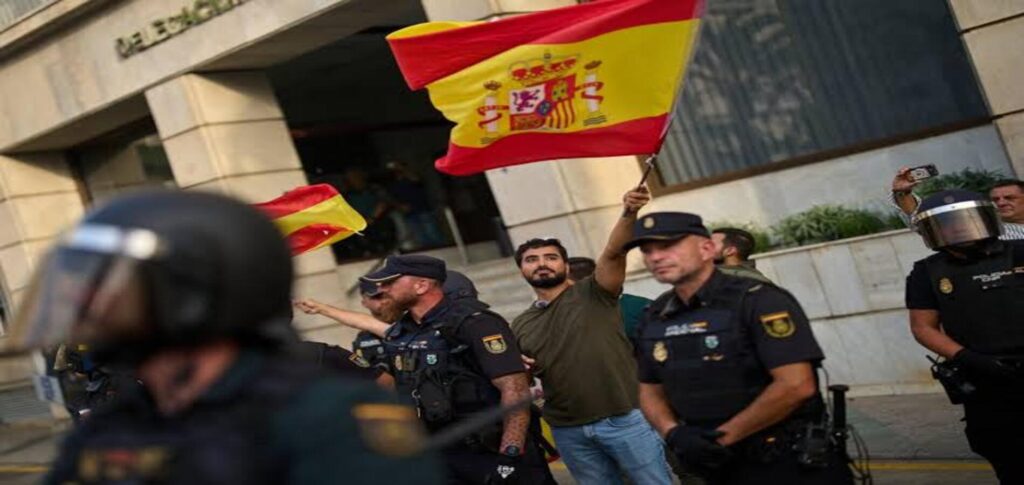
Hundreds of residents took part in Wednesday’s demonstration. Many carried Spanish flags and chanted slogans calling for stronger action over irregular migration.
The protest began around 19:00. However, tensions increased as darkness fell.
Small barricades appeared in several areas. A group of young people also tried to dismantle huts at the migrant settlement on Trampolín beach.
Police blocked access to the area and fired rubber bullets to prevent further escalation.
The march later moved towards the Government Delegation. It eventually dispersed at Plaza de África.
However, another group continued towards the port. Protesters dragged containers onto Avenida Teniente General Muslera and blocked traffic.
Journalists Face Harassment During Protests
The unrest has also created difficult conditions for journalists.
On Tuesday, a reporter and cameraman from La Sexta took shelter behind tables at a pavement terrace after residents surrounded them.
The group shouted at the journalists while they covered the demonstration. Video footage later showed insults and pushing during the confrontation.
Meanwhile, an RTVE journalist reportedly removed the broadcaster’s branded microphone cover while reporting from the area.
On Wednesday, another RTVE crew faced abuse while covering a government meeting in Ceuta.
The Federation of Spanish Journalists’ Associations (FAPE) condemned the growing pressure on media workers. The political group Movimiento por la Dignidad y la Ciudadanía also criticized the harassment.
Migration Crisis Drives Public Anger
Residents say the continuing migration crisis has placed additional pressure on local services.
Some protesters complained about difficulties involving police, ambulances and other public services.
The demonstrations come after a major influx of migrants into Ceuta on 30 and 31 July. According to Interior Minister Fernando Grande-Marlaska, nearly 80,000 migrants entered during the mass arrivals, although most have since returned.
Authorities have also identified around 1,500 minors who entered irregularly. Officials reduced the initial figure after removing duplicate records.
Four Soldiers Injured in Benzú Ambush
Meanwhile, a separate incident has added to concerns over security.
Four soldiers suffered injuries after a group attacked their vehicle in the Benzú area at about 5:30 a.m.
According to initial reports, between 30 and 40 people surrounded the vehicle and threw large stones at the soldiers.
The vehicle did not provide enough protection, forcing the soldiers to leave and escape on foot.
The attackers reportedly continued chasing them towards Calamocarro.
Several soldiers suffered bruises and pain in their arms and backs during the assault.
Police Arrest 12 People
The soldiers contacted emergency services after reaching a safe location.
Police and Civil Guard officers then launched an operation in the area.
Authorities arrested 12 people during the response. Initial reports said all those detained were Moroccan nationals and appeared to be between 35 and 40 years old.
Some suspects reportedly attempted to escape by sea.
The Civil Guard’s Maritime Service searched the area for people who entered the water.
Police also fired shots during the operation to disperse the group.
Authorities Face Pressure to Restore Calm
The latest events have increased pressure on authorities to restore calm in Ceuta.
At the same time, officials must address concerns over migration, public services and security without allowing journalists to become targets.
For residents, the situation has created growing frustration. For authorities, the challenge now involves managing the migration crisis while preventing further violence and maintaining public order.
The continuing protests also highlight the wider social impact of the recent migrant arrivals and the increasingly tense atmosphere across the territory.