
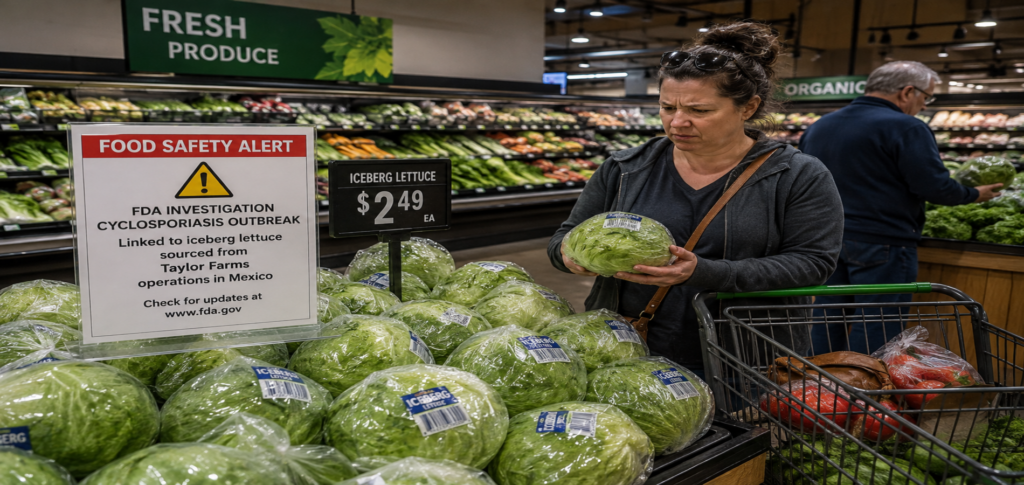
The Cyclosporiasis outbreak Michigan residents are facing continues to affect grocery stores and produce markets, even after health officials cleared shoppers to buy lettuce again. Many consumers remain cautious, keeping fresh greens away from their shopping carts because of ongoing fears about food contamination.
The U.S. Food and Drug Administration linked the outbreak to iceberg lettuce supplied by Taylor Farms operations in central Mexico. The illness has spread across 15 states, with Michigan reporting the highest number of cases.
Although officials say recalled products have been removed, the outbreak has damaged confidence in fresh produce. Grocery stores, restaurants and salad chains have all reported declining sales as customers remain concerned about possible exposure.
Cyclosporiasis Outbreak Michigan Affects Lettuce Demand
Fresh lettuce sales across the United States dropped after the outbreak became public. According to market research firm NielsenIQ, unit sales of fresh lettuce fell 9% during the week ending July 18 compared with the previous week.
The parasite behind cyclosporiasis can cause symptoms including diarrhea, nausea, stomach cramps and other digestive problems.
At Sunrise Market in Au Gres, Michigan, owner Angie Bussinger said lettuce sales have not recovered despite the state’s safety announcement.
“I didn’t even know that as a store owner, so I doubt the customers are seeing it yet,” Bussinger said
She expects shoppers will remain cautious for several more weeks and predicted a small decline in monthly produce sales.
The concerns have also affected other fruits and vegetables. Bussinger said sales of raspberries, blueberries and strawberries dropped after online rumors incorrectly suggested seeded fruits could also be linked to contamination.
Restaurants and Supermarkets Feel the Impact
The effects of the Cyclosporiasis outbreak Michigan has reached beyond grocery stores.
Taco Bell, owned by Yum Brands, experienced lower customer traffic after becoming associated with the outbreak. Research company Placer.ai reported that visits to U.S. Taco Bell locations dropped more than 11% on August 1 compared with the same period last year.
Meanwhile, salad chain Sweetgreen said it expects comparable sales to decline between 7% and 8% for the year, partly due to the impact of the outbreak.
Some stores have responded by lowering prices on affected products. In Wisconsin, Woodman’s Markets offered discounts on Taylor Farms items, including prepared salads and vegetables.
Some Shoppers Turn to Local Produce
While large grocery chains struggle with declining confidence, local farmers markets have seen increased interest.
At New York City’s Union Square farmers market, shoppers said they were slowly returning to eating fresh greens but preferred locally grown produce.
“I missed my salads,” shopper Melody Fifer said while holding a bag of watercress.
Several local sellers reported stronger sales as customers looked for alternatives they considered safer.
Darlene Wolnik of the Farmers Market Coalition said some markets reported sales increases of 15% to 30% as concerns over foodborne illnesses grew.
In Ann Arbor, Michigan, Argus Farm Stop has seen a similar trend. The store sources products directly from nearby farms, and demand for locally grown lettuce has increased.
“The lettuce is kind of flying off the shelves,marketing manager Alex Blume said.
Health Officials Continue Monitoring Outbreak
Authorities continue investigating the source and spread of the Cyclosporiasis outbreak Michigan and other affected states.
Officials have advised consumers to follow food safety practices, including washing produce properly and avoiding recalled products.
Experts say rebuilding trust in fresh produce may take time, even after health officials confirm products are safe.