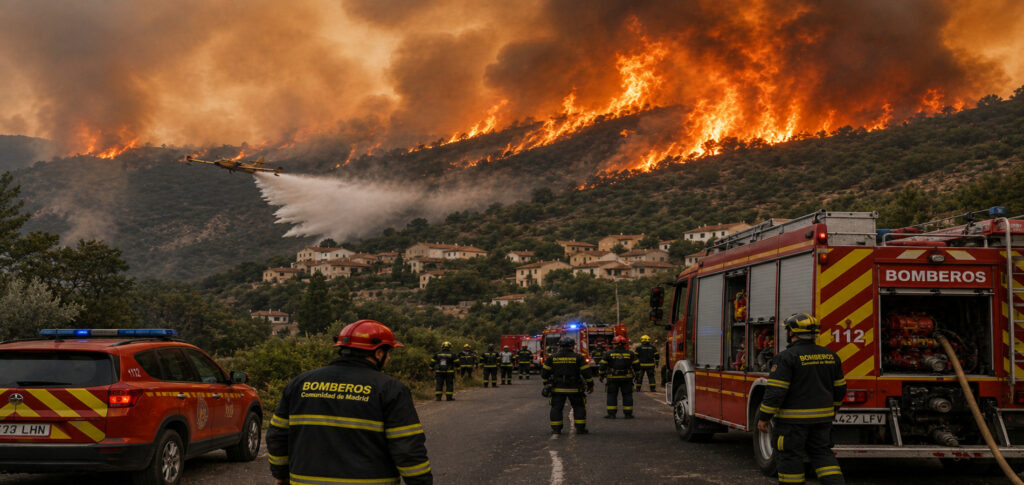
The EU wildfire strategy is facing growing criticism as Spain and France battle one of the worst wildfire seasons in recent years. Despite unveiling a prevention-focused plan in March 2026, the European Commission has struggled to turn policy into action while thousands of hectares continue to burn across southern Europe.
Mass evacuations, extreme heat and worsening climate conditions have once again forced European countries to rely on emergency firefighting resources instead of the long-term prevention measures Brussels promised.
European Commission Shifts Focus to Wildfire Prevention
When the European Commission introduced its wildfire strategy earlier this year, it marked a major policy shift.
Instead of concentrating solely on emergency responses after fires break out, the strategy aimed to prioritise wildfire prevention through better forest management and greater climate resilience.
The plan included:
- Paying farmers and foresters to clear dense vegetation.
- Expanding livestock grazing to reduce wildfire fuel.
- Restoring wetlands, peatlands and floodplains.
- Encouraging sustainable land management across high-risk regions.
The Commission acknowledged that climate change, prolonged drought and decades of neglected forests have dramatically increased wildfire risks across Europe.
Spain and France Still Depend on Emergency Firefighting
Despite the new strategy, much of the plan remains unimplemented.
As major wildfires spread across Spain and France, European authorities have once again relied on rescEU firefighting aircraft, international firefighting teams, civil protection deployments and emergency evacuations.
The Commission had previously warned that relying only on emergency responses was becoming increasingly expensive and ineffective as wildfire seasons grew longer and more destructive.
Forest Management Reforms Remain Delayed
One of the biggest obstacles to implementing the EU wildfire strategy remains political disagreement among member states.
Forest management largely remains a national responsibility, and several governments continue to oppose stronger EU involvement.
Countries including Sweden, Finland and France have repeatedly resisted proposals that would give Brussels greater influence over forest policies.
These disagreements have slowed progress on key legislation, including the proposed Forest Monitoring Law and broader forest restoration initiatives.
Environmental Experts Say Fires Were Predictable
Environmental organisations argue that the current crisis was avoidable.
Martin Pigeon, a forest and climate campaigner with Fern, said the devastating fires in France’s Gironde region were entirely foreseeable.
He criticised the repeated replanting of highly flammable pine monocultures after previous fires instead of creating more resilient mixed forests.
According to environmental experts, this approach continues to increase wildfire risks while imposing heavy environmental, economic and public health costs.
Climate Change Intensifies Europe’s Fire Seasons
Scientists warn that rising temperatures, prolonged droughts and abandoned agricultural land are making European wildfires larger, faster and more difficult to control.
The European Commission itself acknowledges that improving forest management is essential if Europe hopes to reduce future wildfire disasters.
Officials also recognise that emergency aircraft and firefighters alone cannot solve the growing crisis without sustained investment in prevention.
EU Wildfire Prevention Plans Need Faster Implementation
Although the EU wildfire strategy represents a significant policy shift toward prevention, implementation has lagged behind the pace of climate change.
As Spain and France continue battling devastating fires, pressure is mounting on Brussels and national governments to accelerate forest management reforms, improve climate resilience and invest in long-term wildfire prevention before future fire seasons become even more destructive.
Without faster action, Europe risks remaining trapped in an expensive cycle of responding to increasingly severe wildfires instead of preventing them.