
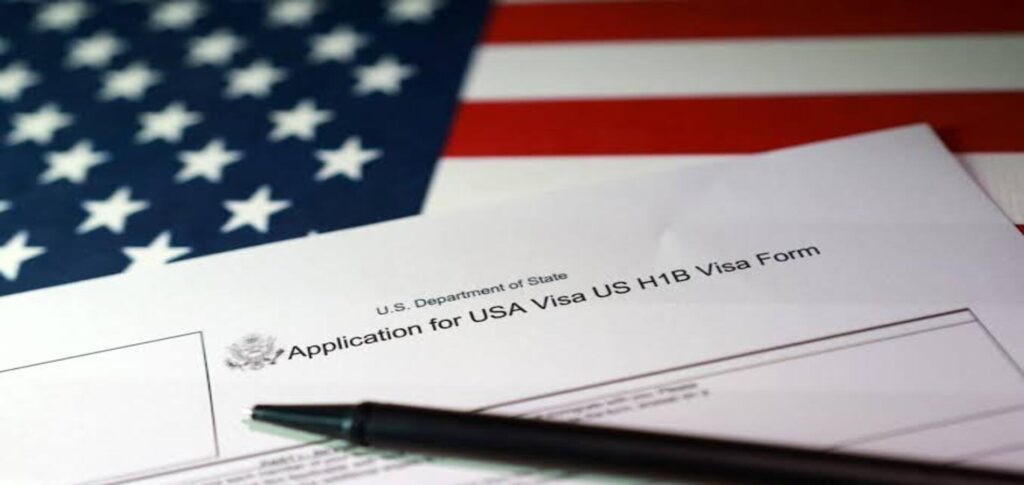
The Trump administration has proposed a $103,265 H-1B visa fee for new visas issued to highly skilled foreign workers, seeking to make a charge introduced last year a permanent requirement.
The Department of Homeland Security published the proposed regulation on Monday. The proposal will enter a 30-day public comment period after formal publication in the Federal Register.
The administration could finalize the rule by the end of the year.
Proposed H-1B visa fee faces court challenges
Trump first introduced the six-figure H-1B visa fee through a temporary proclamation last year. However, legal challenges have prevented the government from collecting the charge in many cases.
A federal judge ruled in June that the fee was unlawful and blocked the administration from enforcing it. An appeals court in Boston is now reviewing that decision.
Another legal challenge is also moving through the courts.
Business groups, Democratic-led states, employers and unions argue that the president does not have the authority to impose such a large charge without congressional approval.
The administration disputes that argument. Officials say the payment is not a traditional tax and falls within presidential authority under federal immigration law.
H-1B program widely used by US employers
The H-1B program allows American employers to hire foreign workers in specialty occupations.
The government makes 65,000 visas available each year, with another 20,000 reserved for workers who hold advanced degrees from US institutions.
H-1B visas generally allow approved workers to remain in the United States for several years.
Before Trump’s new fee, employers typically faced thousands of dollars in H-1B-related costs, depending on the application and other factors. The proposed charge would represent a dramatic increase.
The technology, education and research sectors rely heavily on the program to recruit skilled workers.
Employers divided over H-1B visas
Supporters of the program say American companies need H-1B workers because some industries struggle to find enough qualified employees.
Critics, including Trump and other Republicans, argue that some companies use the program to replace American workers with lower-paid foreign employees.
The debate has intensified as the administration pushes broader immigration restrictions.
Court filings show that about 70 employers had paid the $100,000 fee on 85 visa applications by late February.
Visa demand has already fallen
US Citizenship and Immigration Services data shows that employers registered for about 344,000 H-1B visas last year.
That figure was more than 25% lower than the 2024 level. It was also less than half the roughly 794,000 registrations recorded in 2023.
The administration has introduced other measures affecting H-1B applicants. These include enhanced screening and a proposed selection system that would favor higher-skilled and higher-paid workers.
DHS has also proposed additional fees of up to $4,500 for certain applications involving H-1B workers seeking to extend their stay or transfer employment.
If finalized, the H-1B visa fee proposal would significantly increase the cost of hiring new foreign skilled workers and could reshape how US employers use the program.