
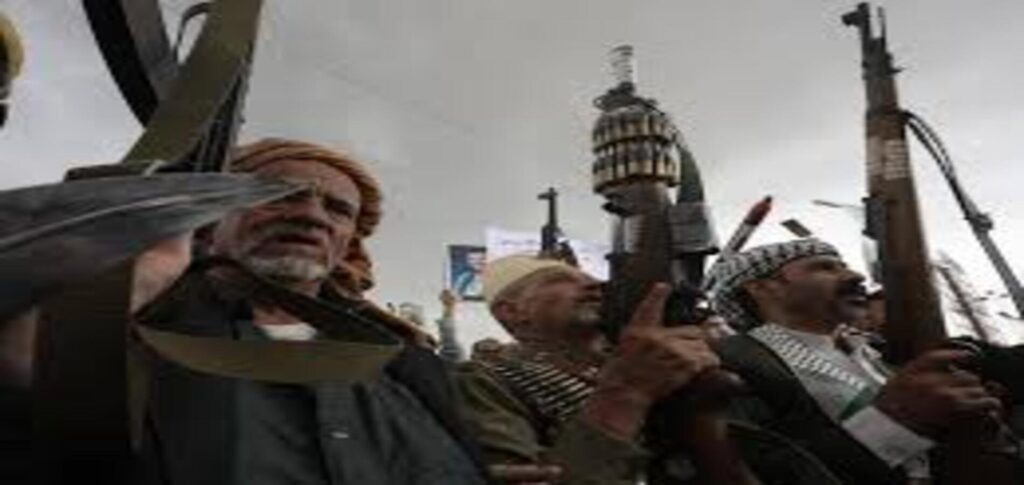
Houthi attacks on military camps in central Yemen have reportedly killed dozens of government troops and wounded many others, raising fresh concerns about renewed violence in the war-torn country.
According to Yemen’s Defence Ministry, ballistic missiles and drones struck several military positions in Marib and Hadramawt on Thursday.
Government officials confirmed casualties but did not initially provide a precise death toll. However, medical and military sources reported significantly higher figures.
Military Camps Hit by Missiles and Drones
The attacks began at around 10:40 a.m. local time.
Military officials said missiles and drones targeted camps in the al-Ruwaik area of Marib, as well as al-Abr and al-Wadiah in Hadramawt, near the Saudi border.
Medical sources told international media that at least 38 soldiers were killed and 29 others wounded.
Other military sources claimed that the death toll had risen above 40, although the competing figures could not immediately be independently verified.
Yemeni Government Condemns the Attacks
Yemen’s Defence Ministry described the strikes as “treacherous” and vowed to respond at a time and place of its choosing.
Government officials accused the Houthis of deliberately targeting military personnel despite ongoing efforts to prevent a return to large-scale fighting.
The attacks could further undermine attempts to maintain the relative calm that has prevailed across much of Yemen in recent years.
Houthis Claim They Targeted Military Build-Up
The Houthis offered a different account of the operation.
Houthi military spokesperson Yahia Sarea said the group targeted what it described as major Saudi-backed military build-ups preparing for an offensive.
He claimed the strikes destroyed military vehicles, weapons and buildings.
Sarea also alleged that hundreds of Saudi-backed fighters were killed or wounded.
The Houthi claims have not been independently verified.
UN Urges Restraint
The United Nations expressed concern over the renewed violence and urged all parties to avoid further escalation.
Deputy UN spokesperson Farhan Haq warned that a new cycle of fighting could undermine years of progress toward reducing violence in Yemen.
The UN has repeatedly called on Yemen’s rival factions to pursue political negotiations and avoid actions that could worsen the humanitarian crisis.
US Condemns the Strikes
The US mission to Yemen also condemned the attacks.
American officials described the strikes as “cowardly” and accused the Houthis of continuing violence against the Yemeni population.
Washington has previously criticized Houthi attacks on military and commercial targets while supporting efforts to protect international shipping in the region.
Yemen’s Long-Running Conflict
Yemen has remained divided since the Houthis seized control of the capital, Sanaa, in 2014.
The conflict escalated in 2015 when a Saudi-led coalition intervened to support the internationally recognized government.
Years of fighting have created one of the world’s most serious humanitarian crises, leaving millions of Yemenis dependent on humanitarian assistance.
Tensions Rise Despite Relative Calm
Although the UN-brokered truce in 2022 sharply reduced large-scale fighting, tensions have increased in recent weeks.
The Houthis have also threatened Saudi-linked interests and maritime traffic, while attacks in and around the Red Sea have raised concerns about international shipping.
Saudi Arabia has responded by strengthening security measures and supporting efforts to protect commercial vessels operating through the region.
The latest Houthi attacks demonstrate how fragile Yemen’s relative calm remains. If the violence continues to intensify, the country could face renewed military escalation, further humanitarian suffering and increased risks to regional and international security.