

Nepal plans to use a new climate study to support a financial request from the United Nations fund created to help countries recover from climate-related loss and damage.
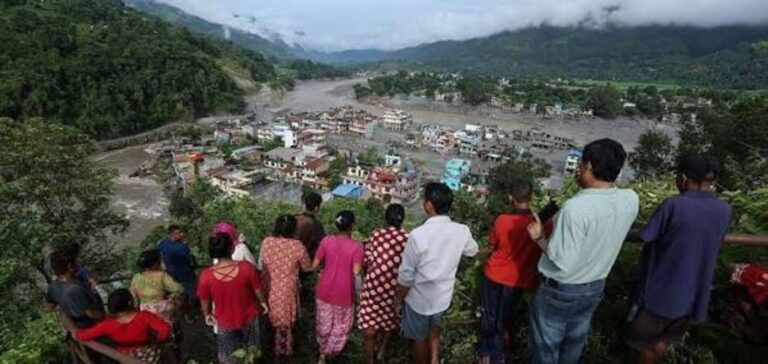
The Nepal UN climate fund request could seek around $20 million, according to reports. The money would help support reconstruction after the devastating floods and landslides that struck the country in August.
The disaster killed more than 1,300 people, while thousands remained missing as of mid-September, according to figures cited by the World Weather Attribution study.
New Study Links Warming to Disaster
World Weather Attribution published its study on September 17 after examining the chain of events behind the disaster.
Researchers found that a massive rock-and-ice avalanche from Langtang Lirung triggered a debris flood that later became a destructive flash flood.
The study says long-term warming likely weakened the mountain environment. Rising temperatures, permafrost degradation, glacier loss and increased water pressure may have contributed to the instability.
However, researchers stressed that climate change was not the fundamental cause of the collapse. Instead, they described warming as a destabilising factor acting on existing geological weaknesses.
Langtang Lirung Collapse Triggered Floods
The disaster began high in the Himalayas near Langtang Lirung on August 26.
According to the study, a huge section of rock collapsed from the mountain at an elevation of about 5,150 metres. Part of the glacier above the rock wall also collapsed.
The resulting avalanche rapidly transformed into a debris flood and then a water-dominated flash flood.
The flood travelled rapidly downstream, carrying rocks, sediment and debris into settlements and damaging homes, roads and infrastructure.
Climate Change Increased Mountain Instability
Scientists identified several factors that may have contributed to the collapse.
Glaciers in the region have been losing mass for decades. The study says the glaciers have been thinning by more than half a metre per year in some areas.
At the same time, warming has contributed to permafrost degradation. When ice inside mountain fractures melts, it can reduce the strength holding rock together.
Meltwater can also increase pressure inside existing fractures. Together, these processes can make unstable mountain slopes more vulnerable to collapse.
Nepal Seeks Support for Reconstruction
The disaster has created enormous reconstruction needs for Nepal.
The government has said the country needs billions of dollars to rebuild damaged communities and infrastructure.
The proposed Nepal UN climate fund claim would therefore provide an important source of potential financial support.
Nepal had already been collecting satellite images, drone footage and other evidence to document the disaster and its causes.
Officials now see the new scientific study as additional evidence that climate-related changes contributed to the mountain collapse.
UN Loss and Damage Fund Faces High Demand
Nepal is seeking money from the UN Fund for Responding to Loss and Damage.
The fund helps vulnerable countries deal with the economic and other losses caused by climate-related disasters.
However, demand for the fund is already high. Many countries have submitted requests, while the amount available for distribution remains far below the total funding sought.
As a result, Nepal could face competition for limited resources.
Officials will also need to follow the fund’s procedures and provide evidence supporting the country’s claim.
Nepal Says It Contributes Little to Global Warming
Nepal has repeatedly highlighted its vulnerability to climate change.
The Himalayan country contributes only a small share of global greenhouse gas emissions. Yet warming has already affected glaciers, mountain ecosystems and communities that depend heavily on natural resources.
The latest disaster has added urgency to Nepal’s calls for greater international climate support.
The government has also argued that countries facing severe climate impacts should receive stronger assistance for recovery and reconstruction.
Scientists Urge Better Mountain Monitoring
The World Weather Attribution study also highlighted the limits of existing warning systems.
Nepal has developed early-warning systems that can help communities respond to conventional floods. However, researchers said the August disaster was different because of its speed, scale and complexity.
The event developed from a high-altitude rock-and-ice collapse before turning into a rapidly moving flood.
Researchers therefore called for stronger monitoring of high Himalayan areas, improved earth observation and better sharing of information across borders.
Study Has Not Yet Been Peer Reviewed
The findings also come with an important scientific qualification.
The World Weather Attribution report has not yet been published in a peer-reviewed journal. The organisation says its rapid studies use established peer-reviewed methods, but individual reports can be released quickly after major disasters.
Researchers also say they cannot determine whether the specific rock-and-ice avalanche would have occurred without human-caused climate change.
Therefore, the study does not establish climate change as the single cause of the disaster.
Instead, it identifies warming as one factor that likely increased instability in an already vulnerable high-mountain environment.
Nepal Awaits Decision on Climate Funding
Nepal now hopes the new evidence will strengthen its case for international financial assistance.
The proposed Nepal UN climate fund request comes as the country faces the enormous task of rebuilding communities affected by the August disaster.
Whether Nepal receives the requested money will depend on the fund’s rules, available resources and assessment of the evidence.
For the Himalayan nation, however, the funding request reflects a wider effort to secure international support for the growing costs of climate-related disasters.