

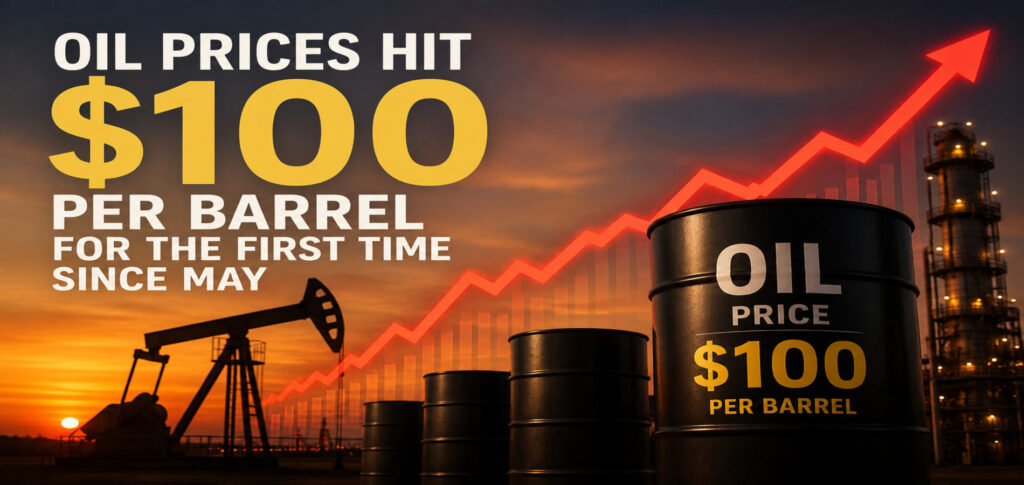
Global oil prices have surged above $100 per barrel for the first time since May, as escalating tensions across the Middle East continue to fuel concerns about global energy supplies.
Brent crude, the international benchmark for oil prices, climbed more than six percent on Thursday after several days of steady gains, driven by renewed military action involving the United States, Iran and Houthi forces.
Middle East Conflict Pushes Oil Markets Higher
The latest rally comes as the United States intensified military strikes against Iranian targets, while Houthi fighters in Yemen launched attacks on oil tankers travelling through the Red Sea.
The attacks have raised fresh concerns about the security of one of the world’s most important energy shipping routes. Saudi Arabia has increasingly relied on the Red Sea to export crude oil and reduce its dependence on the Strait of Hormuz, another vital global oil corridor that remains under growing pressure.
Analysts say the combination of military escalation and threats to key shipping lanes has significantly increased fears of supply disruptions.
Gas Prices Also Continue to Rise
The increase in oil prices has been accompanied by higher natural gas costs.
The benchmark UK gas price has climbed to around 150 pence per therm, compared with approximately 98 pence at the end of June, reflecting wider concerns across global energy markets.
Energy traders believe continued instability in the region could keep both oil and gas prices elevated in the coming weeks.
Fuel Costs Likely to Impact Consumers
Higher crude oil prices usually translate into more expensive petrol and diesel, increasing transport costs for households and businesses.
Businesses often pass these additional costs on to consumers through higher prices for food, manufactured goods and other everyday products.
New figures released this week show average petrol prices in the UK have increased by around 5 pence per litre since the beginning of July, reaching nearly £1.56 per litre, while diesel prices have climbed to approximately £1.72 per litre, according to the RAC.
In the United States, average gasoline prices have once again risen above $4 per gallon, reversing recent declines.
Inflation Concerns Return
The sharp rise in energy prices is creating fresh concerns for central banks that have spent months trying to bring inflation under control.
Economists warn that prolonged increases in fuel and energy costs could slow progress on reducing inflation, forcing policymakers to keep interest rates higher for longer.
Higher borrowing costs would continue to affect mortgage holders, businesses and consumers already facing increased living expenses.
Central Banks Watching Energy Markets Closely
Although inflation has eased in both the United Kingdom and the United States in recent months, economists caution that the renewed surge in oil prices could reverse some of that progress.
The Bank of England recently kept interest rates unchanged at 3.75%, while the US Federal Reserve also maintained its benchmark rate during its latest policy meeting.
Market analysts believe future interest rate decisions will depend heavily on whether tensions in the Middle East ease and whether energy prices stabilise over the coming months.
With uncertainty surrounding global oil supplies continuing to grow, investors remain focused on developments in the region that could determine the direction of energy markets for the rest of the year.