
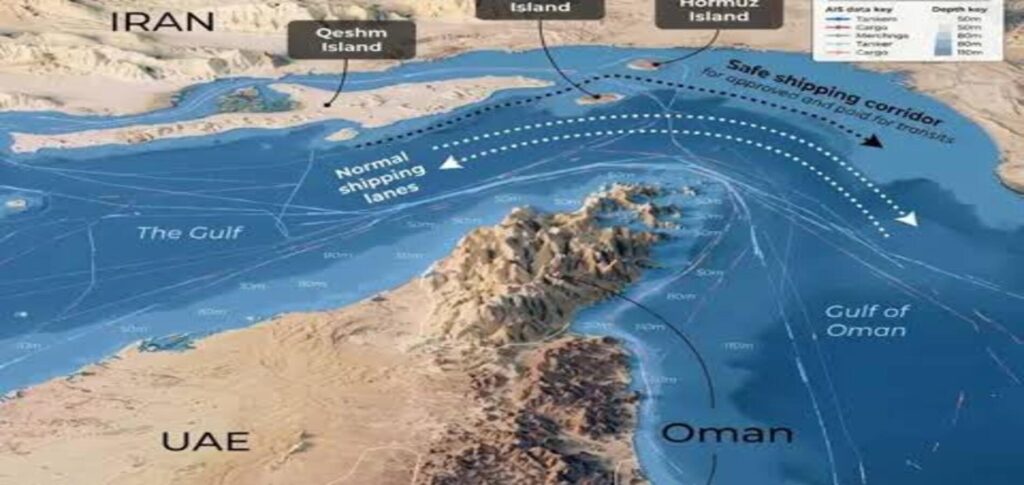
Iran is preparing a list of conditions for reopening the Strait of Hormuz as Tehran responds to requests from international mediators amid efforts to reduce tensions with the United States.
Iranian security chief Mohsen Rezaei said Tehran wants Washington to take practical steps before it agrees to reopen the strategically important waterway.
According to Rezaei, Iranian officials are drafting the conditions in response to requests from mediators. However, he indicated that Iran expects concrete action from the United States before reopening the strait.
Qatar Holds Talks in Tehran
Meanwhile, Qatar’s Prime Minister Sheikh Mohammed bin Abdulrahman bin Jassim Al Thani travelled to Tehran for talks on the situation.
The discussions included the future of the Strait of Hormuz and wider efforts to reduce tensions between Iran and the United States.
Qatar has played a role in diplomatic efforts as international governments push for a return to dialogue.
Therefore, the latest talks have raised hopes that Washington and Tehran could resume discussions aimed at ending the conflict.
US Position on Hormuz
However, the United States maintains a different position on the waterway.
A US government source told Al Jazeera that agreements between Iran and Oman do not involve Washington.
The source also maintained that the Strait of Hormuz remains open and that mines have been cleared.
Furthermore, the US source said no negotiations have been scheduled and that the naval blockade remains in place.
The conflicting statements highlight the uncertainty surrounding the waterway and the wider diplomatic efforts.
Hormuz Remains Strategically Important
The Strait of Hormuz serves as a major route for global energy shipments.
Consequently, any prolonged disruption could affect international trade and energy markets.
Iran’s latest position suggests that Tehran wants guarantees and practical measures before allowing normal traffic to resume.
At the same time, international mediators continue to push both sides toward dialogue.
Warning Over Gaza Ceasefire
Meanwhile, the diplomatic discussions extend beyond the Strait of Hormuz.
Nickolay Mladenov, the high representative for US President Donald Trump’s Board of Peace, warned that the fragile ceasefire in Gaza could collapse if the proposed peace roadmap is not upheld.
Speaking to Al Jazeera, Mladenov said failure to follow the roadmap could trigger a new conflict.
As a result, international efforts now face several major challenges, from tensions around Hormuz to the fragile situation in Gaza.
For now, attention remains focused on Iran’s conditions and whether Washington will take the practical steps Tehran says it requires before reopening the strategic waterway.