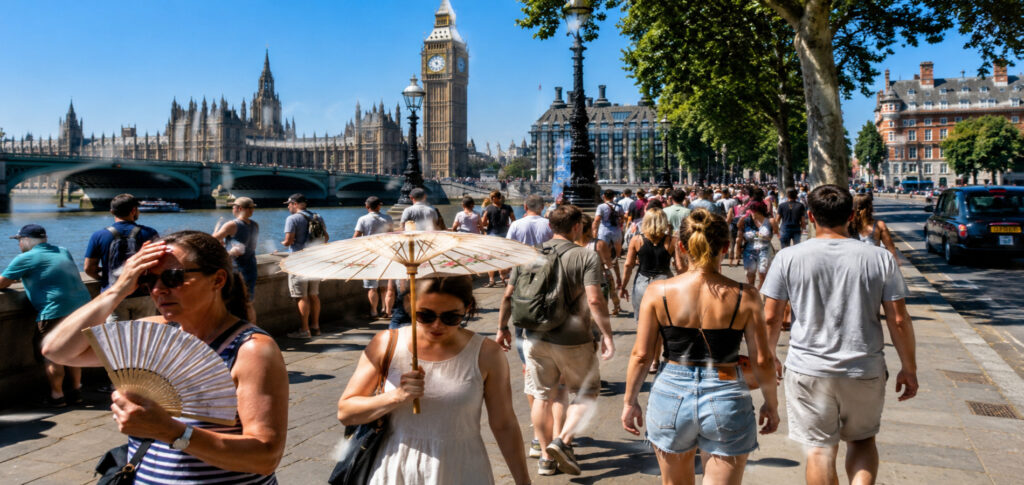
The UK heatwave 2026 is intensifying as a fourth spell of exceptionally hot weather affects large parts of England. Temperatures are expected to reach the mid-30s Celsius this week, with southern and eastern areas likely to experience the highest temperatures on Wednesday.
The latest heatwave could affect millions of people. Health authorities are warning residents to take precautions as prolonged high temperatures can increase risks, particularly for older people, children and those with existing health conditions.
Amber Heat Health Alerts Issued
The UK Health Security Agency (UKHSA) has issued amber heat health alerts for several regions:
- East Midlands
- East of England
- London
- South East England
The alerts are expected to remain in place from Wednesday morning until Thursday morning.
Meanwhile, Yorkshire and the Humber, the West Midlands and the South West are under yellow heat alerts.
Health officials warn that sustained high temperatures could put additional pressure on hospitals, care services and emergency responders.
Southern England Faces the Worst Heat
The UK heatwave 2026 is expected to be most intense across central, southern and eastern England.
Temperatures could reach 30C to 35C in many areas of England and Wales. By contrast, Scotland and Northern Ireland are expected to remain considerably cooler, with cloud and showers affecting some areas.
Forecasters expect Wednesday to be the hottest day before temperatures gradually decline later in the week.
However, the easing temperatures may not bring immediate relief from the wider effects of the prolonged dry weather.
July 2026 Among Britain’s Hottest Months
The latest heatwave follows an exceptionally warm July.
According to the supplied figures, the UK’s average temperature has reached 17.5C, putting July 2026 among the warmest Julys recorded.
Repeated periods of high daytime temperatures, combined with unusually warm nights, have contributed to persistent heat stress across many communities.
Warm nights can be particularly concerning because they give the body less opportunity to recover from daytime heat.
Drought Conditions Worsen
The prolonged heat has also intensified drought conditions across England and Wales.
Several areas remain affected by hosepipe restrictions, while extremely dry vegetation has increased the risk of wildfires.
England has received only 4.4mm of rainfall during the reported period, with central, southern and eastern regions among the driest areas.
Parts of Wales have also experienced severe rainfall shortages and drought conditions.
The lack of rain is creating challenges for farmers, water companies and environmental agencies.
Wisley Records Extended Dry Spell
The severity of the dry conditions is particularly evident in parts of Surrey.
Wisley has reportedly gone around 40 consecutive days without measurable rainfall, highlighting how persistent the current dry spell has become.
Such prolonged rainfall shortages can reduce river flows, put pressure on reservoirs and affect vegetation and wildlife.
They can also make grassland and woodland increasingly vulnerable to rapidly spreading fires.
Significant Rainfall Still Needed
Although isolated showers could develop later in the week, forecasters do not expect widespread, substantial rainfall capable of ending the drought conditions.
As a result, concerns over water supplies, agriculture and wildfire risks are likely to continue even after temperatures begin to fall.
The UK heatwave 2026 therefore represents more than another period of hot weather. Combined with exceptionally dry conditions, it is increasing pressure on communities, water resources and emergency services across England and Wales.
Authorities continue to urge people to stay hydrated, avoid unnecessary exposure to extreme heat and check on vulnerable relatives, friends and neighbours during the hottest periods.