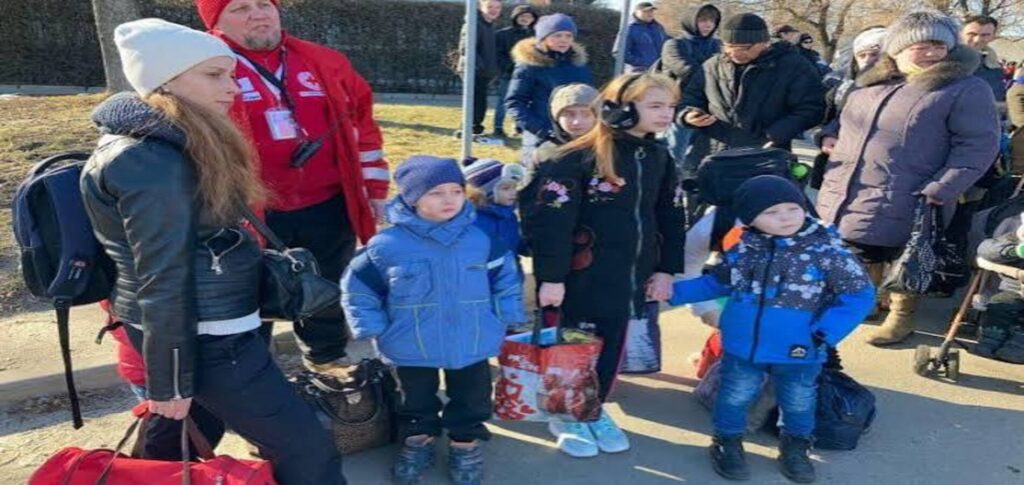
Thousands of Ukrainian children remain under Russian control, with Ukrainian officials warning that they face continued risks to their safety, identity and wellbeing.
The Bring Kids Back UA initiative has urged the international community to hold those responsible for the deportation and forcible transfer of Ukrainian children accountable.
The warning comes as the European Union prepares a new round of sanctions targeting 27 Russian individuals and entities allegedly connected to the deportation and forced transfer of Ukrainian minors.
EU prepares new sanctions
EU ambassadors reviewed the proposed sanctions during a meeting on Wednesday. The discussion marked the first meeting of the ambassadors since the summer recess.
Maksym Maksymov, head of the Bring Kids Back UA initiative, welcomed the European action.
He said those responsible for the removal of Ukrainian children should face prosecution and stressed the need for continued international pressure.
According to Maksymov, children who remain under Russian control face risks including indoctrination, militarisation and the erosion of their Ukrainian identity.
He also warned that thousands of children have yet to return to their families.
The longer they remain away from home, he said, the greater the potential risks become.
Thousands of children remain missing
Ukraine has verified the deportation or forced transfer of more than 20,500 children since Russia’s full-scale invasion.
However, the actual number remains difficult to establish.
Yale’s Humanitarian Research Lab has estimated that the number could be closer to 35,000. Russian authorities have provided a much higher figure, suggesting that as many as 700,000 Ukrainian children may have entered Russia.
The Institute for the Study of War has noted that the true scale remains extremely difficult to verify.
The differing estimates highlight the enormous challenge facing Ukrainian and international authorities as they attempt to identify children and establish where they are.
Concerns over identity and assimilation
Ukrainian officials and international researchers have repeatedly raised concerns about the treatment of children who remain in Russian-controlled areas.
Bring Kids Back UA says some children face pressure that can weaken their connection to Ukraine.
Concerns include indoctrination, militarised education and attempts to assimilate Ukrainian minors into Russian society.
Earlier investigations have also reported systems used by Russian-installed authorities to catalogue Ukrainian children.
Euronews previously reported that an online catalogue allegedly allowed users to search for children using details such as age, gender, hair colour and eye colour.
Children were also described using personality traits, including labels such as “obedient” and “calm.”
Such reports have intensified international concern over the fate of Ukrainian minors who remain separated from their families.
Returning children can take years
The return of a single child can involve a lengthy process.
Ukrainian authorities first need to identify the child and establish their location. They then have to work through diplomatic and logistical channels to secure a safe return.
International mediation has played a major role in many successful returns.
Qatar, South Africa and the Vatican have all helped mediate efforts to bring Ukrainian children back home.
The process can take years, making time an important factor for families still searching for their children.
UN calls deportation a war crime
The issue has also drawn attention from the United Nations.
In March, the UN said the deportation and forcible transfer of Ukrainian children to Russia constitutes a crime against humanity and a war crime.
The European Union has previously imposed sanctions on people and organisations accused of involvement in the deportation and forced assimilation of Ukrainian children.
In May, EU countries sanctioned 16 individuals and seven entities over alleged involvement in the unlawful deportation and forced transfer of Ukrainian minors.
Those measures included people and organisations linked to alleged indoctrination, militarised education and unlawful adoption.
More sanctions still need approval
The latest proposed listings are not yet final.
EU member states still need to complete technical work and legal checks before formally adopting the new sanctions.
Those checks aim to ensure that the measures can withstand possible legal challenges.
The European External Action Service has also provided member states with a list of around 1,600 individuals and entities considered to be contributing directly to Russia’s war effort.
The move reflects a broader European effort to target individuals and organisations rather than relying only on large sector-wide sanctions packages.
International conference planned
The new sanctions are being prepared ahead of the International Coalition for the Return of Ukrainian Children conference.
The meeting is scheduled to take place in Toronto, Canada, on September 28 and 29.
The coalition aims to strengthen international cooperation and develop mechanisms that can help secure the safe return of Ukrainian children.
For Ukraine, the issue remains both a humanitarian and national priority.
Every successful return brings another child back to their family. However, thousands of cases remain unresolved.
Ukraine calls for continued action
Bring Kids Back UA says international cooperation remains essential to resolving the crisis.
Maksymov stressed that governments and international partners must continue working together to protect children affected by the war.
The initiative also wants accountability measures to continue alongside diplomatic efforts.
The EU’s proposed sanctions represent another step in that process.
However, sanctions alone cannot return children to their families.
Ukrainian authorities and international partners still face the much harder task of identifying missing children, locating them and negotiating their safe return.
For families waiting for answers, each successful reunification offers hope.
But with thousands of Ukrainian children still unaccounted for or under Russian control, international pressure and coordinated efforts remain critical to bringing them home.