Trump White House Ballroom Construction Halted by Appeals Court
A US appeals court has upheld an order blocking construction of the Trump White House ballroom, creating another legal setback for President Donald Trump’s planned renovation of the White House.
The US Court of Appeals for the DC Circuit ruled 2-1 on Friday that the administration cannot continue the major construction project without explicit authorization from Congress. The decision adds to the legal uncertainty surrounding Trump’s plans to transform part of the White House complex.
However, the court paused its ruling for two weeks. That gives the Trump administration time to ask the US Supreme Court to intervene.
Trump has strongly criticized the decision and said he intends to continue challenging the ruling.
Appeals Court Blocks Trump White House Ballroom Construction
The appeals court agreed with a lower court that the administration must obtain congressional approval before proceeding with the large-scale project.
The judges emphasized that they were not deciding whether the ballroom should ultimately be built. Instead, they focused on whether the administration has the legal authority to continue construction while the dispute remains before the courts.
According to the ruling, construction cannot continue during the litigation unless Congress authorizes the project.
The decision was split 2-1. Two judges in the majority were appointed by Democratic presidents, while the dissenting judge was appointed by Trump.
Trump Criticizes Court Decision
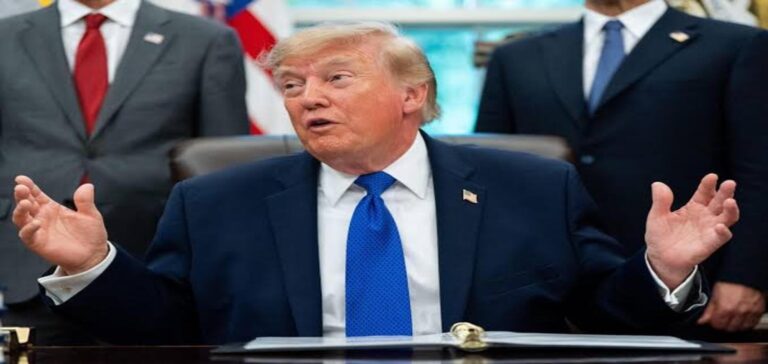
Trump immediately condemned the ruling and described it as politically motivated.
In posts on Truth Social, the president argued that stopping the project could create security and national security concerns. He also vowed to appeal the decision.
Trump has repeatedly defended the ballroom as an important addition to the White House. He says the existing facilities do not provide enough space for large events, including state dinners, diplomatic receptions and other official gatherings.
The administration has also pointed to security improvements associated with the project, including underground facilities and a military bunker.
White House East Wing Demolished for Project
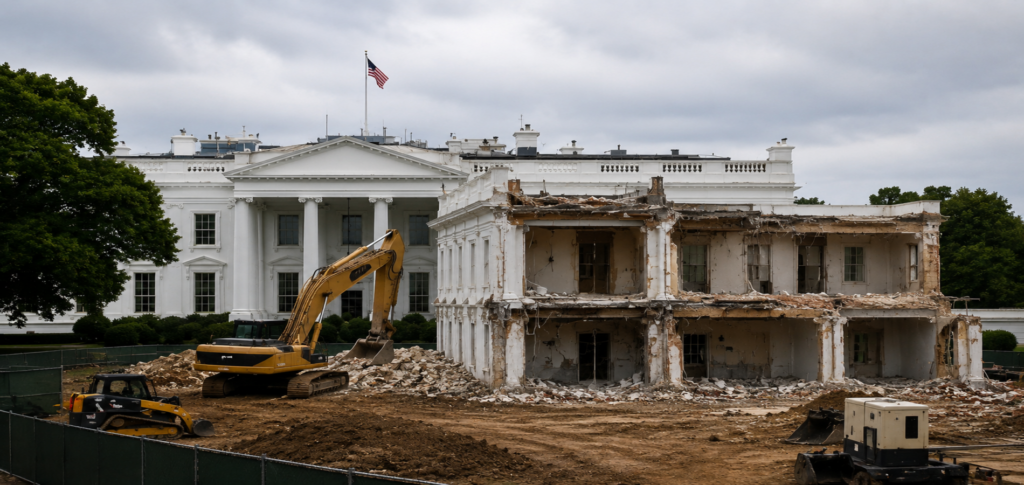
Work on the project began last year after the administration ordered the demolition of the historic White House East Wing.
Since then, construction has expanded to include major underground work. Images from the site have shown concrete structures and other elements of the planned development emerging above ground.
The administration initially estimated the ballroom would cost around $200 million. That figure later increased to approximately $400 million. Some media reports have suggested that the final cost could reach as much as $600 million.
Trump has said private donors would finance the ballroom. However, questions remain about whether taxpayer funds could be used for other parts of the broader renovation effort.
Congress Could Determine the Project’s Future
The latest ruling has placed the Trump White House ballroom at the centre of a wider debate over presidential authority and congressional oversight.
The appeals court did not permanently reject the ballroom project. Instead, it ruled that construction cannot proceed during the current legal dispute without authorization from Congress.
The Trump administration is expected to ask the Supreme Court to review the decision. The high court could therefore play a crucial role in determining whether construction can resume.
The case could also become an important test of presidential authority over major changes to federal property.
Trump’s Washington Projects Face Legal Challenges
The White House ballroom is part of Trump’s broader effort to reshape and renovate parts of Washington during his current presidential term.
Other proposed projects include changes involving the Lincoln Memorial Reflecting Pool, Washington parks and plans for a large ceremonial arch.
Several of Trump’s projects have faced legal scrutiny. However, the ballroom dispute could prove particularly significant because it has now reached the federal appeals court and could move to the Supreme Court.
For now, construction remains restricted under the court’s order. The administration must decide whether to seek immediate intervention from the Supreme Court or pursue congressional authorization for the project.
The legal battle over the Trump White House ballroom is therefore likely to continue, with the next steps potentially determining whether Trump’s ambitious renovation plans can move forward.