
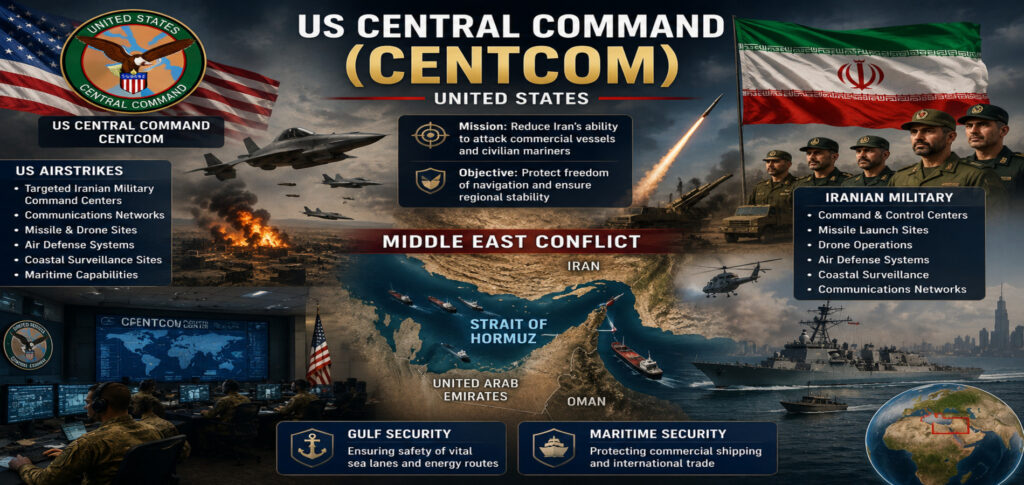
US strikes on Iran targeted key military facilities that American officials said support Tehran’s command network and military activities near the Strait of Hormuz. US Central Command (CENTCOM) said the operation aimed to reduce threats to international shipping and protect one of the world’s most important energy routes.
US Strikes Iran Command and Control Facilities
CENTCOM said the US strikes focused on command centres, communication systems, missile launch sites and drone facilities.
US forces also targeted air defence positions, coastal surveillance systems and maritime infrastructure. Officials said these locations supported Iranian military operations near the Strait of Hormuz.
Military leaders said the operation was designed to weaken Iran’s operational capabilities while reducing risks to commercial shipping.
Strait of Hormuz Remains Critical
The Strait of Hormuz remains one of the world’s most important shipping lanes.
A significant share of global seaborne oil exports passes through the narrow waterway each day. As a result, any disruption could affect energy supplies, shipping operations and international markets.
US officials said protecting civilian vessels and commercial shipping remains a major priority as regional tensions continue to rise.
Regional Tensions Continue to Grow
The latest US strikes Iran operation comes as military tensions between Washington and Tehran remain elevated.
Both countries have exchanged accusations over recent attacks and military operations. These developments have increased international concern about the possibility of a wider regional conflict.
Diplomatic efforts continue through regional and international channels. However, security analysts warn that the situation remains unpredictable.
Global Markets Monitor Developments
Energy markets and shipping companies continue to closely monitor developments around the Strait of Hormuz.
Any prolonged disruption could affect global oil supplies, increase transportation costs and push energy prices higher.
Governments across the region continue calling for restraint while diplomatic channels remain open. Officials and international observers are closely watching for further developments that could influence regional security and global energy markets.