
Amazon Seafood Sustainability Lawsuit Targets Greenwashing Claims
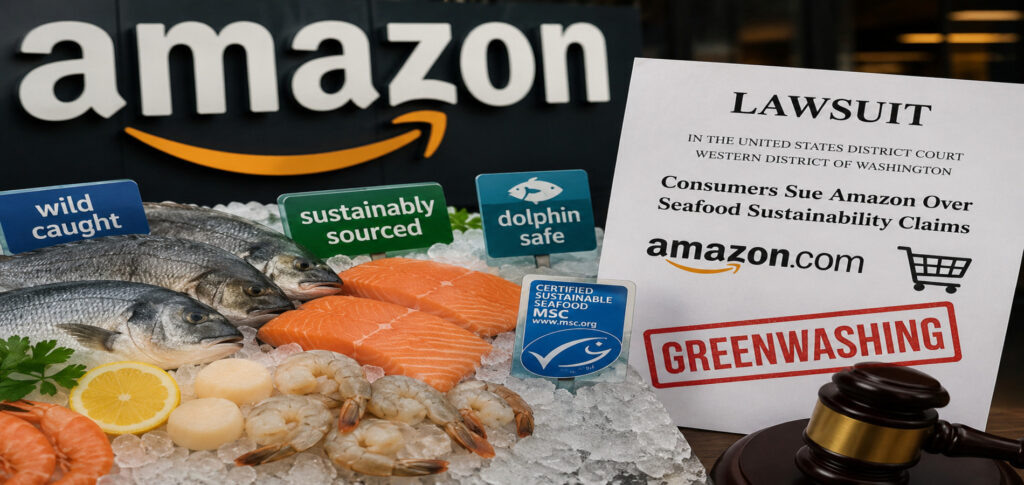
Amazon is facing a new legal challenge after consumers filed an Amazon seafood lawsuit, accusing the company of misleading shoppers with sustainability claims attached to seafood products sold through its online marketplace.
The proposed class-action complaint was filed in a federal court in Seattle, where plaintiffs argue that Amazon marketed seafood using environmental labels that allegedly gave consumers an inaccurate impression about how the products were sourced.
Amazon Seafood Lawsuit Questions Sustainability Labels
According to the lawsuit, seafood products sold on Amazon carried labels such as “dolphin safe,” “responsibly sourced,” “wild caught,” “sustainable,” and “MSC Certified Sustainable Seafood.”
Consumers claim these descriptions encouraged shoppers to believe the seafood came from environmentally responsible fisheries, even though they argue there is insufficient evidence to support many of those claims.
The complaint alleges that the retailer failed to provide enough transparency about the origin of seafood products, leaving customers unable to verify whether the products met the advertised environmental standards.
Plaintiffs Allege Greenwashing
The Amazon seafood lawsuit accuses the company of engaging in greenwashing by promoting seafood with broad sustainability messaging that allegedly does not accurately reflect the realities of global fishing operations.
According to the filing, many commercial fishing vessels are difficult to monitor because some disable electronic tracking systems, making it challenging to verify fishing practices.
The complaint also references studies suggesting that a significant portion of imported wild-caught seafood may not come from sustainable sources.
Popular Seafood Brands Included
The legal action covers numerous seafood products available through Amazon, including items sold under well-known brands such as:
- Bumble Bee
- Chicken of the Sea
- StarKist
- 365 by Whole Foods Market
The lawsuit does not name the parent companies behind these brands as defendants. Instead, it focuses on Amazon’s marketing and promotional practices on its online platform.
Consumers Seek Compensation
The plaintiffs say they would not have purchased the seafood—or would have paid less—if they had known the products allegedly did not meet the sustainability standards suggested by Amazon’s advertising.
They are seeking financial compensation, restitution, punitive damages, and other relief under Washington consumer protection laws.
Amazon Yet to Respond
Amazon has not publicly responded to the allegations contained in the lawsuit.
The company, one of the largest grocery retailers in the United States through its online marketplace and Whole Foods Market, has previously faced legal disputes involving products sold by both Amazon and third-party sellers.
The outcome of the Amazon seafood lawsuit could influence how retailers market sustainability claims in the future and may lead to greater scrutiny of environmental labeling across the food industry.