
The number of asylum seekers in UK hotels has fallen by half in a year, according to new Home Office figures, as the government works to reduce the use of temporary accommodation.
More than 32,000 asylum seekers were staying in hotels in June 2025. By June 2026, that figure had dropped to just over 16,000.
The decline comes alongside reductions in asylum claims, legal migration and small boat arrivals compared with the previous year.
The Home Office said the figures showed that its migration policies were having an impact. However, officials acknowledged that more work was needed to tackle Channel crossings.
Asylum Claims Fall by a Fifth
Around 86,000 people claimed asylum in the UK during the year to June 2026.
That was a 20% decline compared with the previous year.
About half of those applications came from people who were already legally present in the UK rather than people who had crossed the English Channel in small boats.
The government has also accelerated decisions on asylum applications in an effort to reduce the backlog.
Small Boat Arrivals Also Decline
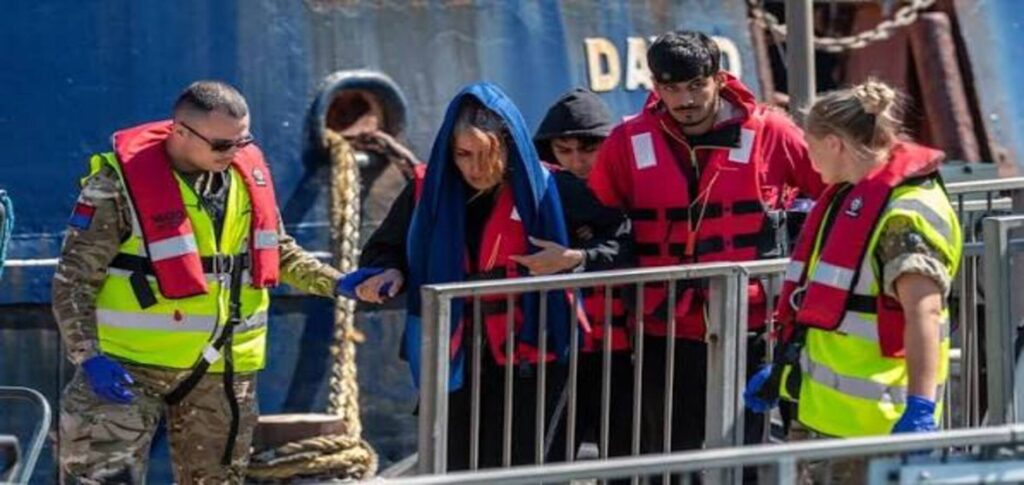
About 38,000 irregular arrivals were detected in the year to June.
Of those, approximately 33,000 arrived in small boats after crossing the English Channel from France.
More recent figures indicate that small boat arrivals have continued to remain below last year’s levels.
The government has made reducing Channel crossings a major immigration priority.
Government Targets Hotel Use
The sharp increase in hotel accommodation followed the rise in Channel crossings from 2019 and delays in processing asylum claims.
The number of people waiting for an initial decision eventually reached about 175,000 in June 2023.
The figure has since fallen dramatically.
By June 2026, around 40,000 asylum claimants were still waiting for an initial decision.
The Starmer government ordered officials to speed up decisions shortly after taking office in July 2024. It also set a target of ending the use of asylum hotels within five years.
Removals Increase
The latest figures also show an increase in removals from the UK.
Around 40,000 people who were found not to have a legal basis to remain were removed during the year to June 2026.
That figure includes foreign offenders, visa overstayers and failed asylum seekers.
Removals increased by 8% compared with the previous year.
Officials said about one-third of those removed were failed asylum seekers. They described that figure as the highest in 16 years and roughly twice the level recorded in 2021.
Home Office Accommodation Rises
While hotel use has declined, the number of people living in other accommodation paid for by the Home Office has increased.
Around 69,000 people were housed in properties across the country in June 2026.
That compares with approximately 65,000 at the end of 2024.
The accommodation forms part of long-term arrangements with private providers.
Work Visa Numbers Decline
The statistics also point to a broader reduction in legal migration.
The Home Office issued around 235,000 work visas in the year to June 2026.
That represents an 18% fall from the previous year and a 62% decline from the peak recorded in December 2023.
The government has progressively tightened several visa routes since the sharp rise in migration under earlier policies.
Health and Care Visas Drop Sharply
The number of people arriving through the specialist health and care worker route has fallen particularly sharply.
Applications under that route dropped by about 90% following successive changes to the rules.
The government has argued that tighter controls are necessary to reduce overall migration.
Foreign Student Numbers Also Fall
The UK recorded around 383,000 foreign students arriving during the year to June 2026.
That was 11% lower than the previous year and 41% below the peak reached in June 2023.
The figures reflect wider changes to immigration rules introduced in recent years.
Fewer Family Visas Granted
Only around 58,000 visas were granted to family members joining migrants already legally living in the UK during the year to June 2026.
That was 19% lower than the previous 12-month period.
Statisticians said the decline was largely linked to new rules restricting family migration.
The restrictions have also made it considerably harder for some refugee families to reunite in Britain.
Government Defends Migration Policies
Home Secretary Shabana Mahmood said the latest figures showed progress across several areas.
She pointed to the falling asylum backlog, reduced hotel use, increased removals and lower numbers of small boat arrivals.
However, she said the government would continue working to reduce irregular migration.
Opposition parties have taken a tougher stance.
Shadow Home Secretary Chris Philp argued that the government was simply moving illegal migrants from hotels into other forms of accommodation. Reform UK also said Britain was facing severe pressure from illegal migration.
Migration Debate Continues
The latest statistics show significant changes across both legal and irregular migration.
Hotel use has fallen substantially, while the asylum backlog has dropped from its 2023 peak. At the same time, work visas, student arrivals and family visas have also declined.
Nevertheless, political disagreement remains intense over how the government should manage migration.
For ministers, the figures provide evidence that tighter policies and faster asylum decisions are working. Critics, meanwhile, argue that some measures risk preventing vulnerable people and genuine refugees from rebuilding their lives in the UK.
With immigration statistics updated every three months, the next figures will offer a clearer picture of whether the downward trend continues.