
Diplomatic efforts over the Iran war are increasingly focusing on reopening the Strait of Hormuz, as Tehran considers conditions for restoring normal shipping through the vital waterway.
Qatar and Pakistan have stepped up their diplomatic efforts after the United States moved away from direct negotiations and adopted a stronger economic pressure campaign against Iran.
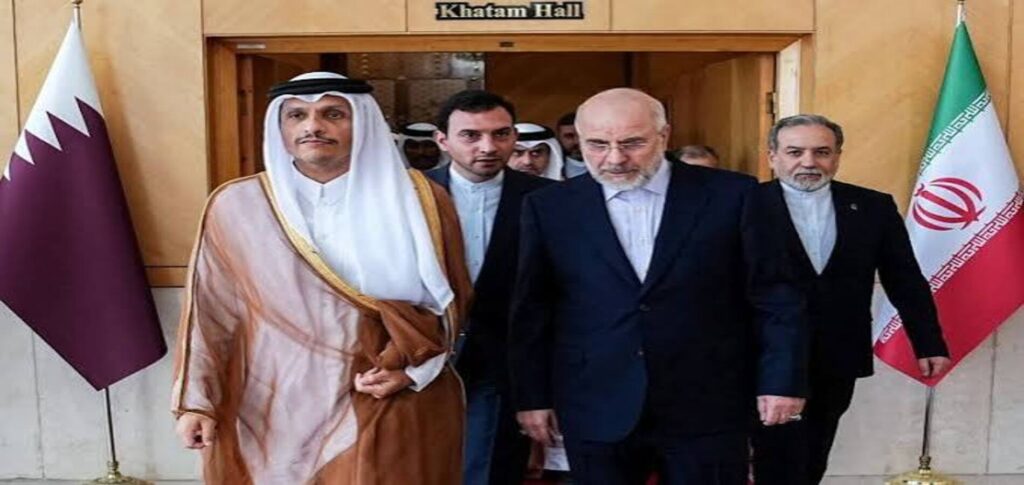
On Thursday, Qatari Prime Minister and Foreign Minister Sheikh Mohammed bin Abdulrahman Al Thani traveled to Tehran and met senior Iranian officials. During the visit, he stressed the importance of keeping the Strait of Hormuz open to international shipping.
The narrow waterway between Iran and Oman plays a crucial role in global energy markets. Before the war, roughly 20% of the world’s oil supply passed through the strait.
Iran Considers Conditions for Reopening Strait
Mohsen Rezaei, secretary of Iran’s Supreme National Security Council, said Tehran is preparing a list of conditions for reopening the Strait of Hormuz.
Rezaei said mediators had asked Iran to clearly outline what it wants before shipping can return to normal.
He also said Iran and Oman had agreed on a proposed shipping corridor through the strait. According to Rezaei, part of the route would pass through Omani waters while another section would run through Iranian waters.
Under the proposal, ships would use a designated central channel if the United States accepts Iran’s conditions.
However, it remains unclear whether Washington would accept Tehran’s demands.
Sanctions and Blockade Remain Key Issues
Iran has previously demanded an end to the U.S. blockade of its ports, compensation and the removal of sanctions.
Tehran has not yet indicated whether it plans to change those demands as part of the latest diplomatic effort.
Meanwhile, Iran and the United States have exchanged increasingly hostile statements in recent weeks. As a result, Qatar, Pakistan and other intermediaries have taken on a larger role in trying to keep negotiations alive.
Qatar has strong ties with Washington while also maintaining close relations with Tehran, giving it a potentially important role in the diplomatic process.
Earlier Strait Agreement Collapsed
Qatar and Pakistan helped broker a memorandum of understanding in June that established a ceasefire and created a framework for negotiations over shipping through the Strait of Hormuz.
However, the agreement quickly ran into difficulties.
Iran and the United States disagreed over Tehran’s authority to control shipping arrangements in the waterway. The dispute eventually undermined the agreement.
U.S. President Donald Trump later declared the memorandum “over” only three weeks after the parties signed it.
Since then, Iran has continued to call for a return to the June agreement.
Iran and Oman Discuss Shipping Corridor
Iran’s Revolutionary Guards said Wednesday that Iran and Oman had reached an agreement in principle on managing traffic through the strait and sharing related revenues.
However, a senior Iranian source later said the two countries were still negotiating the details.
That difference highlights the uncertainty surrounding any potential reopening arrangement.
For international shipping companies, the key question remains whether vessels can travel through the strait safely and consistently.
US Says Shipping Lanes Are Open
While Iran continues to discuss conditions for reopening the waterway, U.S. military officials say international shipping lanes are already open.
U.S. forces have cleared sea mines from the strait that the Islamic Revolutionary Guard Corps allegedly placed months ago.
Admiral Brad Cooper, commander of U.S. Central Command, said in a video message that international shipping lanes were open and that momentum was building.
Cooper said U.S. forces had helped around 1,500 commercial vessels carrying nearly 750 million barrels of crude oil pass through the strait in recent months.
However, shipping activity remains far below normal levels.
Most Ships Still Avoid the Strait
Although Trump has repeatedly said that the Strait of Hormuz remains open, many commercial vessels continue to avoid the route because of concerns about Iranian threats.
Ship-tracking services have estimated that traffic remains at only around 5% to 15% of normal levels.
That sharp decline has kept pressure on global energy markets and complicated efforts to restore regular commercial shipping.
The United Nations International Maritime Organization has reported 70 incidents in the Strait of Hormuz since the war began, resulting in the deaths of 19 seafarers.
Diplomacy Faces a Critical Test
The latest diplomatic push could provide a path toward restoring shipping through one of the world’s most important energy routes.
For Iran, the strait provides significant economic and strategic leverage. For the United States and its allies, keeping international navigation open remains a major priority.
The next stage of negotiations will therefore depend heavily on whether Tehran can present conditions that Washington and other countries consider acceptable.
Until the two sides reach an understanding, shipping companies are likely to remain cautious despite U.S. claims that the waterway is open.
For now, Qatar and Pakistan continue to work with regional partners in an effort to bridge the gap between Iran and the United States and prevent the Strait of Hormuz from becoming an even greater source of tension in the global economy.