

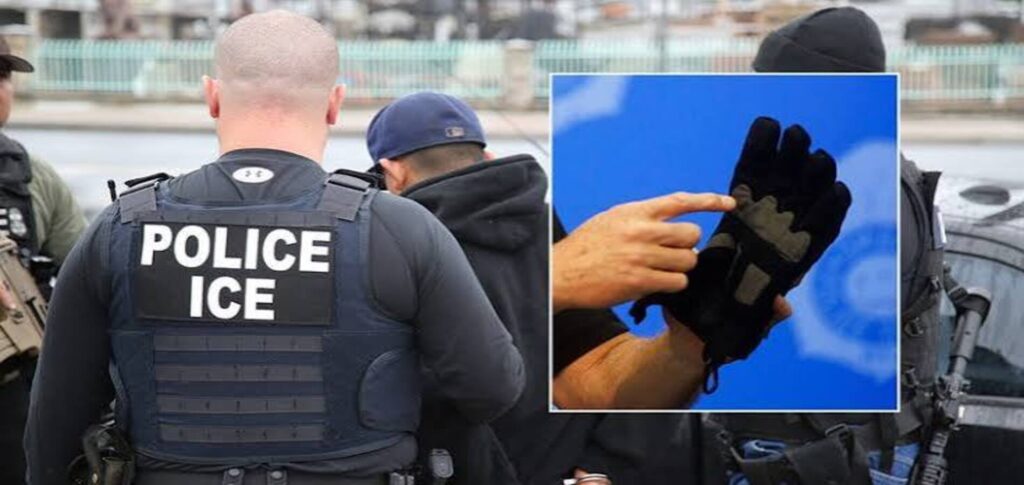
U.S. Immigration and Customs Enforcement plans to spend $16.7 million on 6,000 pairs of electric-shock gloves, saying the devices could help officers control resisting detainees and manage protests.
The immigration agency included the gloves in a six-month, no-bid contract with Kentucky-based Compliant Technologies, according to a federal procurement notice published Thursday.
The contract also covers related equipment, support and services.
ICE has described the gloves as “de-escalation devices” and says officers could use them in situations where they need to quickly control a person who is resisting.
ICE Says Gloves Could Reduce Use of Force
According to the procurement notice, officers could use the devices in what the agency calls “high-tension environments.”
Those situations include arrests, transporting combative detainees and responding to disturbances outside immigration detention facilities.
ICE says officers could deploy the gloves when a person actively or passively resists and officers need to gain control quickly.
The agency also says the devices could help officers prevent escapes, control aggressive detainees and bring a person’s hands into view during handcuffing.
In addition, ICE says officers could use the technology while managing crowds.
The agency argues that the gloves could provide an alternative to more serious forms of force, including firearms.
However, ICE says officers would have to follow existing policies and training requirements when using the devices.
Civil Rights Groups Raise Concerns
The planned purchase has already drawn strong criticism from civil rights organisations and Democratic lawmakers.
Critics argue that ICE’s existing record on the use of force raises questions about whether officers can safely and appropriately deploy a device designed to cause pain.
The American Civil Liberties Union warned that giving immigration officers a concealed way to deliver painful electric shocks could increase the risk of abuse.
The criticism comes as ICE faces heightened scrutiny over its enforcement operations under President Donald Trump’s immigration policies.
Lawmakers Demand More Oversight
A group of U.S. senators called on ICE’s acting director to cancel the purchase shortly before the agency published its procurement notice.
The lawmakers pointed to allegations of excessive force during immigration operations in several parts of the country.
They argued that the new technology could create additional risks, particularly during arrests and civil disturbances.
The senators also called for greater transparency.
They want ICE to explain how officers will receive training before using the gloves and how officials will record, review and investigate their use.
The lawmakers said independent oversight should also play a role in ensuring officers use the devices within clearly defined limits.
ICE Defends the Purchase
The Department of Homeland Security, which oversees ICE, rejected the criticism.
The agency argued that immigration officers need appropriate safety equipment to protect themselves while carrying out federal law-enforcement duties.
DHS also accused its political opponents of attempting to restrict the tools available to federal officers.
ICE maintains that the gloves could help officers control dangerous situations without resorting to more severe forms of force.
ICE Faces Growing Scrutiny
The planned purchase comes during an especially contentious period for ICE.
The agency has become one of the most visible parts of the Trump administration’s immigration enforcement campaign.
Its officers have faced protests and criticism over arrests, detention conditions and the use of force.
The procurement of electric-shock gloves is therefore likely to receive further scrutiny from lawmakers, civil rights organisations and immigration advocates.
For ICE, the central argument is that the devices could provide officers with another option when people resist arrest or become aggressive.
For critics, however, the concern is whether officers will use the technology responsibly and whether sufficient safeguards will prevent unnecessary or excessive force.
As the six-month contract moves forward, questions about training, accountability and oversight are likely to remain at the centre of the debate.