
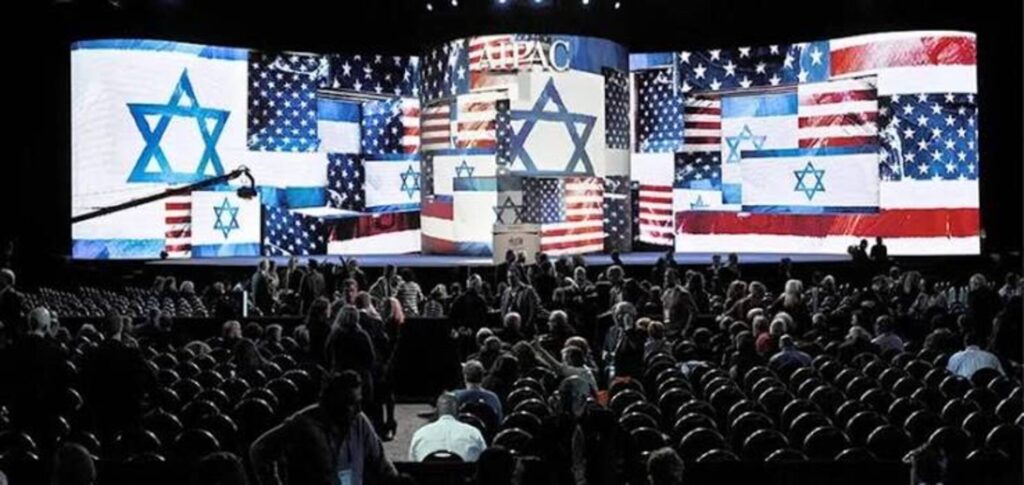
AIPAC spending has surged during the 2026 US midterm elections, making the powerful pro-Israel lobby the largest outside political spender while facing growing criticism from voters and candidates.
The American Israel Public Affairs Committee (AIPAC) has directed tens of millions of dollars toward congressional races through its main election vehicle, the United Democracy Project (UDP).
According to campaign finance monitor OpenSecrets, the super PAC has spent about $54 million on congressional contests this election cycle.
That figure makes UDP the largest outside spender in the 2026 midterms. Meanwhile, the wider pro-Israel donor network has spent around $71 million, ranking behind only the cryptocurrency industry among major outside political networks.
AIPAC Targets Key Democratic Primaries
AIPAC has focused much of its political spending on Democratic primary races.
The organization has supported candidates who strongly back Israel and has worked to defeat politicians who criticize US military assistance to the country.
AIPAC has rejected claims that its political influence is declining. The organization has pointed to the success of many candidates it supported in primary elections.
However, its spending has also produced several costly defeats.
Millions Spent in Michigan Race
Michigan has become one of the clearest examples of the resistance facing AIPAC-backed candidates.
AIPAC and allied groups reportedly spent about $30 million in an unsuccessful campaign against progressive former health official Abdul El-Sayed.
El-Sayed defeated establishment-backed Congresswoman Haley Stevens in the Democratic Senate primary.
Progressive candidates supported by AIPAC-linked spending have also won several other congressional contests in California, Illinois and New York.
In some of those races, candidates turned AIPAC’s political spending into a central campaign issue.
Critics Question Foreign Policy Influence
Eli Clifton of the Quincy Institute said UDP was the largest spender in Michigan despite most of its funding coming from outside the state.
He noted that 97% of UDP’s large contributions came from outside Michigan and argued that the group’s spending raises questions about foreign policy influence in US elections.
The debate has also moved beyond the Democratic Party.
Republican Senate candidate Mike Rogers’ allies reportedly asked AIPAC not to run advertisements supporting him publicly.
They feared that visible AIPAC involvement could help El-Sayed among Michigan’s large Arab-American population.
US Views on Israel Are Changing
The growing political resistance comes amid changing American attitudes toward Israel.
Years of war in Gaza and wider conflict across the Middle East have intensified debate over Washington’s relationship with the Israeli government.
A June Quinnipiac University poll found that 48% of American voters believed the United States was too supportive of Israel.
Among Democrats, the figure reached 66%, marking the highest overall result recorded by the survey in nine years.
AIPAC Faces Criticism From the Left
The shift has been particularly noticeable among progressive Democrats.
Some candidates increasingly portray AIPAC as closely aligned with Israeli Prime Minister Benjamin Netanyahu.
They also criticize the role of wealthy political donors in shaping US elections.
For these candidates, AIPAC’s spending has become an opportunity to highlight questions about campaign finance and American foreign policy.
Criticism Also Emerges on the Right
Criticism is no longer limited to the Democratic left.
Some populist and America First conservatives have also questioned Washington’s support for Israel.
They argue that US involvement in overseas conflicts can conflict with domestic priorities.
This growing criticism across ideological lines could make AIPAC’s political involvement a more difficult issue for candidates in competitive races.
Political Influence Remains Strong
Despite the backlash, AIPAC continues to wield significant political influence.
OpenSecrets reports that AIPAC itself has contributed about $30 million to UDP.
The broader pro-Israel political network has also maintained substantial financial resources.
US military assistance to Israel continues to receive significant congressional support, demonstrating that opposition to AIPAC does not necessarily translate into opposition to the US-Israel relationship.
Spending Does Not Guarantee Victory
The 2026 primary elections have nevertheless shown that enormous political spending cannot guarantee electoral success.
Candidates backed by AIPAC-linked groups have suffered several notable defeats.
At the same time, some politicians have become increasingly willing to distance themselves from the organization rather than risk allowing opponents to use its support against them.
That development marks a significant change from previous election cycles, when AIPAC backing was often viewed as an important political advantage.
As the midterm campaign continues, the debate over AIPAC spending is likely to remain closely tied to wider arguments about US policy toward Israel, campaign finance and the influence of outside political groups.