
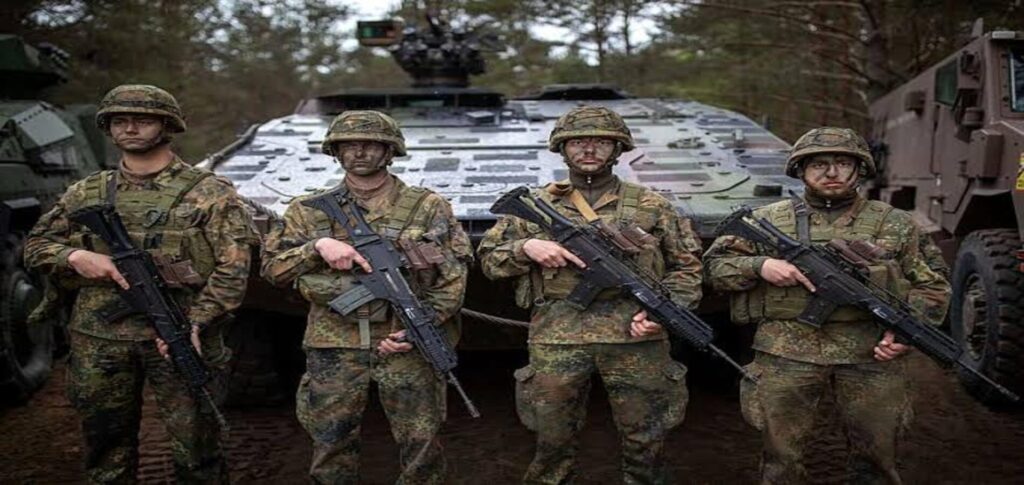
Germany is expanding its fleet of Schakal armoured vehicles as the Bundeswehr prepares for a changing security environment in Europe.
The new vehicles will play an important role in Germany’s Medium Forces. These units aim to combine rapid mobility with strong combat capabilities.
The Bundeswehr originally ordered 150 Schakal infantry fighting vehicles. It has now ordered another 35 vehicles.
The additional contract also covers logistics, training and operational support.
The move comes as Germany increases defence spending and modernises its military equipment.
The Bundeswehr is also buying new battle tanks, artillery systems and air-defence equipment. The goal is to address capability gaps that have developed over several decades.
Why NATO’s Eastern Flank Matters
Europe’s security situation has changed significantly in recent years.
Germany now faces growing pressure to ensure its forces can move quickly during a crisis.
That requirement is especially important for NATO’s eastern flank.
Germany has a major role in supporting the alliance’s eastern members. Its forces may need to travel long distances before reaching a potential area of operations.
The Medium Forces are designed for that task.
They aim to bridge the gap between light mobile troops and heavily armoured formations.
The Schakal serves as the main combat vehicle for these units. The Bundeswehr describes it as the backbone of the Medium Forces.
Schakal Combines Mobility and Firepower
The Schakal uses the chassis of the GTK Boxer. The eight-wheeled platform gives the vehicle strong road mobility.
That makes it different from heavy tracked vehicles.
A heavy tank or infantry fighting vehicle can provide excellent protection and firepower. However, moving such vehicles over long distances can require significant transport resources.
The Schakal offers a different approach.
It can travel long distances on roads without relying as heavily on military transport vehicles.
The Bundeswehr wants its Medium Forces to move between different operational areas quickly.
The Schakal is designed to support that goal.
Between Heavy and Light Vehicles
The German army operates several types of armoured vehicles.
The Puma infantry fighting vehicle represents the heavier end of the spectrum. It offers high protection and substantial combat power.
However, its tracked design makes long-distance redeployment more demanding.
The Dingo represents a lighter option.
It provides good mobility and protection but does not offer the same level of firepower as an infantry fighting vehicle.
The Schakal sits between these categories.
It combines the mobility of a wheeled platform with the firepower needed for combat operations.
Powerful Weapon System
The Schakal is based on the Boxer platform and carries an unmanned RCT-30 turret.
The turret comes from technology developed for the Puma infantry fighting vehicle.
Its main weapon is a 30mm automatic cannon.
The cannon can engage lightly and moderately armoured targets.
The vehicle also has capabilities against drones and aircraft.
In addition, the Schakal carries the MELLS guided missile system.
The missile system allows troops to engage heavily armoured targets at longer ranges.
This combination gives the vehicle a broad range of battlefield capabilities.
New Vehicles Need New Training
Buying the Schakal fleet is only the first stage of the programme.
The Bundeswehr must also prepare soldiers to operate the vehicles.
Crews will need extensive training before the new formations can become fully operational.
Germany must also build the necessary logistics system.
That includes spare parts, ammunition and maintenance support.
Military units will need time to establish new procedures and integrate the vehicles into larger formations.
The first Schakals are scheduled for delivery from the end of 2027.
The entire fleet will take longer to enter service.
Germany Builds a More Mobile Force
The expansion of the Schakal fleet reflects Germany’s broader military modernisation programme.
Berlin wants the Bundeswehr to become more capable of responding to a conventional conflict in Europe.
That requires more than heavy tanks and artillery.
German forces also need vehicles that can move quickly across long distances.
The Schakal is designed to fill that role.
Its combination of protection, firepower and road mobility could make it a central part of Germany’s future Medium Forces.
The programme will take years to complete.
However, the growing Schakal fleet shows how Germany is reshaping its army to meet NATO’s demands on the eastern flank.