

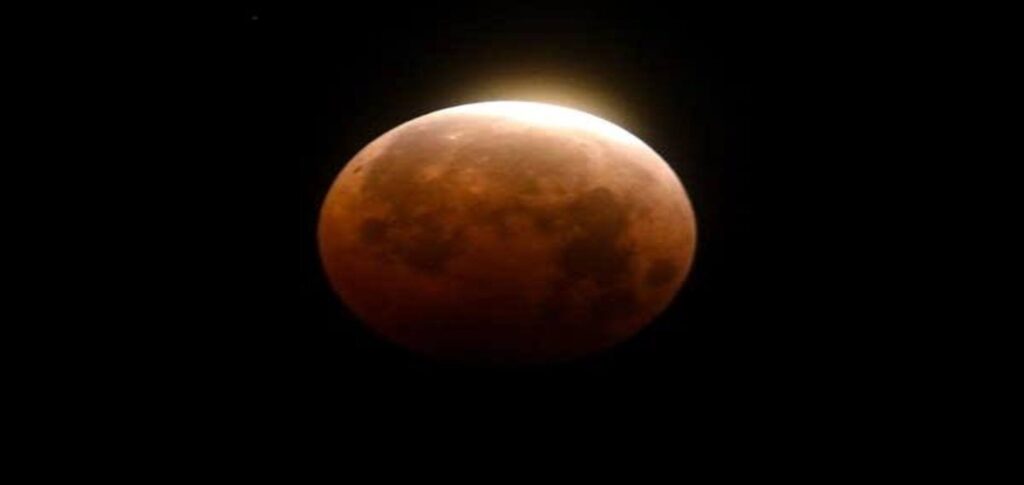
Americas Prepare for a Spectacular Lunar Show
A near-total lunar eclipse is set to give millions of people across the Americas a spectacular view of the night sky.
The event will take place Thursday night into Friday. Earth’s shadow will cover about 96% of the Moon’s surface, making it one of the deepest partial lunar eclipses in recent years.
Unlike a total solar eclipse, this event will unfold at a slower pace. The partial phase will last for more than three hours. The complete eclipse, including the period when the Moon passes through the faint outer edge of Earth’s shadow, will last around five and a half hours.
The eclipse will reach its peak shortly after midnight Eastern Daylight Time.
Billions Could Watch the Eclipse
People across North and South America will have some of the best views of the event. Nearly one billion people in the United States, Canada and Central and South America could watch the entire eclipse if weather conditions cooperate.
More than three billion people, or about 44% of the world’s population, will have an opportunity to see at least part of the event.
Viewers in Europe, Africa and the Middle East will see the Moon set before the eclipse finishes. Hawaii will get a different experience, with the Moon rising during the event.
Parts of northwestern Canada and the United States will also see the eclipse begin before the Moon rises fully.
Why Does a Lunar Eclipse Happen?
A lunar eclipse occurs when Earth moves between the Sun and the Moon. Earth then blocks some of the sunlight that normally reaches the lunar surface.
During a partial eclipse, the three bodies do not line up perfectly. As a result, Earth’s shadow covers most, but not all, of the Moon.
This eclipse will cover such a large portion of the lunar surface that it may appear almost completely dark. However, it will not qualify as a total lunar eclipse.
The event comes only two weeks after a total solar eclipse crossed Greenland, Iceland and Spain.
Solar and lunar eclipses often occur in pairs because the Sun, Earth and Moon reach the necessary alignment within a short period.
The Moon Remains in the Spotlight
The lunar event arrives during a period of renewed interest in the Moon and human space exploration.
NASA’s Artemis II mission carried astronauts on a record-setting lunar flyby in April. The mission forms part of a wider programme aimed at returning humans to the lunar surface and eventually establishing a sustained presence there.
Astronauts in space may also have an opportunity to observe the eclipse. People aboard the International Space Station and China’s orbiting space station could see the event from above Earth.
The upcoming near-total lunar eclipse is the second lunar eclipse of the year and the fourth eclipse overall.
A total lunar eclipse appeared over parts of the Americas, Australia and eastern Asia in March.
When Is the Next Total Lunar Eclipse?
Skywatchers will have to wait several years for another complete lunar blackout.
The next total lunar eclipse will occur on New Year’s Eve in 2028, with Asia and Australia expected to have the best views.
Observers across North and South America will have to wait until 2029 for another opportunity to see a total lunar eclipse.
For now, the upcoming near-total lunar eclipse offers a rare chance for millions across the Americas to watch Earth’s shadow slowly sweep across the Moon.