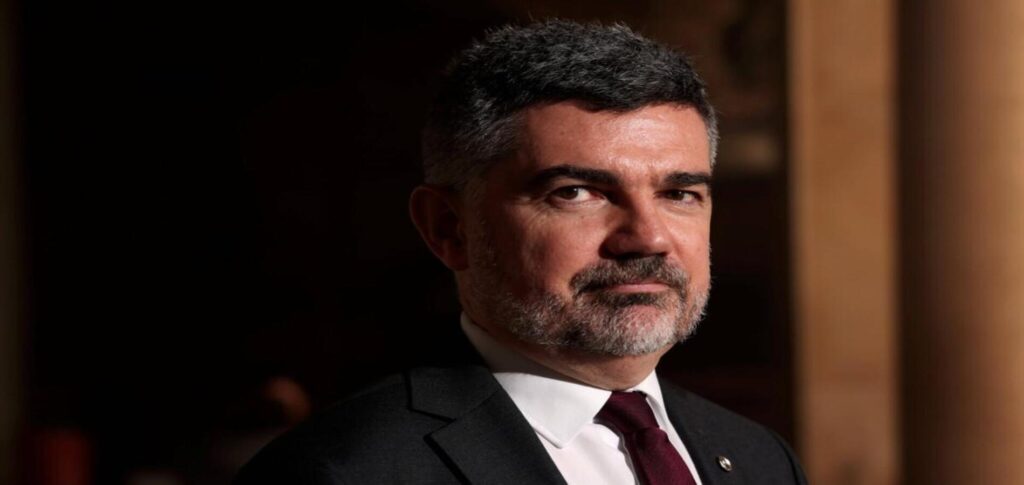
French International Criminal Court (ICC) Judge Nicolas Guillou has spoken about the personal impact of US sanctions imposed after he helped approve an arrest warrant for Israeli Prime Minister Benjamin Netanyahu.
Guillou said the restrictions have disrupted ordinary aspects of his life, including banking, travel and access to international online services. However, he stressed that the sanctions have not changed his commitment to international justice.
US Sanctions Disrupt Judge’s Daily Life
Speaking to Deutsche Welle, Guillou said the sanctions have created practical difficulties in his everyday activities.
He said he can no longer use some major bank cards or make certain online travel bookings because US companies are prohibited from providing services to sanctioned individuals.
According to Guillou, some hotel and travel reservations have also been cancelled after companies identified his name on sanctions lists.
ICC Judge Criticises Sanctions
Guillou questioned the decision to place ICC judges under sanctions alongside individuals accused of terrorism and serious organised crime.
He argued that targeting judges for carrying out their judicial duties raises concerns about the independence of international courts.
The sanctions also include a travel ban to the United States and the freezing of assets under US jurisdiction.
Arrest Warrants Triggered Political Dispute
The sanctions followed the ICC’s decision in November 2024 to issue arrest warrants for Netanyahu, former Israeli Defence Minister Yoav Gallant and a Hamas commander.
The court said there were reasonable grounds to believe the individuals could bear criminal responsibility for alleged war crimes and crimes against humanity connected to the Gaza conflict.
The decision triggered strong opposition from Israel and the United States, which rejected the ICC’s jurisdiction over Israeli nationals.
US Rejects ICC Jurisdiction
The administration of President Donald Trump has strongly criticised the ICC and argued that the court does not have jurisdiction over Israel.
Washington has also expressed concern that ICC actions could eventually expose US military personnel to similar proceedings.
The dispute has further strained relations between Washington and the Hague-based court.
Guillou Vows to Continue His Work
Despite the restrictions, Guillou said he remains committed to the principles of international justice.
He acknowledged that serving as an ICC judge can involve significant political pressure but argued that independent courts must be able to operate without intimidation.
Guillou also said his life before the digital era helped him adapt to the restrictions. He noted that he managed without smartphones, online banking and many internet-based services during the 1990s.
Sanctions Highlight Wider ICC Tensions
The judge’s comments highlight the growing political confrontation surrounding the ICC.
As the court investigates alleged international crimes involving powerful governments and armed groups, its judges and officials increasingly face political opposition and sanctions.
Guillou’s position is that such pressure will not change the court’s responsibility to apply international law, underscoring the continuing debate over judicial independence, state sovereignty and accountability for alleged war crimes.