Iran has accused the United States of escalating tensions in the Strait of Hormuz by attempting to establish alternative shipping routes without consulting Tehran, despite an interim understanding between the two countries.
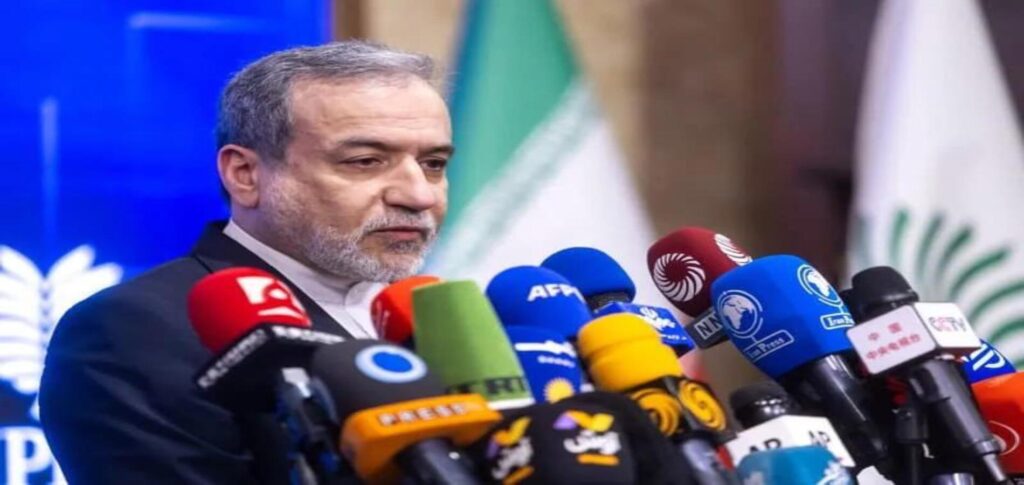
Iranian Foreign Minister Abbas Araghchi said the arrangement reached between Tehran and Washington gives Iran a role in overseeing transit procedures and coordinating navigation through the strategically important waterway.
Iran Says US Violated Understanding
Araghchi argued that Washington should have consulted Iranian authorities before introducing alternative maritime routes through the Strait of Hormuz.
According to the Iranian foreign minister, both sides had agreed to maintain communication channels to resolve disagreements and prevent further escalation. Tehran now says recent US actions have undermined that understanding.
Iran maintains that the existing memorandum gives its authorities a central role in managing shipping procedures through the strategic waterway.
First Quiet Night in Weeks
Despite the political dispute, Iranian officials reported that no new US strikes occurred overnight into Saturday. They described the pause as the first such period of calm after nearly two weeks of military exchanges.
Iranian health officials said the relatively quiet night raised hopes that the confrontation could be moving toward a reduction in hostilities.
However, the absence of overnight attacks does not necessarily indicate that a lasting ceasefire has been reached.
Diplomatic Contacts Continue
US President Donald Trump has also indicated that Washington remains open to negotiations with Tehran.
Trump said Iranian officials continue communicating with the United States through intermediaries and suggested he would consider proposals if they could produce meaningful progress.
Iranian officials confirmed that proposals have been exchanged through mediators, although substantial differences remain unresolved.
The continued diplomatic contacts could provide an opportunity to prevent further military escalation.
Strait of Hormuz Remains a Major Flashpoint
The Strait of Hormuz remains one of the world’s most important maritime chokepoints, carrying a significant share of global energy shipments.
Iran insists that vessels should coordinate their movements with Iranian authorities and follow designated transit routes. The United States, meanwhile, rejects Tehran’s broader interpretation and maintains that international navigation should remain unrestricted.
The dispute over maritime access has therefore become a major obstacle in efforts to stabilise relations between Washington and Tehran.
Regional Security Concerns Persist
The wider regional conflict continues to create security risks across the Middle East.
Military tensions have affected shipping routes around both the Strait of Hormuz and the Red Sea, raising concerns among governments, shipping companies and energy markets.
For now, diplomatic efforts remain the main avenue for preventing further escalation. However, deep mistrust between Iran and the United States and their unresolved disagreement over maritime access mean the situation remains highly fragile.