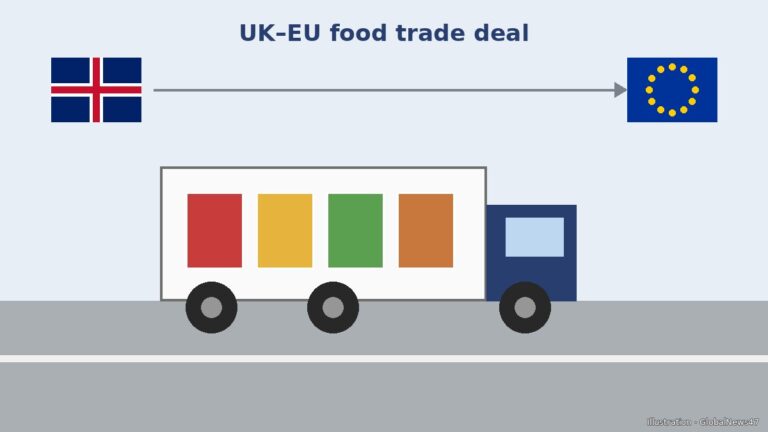

The UK and the European Union have settled the text of a UK-EU food deal. It will remove most post-Brexit checks on food, plant and animal products. Officials circulated the 200-page agreement, known as an SPS deal, to EU governments this week. However, it is not expected to take effect until early 2028. This report is as of Tuesday, November 3.
What the UK-EU food deal changes
SPS stands for sanitary and phytosanitary rules. In simple terms, these are the health standards for food, animals and plants that cross borders. Since Brexit, British exporters have needed costly certificates and inspections to sell such goods into the EU.
According to the BBC, the deal would:
- allow exports of fresh sausages, burgers, shellfish from British waters and seed potatoes to resume;
- remove the need for £200 Export Health Certificates and £25 plant health certificates;
- cut inspection fees, organic certificates and some port charges;
- bring back pet passports for British animals travelling to the EU.
The Guardian has seen a draft joint statement. It says the “vast majority” of movements of animals, plants and related products would no longer need the current certificates or controls. In addition, UK goods would be exempt from the EU’s carbon border tax.
The price: following EU rules
In return, Britain will adopt EU food and farming standards as they change over time. Officials call this “dynamic alignment”. The government has already announced a European Partnerships Bill to provide the legal mechanism for this.
This is the most controversial part of the deal. Conservative leader Kemi Badenoch said dynamic alignment would be a red line and would “take us backwards”. Reform UK’s Richard Tice warned it would force Britain to “surrender sovereignty”. On the other side, Liberal Democrat Al Pinkerton called the deal “a patch, not a fix” and urged a return to the single market.
Business groups welcome the move
Meanwhile, many exporters say the change is overdue. The government estimates the deal could eventually bring £5.1bn a year in economic benefits. Last month, the National Farmers’ Union said British food exports to the EU had fallen by a third since Brexit.
William Bain of the British Chambers of Commerce spoke to the BBC. He said business saw common rules as a price “worth paying” for lower costs and fewer delays. Likewise, Jon Walsh, co-founder of the food firm Bio&Me, said his company had stopped exporting yoghurt because each pallet needed a £140 vet inspection.
Why it will take until 2028
Negotiators had largely agreed the outline earlier, and ministers hoped to apply it next year. However, the change of UK prime minister in July delayed the second UK-EU summit by about six months, The Guardian reports.
As a result, the Department for Environment, Food and Rural Affairs has told industry the deal may not start until the first quarter of 2028. Moreover, officials plan a further six-month transition for some products, such as grain treated with fungicides not yet approved in the EU.
Part of a wider Brexit reset
The food deal is one of several agreements due at a UK-EU summit on November 20. Officials have also shared draft texts on linking carbon trading schemes and on a youth travel and work scheme. EU ambassadors are due to discuss them in Brussels on Wednesday.
According to The Guardian, the draft statement also covers the UK rejoining the EU’s single electricity market. That would involve a UK financial contribution to the EU. Separately, talks on tuition fees for EU students remain unresolved.
Prime Minister Andy Burnham has taken a warmer approach to Europe than his predecessor, Sir Keir Starmer. Nevertheless, Burnham told ITV that he had not proposed a return to free movement. He also said he remained bound by Labour’s manifesto red lines for this parliament. “The public need to be the boss” on Brexit, he added.
What it means for Northern Ireland
The deal has special importance for Northern Ireland, which stayed in the EU single market for goods after Brexit. Currently, food from Great Britain faces paperwork and some checks at Northern Irish ports. Under the deal, most of those requirements would end. Shops would also no longer need “not for EU” labels.
Even so, unionists are divided. DUP leader Gavin Robinson said the deal showed a “lack of ambition”, while the Ulster Unionist Party gave it a cautious welcome.
The next step is the November 20 summit, where leaders aim to sign off the package.
Related on Global News 47: UK-EU Ties: Burnham Meets Macron in London · Burnham Warns EU Industry Rules Could Hurt UK