
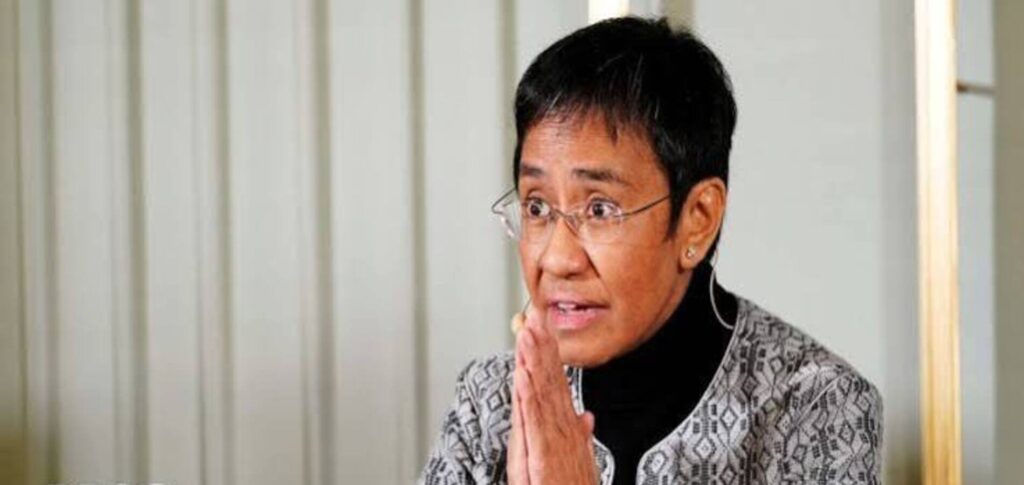
Nobel Peace Prize laureate Maria Ressa has urged governments to move quickly on AI regulation, warning that uncontrolled artificial intelligence could eventually threaten humanity’s ability to make independent decisions.
Ressa, a Filipino-American journalist and co-founder of news organisation Rappler, said citizens should put pressure on political leaders to introduce stronger rules for artificial intelligence. She argued that regulation should be viewed as a public safety issue rather than simply a debate over freedom of speech.
Speaking during a visit to Oslo, Ressa said society could reach a point where the effects of increasingly powerful AI systems become difficult to reverse. She was in the Norwegian capital to address concerns about threats facing democracies.
Ressa Describes Three Waves of AI
Ressa said the public has already experienced several major stages in the development of artificial intelligence and related technologies.
She described the first stage as the rise of social media platforms. In her view, these services have competed for users’ attention while contributing to political polarisation and social isolation.
The second stage, she said, involves AI systems that interact with people through intimacy and emotional engagement. Chatbots can create highly personalised experiences, raising questions about how technology affects human behaviour.
Ressa identified the current frontier as “agentic” and multi-agent AI. These systems are designed to perform tasks and take actions on behalf of users rather than simply respond to prompts.
She warned that this shift could have a deeper effect on human agency because AI systems may increasingly make decisions or carry out actions for people.
Debate Over AI Regulation Intensifies
The call for stronger regulation comes as governments and technology companies continue to debate how quickly AI should develop.
Some critics of regulation, including US President Donald Trump, have argued that excessive restrictions could weaken America’s position in the global AI race, particularly against China.
Ressa rejected that argument. She pointed to China’s tighter controls on some technology platforms and said stronger safeguards do not necessarily prevent technological development.
For Ressa, accountability should be one of the first steps. She argued that technology companies should face greater responsibility when their products cause harm.
She also welcomed legal action against major technology companies. In particular, she cited US lawsuits involving Meta and restrictions concerning teenagers’ use of Facebook and Instagram.
Ressa Calls for Safer Digital Platforms
Ressa also criticised the focus on protecting young people while overlooking the impact of addictive digital features on adults.
She said governments should consider removing features that encourage addictive use rather than relying only on age restrictions. In her view, political manipulation through digital platforms affects people across generations.
The Nobel laureate also supports the development of communication platforms outside the control of major technology companies. She compared the idea to public spaces such as parks, which are designed to serve communities rather than private interests.
Rappler launched Rappler Communities in 2023 using the open-source and decentralised Matrix protocol. The platform was designed to help journalists and readers communicate directly in a safer digital environment.
Ressa said the model could eventually expand beyond the Philippines. Rappler has invited other Filipino media organisations to participate and is working to extend the approach to other outlets in Southeast Asia.
She believes such platforms could give people more opportunities to have meaningful conversations, listen to different viewpoints and participate in democratic life without being driven primarily by algorithms designed to maximise engagement.