

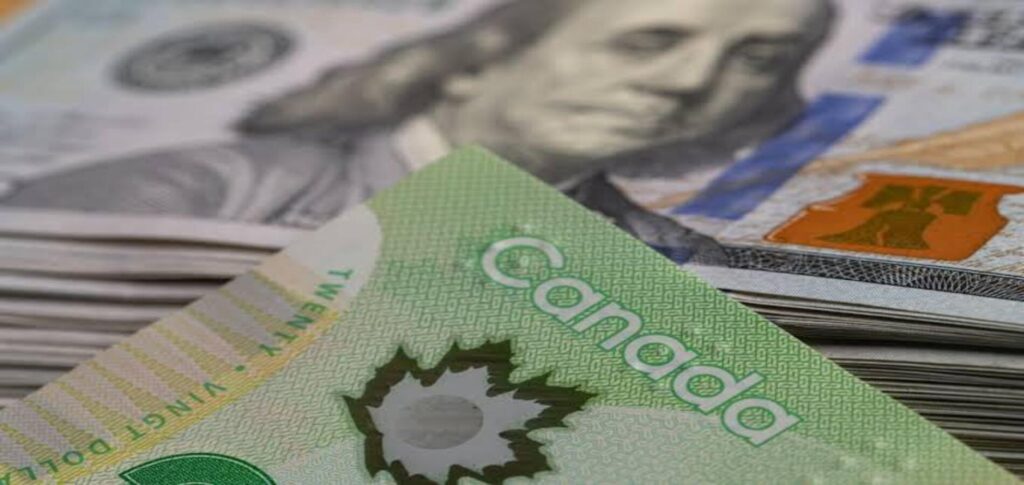
The Canadian dollar fell to a 12-day low against the U.S. dollar on Monday. The decline came as Canadian inflation data matched expectations and the U.S. dollar strengthened ahead of this week’s Federal Reserve interest rate decision.
The loonie was trading 0.3% lower at C$1.3915 per U.S. dollar, equivalent to 71.86 U.S. cents. Earlier, it reached C$1.3929, its weakest intraday level since September 2.
Marc Chandler, chief market strategist at Bannockburn Global Forex LLC, said the stronger U.S. dollar was the main factor behind the Canadian currency’s decline. He also pointed to changing expectations about the Federal Reserve’s policy.
Stronger US Dollar Weighs on Loonie
The U.S. dollar gained against major currencies as investors moved toward safe-haven assets. Rising oil prices linked to the conflict in the Middle East also influenced market sentiment.
At the same time, traders were increasing their expectations that the Federal Reserve could raise interest rates on Wednesday. Such a move would be the first U.S. rate increase in more than two years, according to the source material.
The Canadian dollar also faced pressure from ongoing trade tensions between Canada and the United States. Chandler said investors remained doubtful that a new trade agreement could be reached soon.
Those concerns followed comments from U.S. President Donald Trump on Saturday suggesting that progress on a deal could come soon.
Canadian Inflation Remains Above Target
Canada’s consumer price index increased 3% year over year in August. The figure matched both July’s reading and economists’ expectations.
However, inflation remains well above the Bank of Canada’s 2% target. As a result, markets continue to watch the central bank closely for clues about future interest-rate decisions.
Bank of Canada Governor Tiff Macklem has previously indicated that policymakers could raise borrowing costs more than once if inflation stays too high.
The latest inflation figures therefore provide little reason for an immediate change in that concern. At the same time, the Canadian economy continues to face pressure from trade uncertainty and weaker external demand.
Canadian Bond Yields Rise
Canadian government bond yields also moved higher on Monday. The increase occurred across a flatter yield curve.
The two-year Canadian government bond yield climbed 2.7 basis points to 3.384%. Earlier in the session, it reached 3.437%, its highest level since August 2024.
Meanwhile, Prime Minister Mark Carney is preparing to welcome dozens of global investors to Toronto this week. The government hopes to attract investment into more than 160 projects that it considers important for Canada’s economic growth.
The investment drive comes as Canada continues to deal with trade tensions involving the United States.
For currency markets, however, attention remains focused on the Federal Reserve and the direction of U.S. interest rates. Meanwhile, investors will continue watching Canadian inflation and Bank of Canada policy for signs of where the loonie could head next.