

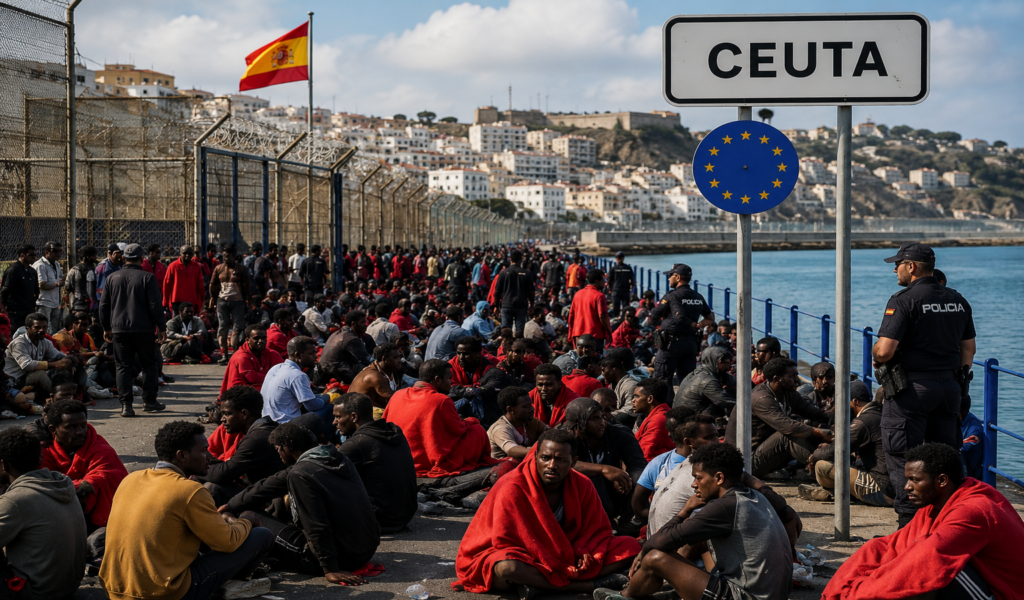
The European Union is considering additional financial support for Spain as authorities respond to the Ceuta migrant surge, which saw around 72,000 people cross into the Spanish enclave from Morocco within just a few days.
The European Commission confirmed on Thursday that discussions with the Spanish government are progressing quickly. The proposed funding would help strengthen border management and provide humanitarian assistance to migrants who remain in Ceuta.
European Commission Reviews Spain’s Needs Assessment
European Commission spokesperson Guillaume Mercier said Brussels received Spain’s initial assessment of its financial needs on Wednesday.
Officials held technical discussions earlier this week. The Commission is now reviewing the information before Spain submits a formal funding request.
Mercier said the process is moving at “full speed.”
He added that the Commission recognizes the need for additional support because of the current situation in Ceuta.
Funding Could Support Border Security and Humanitarian Aid
If approved, the financial package could help Spain improve border management and expand emergency humanitarian services.
The funding may cover:
- Temporary shelters
- Food supplies
- Medical treatment
- Emergency response teams
- Humanitarian assistance
- Border management equipment
Spain has not yet finalized its application. Officials have also not disclosed how much funding they plan to request.
Thousands Still Remain in Ceuta
Spanish authorities said around 70,000 migrants have already returned to Morocco following last week’s mass crossing.
However, approximately 5,000 people remain in Ceuta.
According to Ceuta President Juan Vivas, the group includes around 860 unaccompanied children.
The migrant surge also turned deadly. Officials reported at least 88 deaths during the crisis.
Aid Groups Struggle to Meet Growing Needs
Local humanitarian organizations continue to support thousands of migrants.
The non-governmental organization Luna Blanca has distributed more than 12,000 meals over the past several days.
Luna Blanca President Mustafa Abdelcader said local institutions were not prepared for a crisis of this scale.
“We’re talking about an influx of some 60,000 or 70,000 people,” he said.
He added that the number of arrivals was nearly equal to Ceuta’s population.
A social worker with the organization said many children arrived suffering from hunger and heatstroke.
EU Already Approved Emergency Funding
EU Commissioner for Internal Affairs and Migration Magnus Brunner addressed the crisis after an extraordinary meeting on Tuesday.
He confirmed that the European Union already has emergency funding available for Spain under its long-term budget.
According to Brunner, Spain has received an additional €114 million through emergency assistance.
He said approximately €28 million will help strengthen reception centers, asylum systems and return procedures in Ceuta.
EU Reaffirms Support for Spain
Following the emergency meeting, Brunner reaffirmed the European Union’s support for Spain.
He said the bloc stood “shoulder-to-shoulder” with the Spanish government throughout the crisis.
Brunner also described the situation as a major test of the European Union’s ability to respond to migration emergencies.
According to him, Europe demonstrated unity and resilience during one of the largest migration challenges in recent years.