
Iran threatens Gulf states with retaliation if the United States launches another round of military strikes, according to regional officials familiar with recent diplomatic discussions.
Tehran has reportedly warned that energy facilities and US-linked military assets across the Gulf could become targets if Washington attacks Iranian infrastructure.
The warning comes as diplomatic efforts intensify to prevent a wider confrontation between Iran and the United States.
Iran Threatens Gulf States During Regional Diplomacy
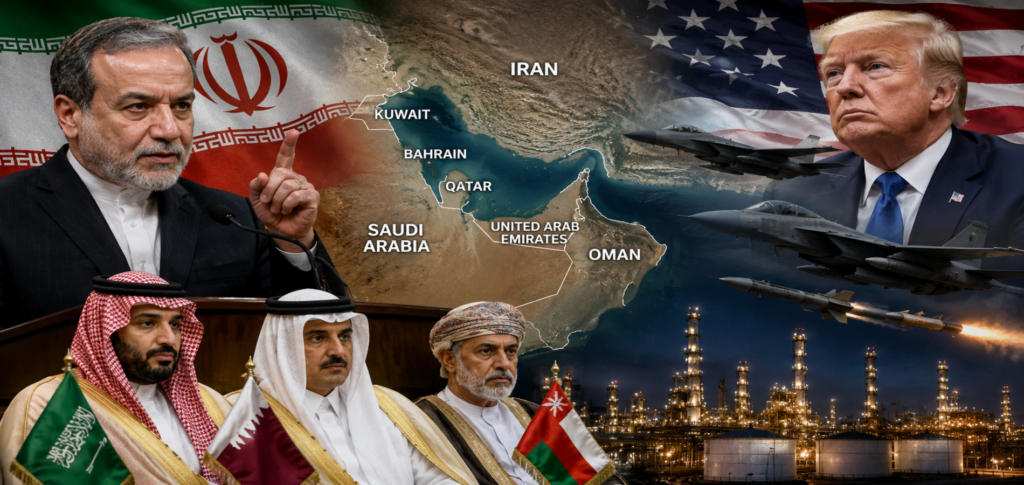
Iranian Foreign Minister Abbas Araqchi reportedly contacted senior officials in Saudi Arabia, Qatar, Türkiye and Pakistan after US President Donald Trump renewed threats of military action against Iran.
According to regional sources, Araqchi urged Gulf leaders to use their influence to persuade Washington to avoid further escalation.
Officials said Tehran warned that any attack on Iranian energy infrastructure could trigger retaliation against American military facilities and critical energy sites across the Gulf.
A senior regional diplomat described Iran’s message as direct while emphasizing that Tehran still preferred diplomacy.
Iran Warns Over Gulf Energy Infrastructure
Regional officials said Iran specifically highlighted oil facilities, export terminals and US military installations as potential targets if hostilities resume.
The warning has raised concerns because Gulf countries host some of the world’s most important energy infrastructure.
Any attack on major oil facilities or export terminals could disrupt global supplies and trigger significant volatility in international energy markets.
Gulf Leaders Push for Diplomacy
Saudi Arabia, Qatar and Oman have intensified diplomatic efforts aimed at reducing tensions between Washington and Tehran.
Sources said Saudi Crown Prince Mohammed bin Salman urged President Donald Trump to return to negotiations rather than approve additional military strikes.
Regional officials believe renewed diplomacy offers the best opportunity to protect Gulf security and prevent the conflict from spreading.
Saudi Arabia has also reportedly made clear that it would defend its territory if it came under attack.
Strait of Hormuz Remains Critical
The Strait of Hormuz remains central to the growing dispute.
The narrow waterway connects the Persian Gulf with the Gulf of Oman and serves as a major route for international oil and gas shipments.
Any military confrontation around the strait could disrupt commercial shipping, increase insurance costs and push energy prices higher.
A prolonged closure or severe disruption could also affect global supply chains and place additional pressure on economies that depend heavily on Gulf energy exports.
Iran Seeks Regional Cooperation
Tehran has strengthened relations with several Gulf countries in recent years, including Saudi Arabia.
Iranian officials appear to view these improved diplomatic ties as an important channel for preventing another direct military confrontation.
At the same time, Washington and Tehran continue to exchange warnings while leaving the possibility of negotiations open.
The latest developments show how quickly tensions could spread beyond Iran and the United States. For Gulf governments, the immediate priority remains protecting their territory and critical infrastructure while encouraging both sides to return to diplomacy.
If negotiations fail and military strikes resume, the consequences could extend far beyond the region, affecting energy markets, shipping routes and global economic stability.