
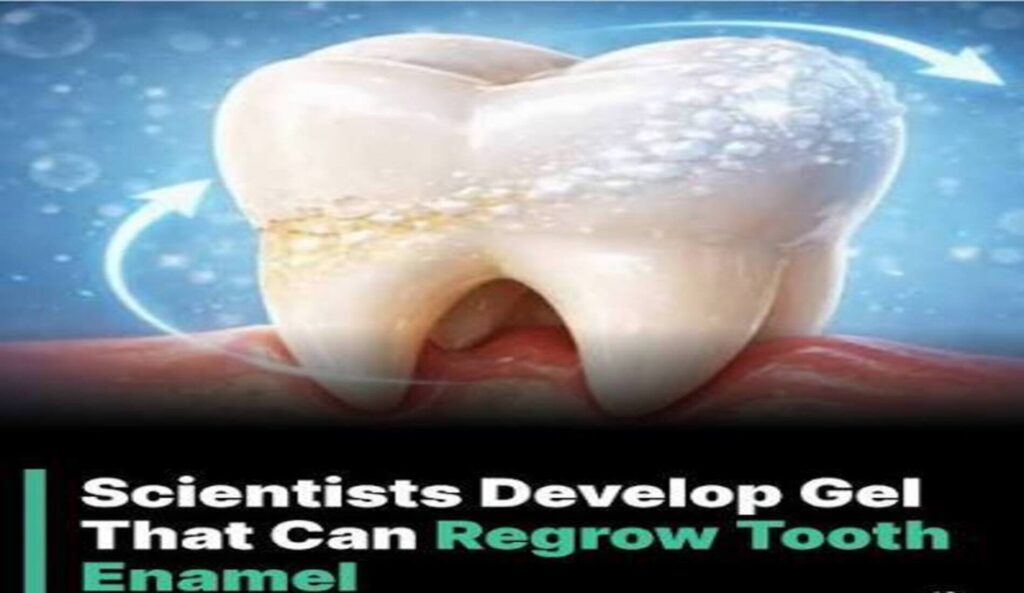
Scientists at the University of Nottingham have developed a new protein-based gel that could help repair and regenerate damaged tooth enamel.
The material is inspired by the natural proteins that guide enamel growth during early life. Unlike traditional fluoride treatments, the new gel does not contain fluoride. Researchers say it could offer a new approach to repairing enamel that has been worn away or damaged.
New Gel Mimics Natural Enamel Growth
The research team included scientists from the University of Nottingham’s School of Pharmacy and Department of Chemical and Environmental Engineering. They also worked with international researchers on the project.
Their findings were published in Nature Communications.
The gel is designed for simple application. Dentists could apply it to damaged teeth in a way similar to existing dental treatments. Once applied, it forms a thin layer over the tooth surface.
More importantly, the layer acts as a framework for rebuilding minerals. It draws calcium and phosphate from saliva and guides them into a controlled growth process called epitaxial mineralization.
As a result, newly formed minerals can connect with the existing tooth structure. This process helps restore the strength and organization of natural enamel.
Could Help Treat Tooth Sensitivity
The material may have another important use. Researchers found that it can also work on exposed dentine.
Dentine is the layer beneath tooth enamel. When it becomes exposed, people can experience sharp pain from hot, cold, sweet or acidic foods.
The new gel could create a protective layer over exposed dentine. Therefore, it may help reduce severe tooth sensitivity. It could also provide a better surface for future dental repairs.
Why Enamel Repair Matters
Enamel is the hard outer layer that protects teeth. However, it cannot naturally regenerate after significant damage.
Enamel loss is closely linked to tooth decay and affects a large share of the global population. In serious cases, continued damage can contribute to infections and tooth loss.
Current treatments, including fluoride varnishes and remineralization products, can help protect teeth. However, they generally cannot fully replace enamel that has already been lost.
The new approach aims to address that limitation by rebuilding enamel rather than simply protecting the remaining surface.
Tests Show Promising Results
The researchers tested the regenerated enamel under conditions designed to mimic everyday life.
The tests included brushing, chewing and exposure to acidic foods. According to the research team, the newly grown enamel showed properties similar to natural enamel under these conditions.
Dr. Abshar Hasan, a postdoctoral fellow and lead author, said the material allows crystals to grow together in an organized way. This helps rebuild the structure of healthy enamel.
The team believes the technology could eventually provide a practical option for dentists and patients. However, further development and testing will be important before the treatment becomes widely available.
For now, the research offers a promising new direction in restorative dentistry. Instead of only protecting damaged enamel, scientists are working toward treatments that could help the tooth rebuild its lost structure.