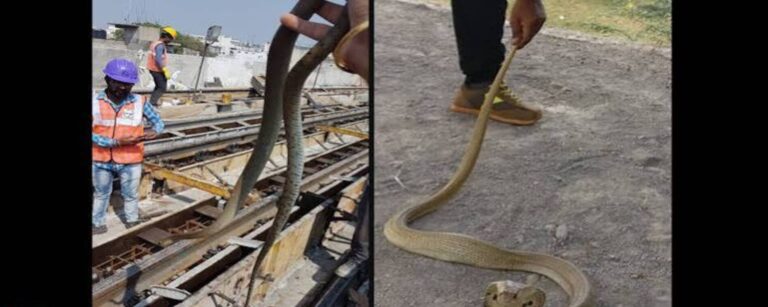


Dehradun snake rescues have increased during the rainy season, with Forest Department records showing 542 snakes rescued across the Dehradun Forest Division between January and September 13, 2026.
The figure includes 112 venomous snakes, accounting for about 21% of all rescued reptiles. Cobras made up the largest group among the venomous species, with 62 rescued during the period.
Officials say the pattern is particularly noticeable in areas on the outskirts of Dehradun, where expanding construction is bringing homes closer to forests and rivers.
Dehradun Snake Rescues Include 112 Venomous Snakes
The Forest Department recorded several venomous species among the rescued snakes.
These included:
- 62 cobras
- 41 common kraits
- 6 Sindh kraits
- 2 Russell’s vipers
- 1 king cobra
Together, the 112 venomous snakes represented roughly one-fifth of all rescues.
At the same time, non-venomous species accounted for most of the total rescues.
Rat Snakes Account for the Largest Share
Rat snakes were the most frequently rescued species, with 230 recorded cases.
That figure represents about 42% of the total.
The Forest Department also recorded 109 water snakes, 59 trinket snakes and 18 buff-striped keelbacks.
In addition, rescuers handled eight pythons and four cat snakes during the same period.
Therefore, the majority of snakes entering residential areas were not venomous.
Outskirts Face Greater Snake Encounters
Officials have reported more venomous snake encounters in areas around the outskirts of Dehradun.
These include areas behind Balawala, Mothrowala, Badhowala, Nathuwala and the Forest Research Institute.
According to officials, rapid construction has reduced the distance between natural habitats and human settlements.
As more homes and other structures appear near forests and waterways, snakes have more opportunities to come into contact with people.
Vaibhav Kumar Singh, the Dehradun Divisional Forest Officer, said the department is studying this pattern.
Why Do Snakes Enter Homes During Rain?
Monsoon weather can push snakes out of their usual hiding places.
Heavy rain can fill burrows and other shelters with water. As a result, snakes may move toward drier and safer locations.
Their prey can also move closer to residential areas during wet weather.
Rats and frogs, for example, often leave their hiding places in search of food. Snakes can then follow them into populated areas.
Consequently, snake rescue calls often increase during the rainy season.
Construction May Increase Human-Snake Contact
The expansion of residential areas around forests has added another challenge.
When development moves closer to natural habitats, the boundary between wildlife and human settlements becomes smaller.
That can increase the chances of snakes entering houses, gardens and other populated spaces.
The Forest Department says this changing landscape is one reason officials are closely monitoring snake activity around Dehradun’s outer areas.
Rescue Calls Can Reach 15 a Day
Sudarshan Singh, a Forest Department employee involved in snake rescues, said calls increase considerably during the rainy season.
On some days, teams receive between 10 and 15 requests to rescue snakes.
The rising number of calls highlights the importance of responding quickly when reptiles enter residential areas.
However, officials have also warned residents against attempting to catch or kill snakes themselves.
Forest Department Issues Safety Warning
The Forest Department has urged residents to contact trained personnel whenever they spot a snake.
People can report sightings through the department’s toll-free number, 1926.
Officials have particularly advised residents living near forests and rivers to remain cautious during the rainy season.
Most importantly, people should avoid approaching, catching or killing a snake themselves.
Dehradun Snake Rescues Highlight Growing Wildlife Contact
The latest Dehradun snake rescues show how seasonal weather and rapid urban expansion can bring wildlife closer to populated areas.
Although 112 of the 542 rescued snakes were venomous, most of the reptiles rescued during the period were non-venomous species.
Still, the presence of cobras, kraits and vipers around residential areas creates a genuine safety concern.
As the rainy season continues, Forest Department teams are expected to remain active across the district.
For residents, the safest response is simple: keep a distance from any snake and contact trained wildlife rescuers rather than attempting to handle the animal themselves.