The Middle East conflict has entered another dangerous phase after Yemen’s Houthi movement claimed responsibility for attacks on two Saudi oil tankers in the Red Sea, raising concerns about renewed disruption along one of the world’s most important shipping routes.
The reported attacks come as tensions between the United States and Iran continue to escalate. The combination of threats in the Red Sea and Strait of Hormuz has increased uncertainty for international shipping and global energy markets.
Houthis Claim Attacks on Saudi Oil Tankers
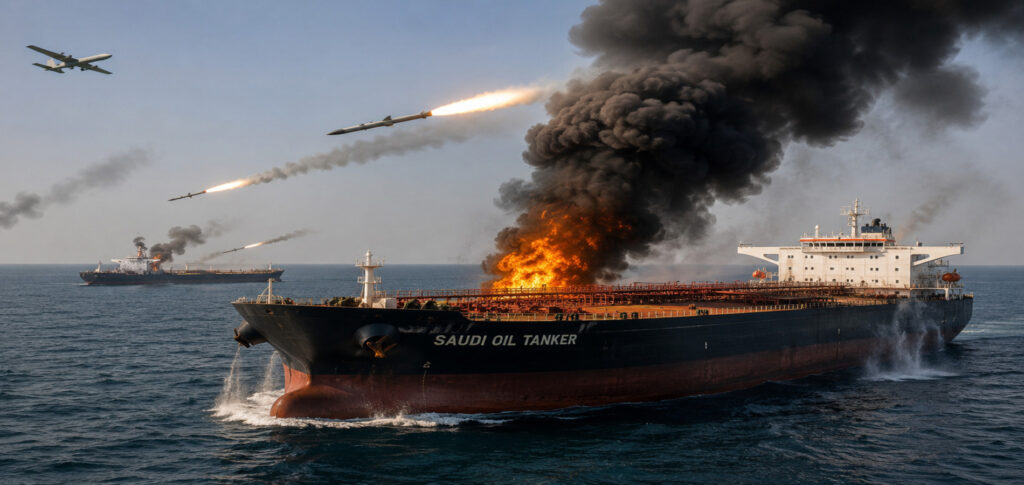
The Houthis said they targeted two Saudi oil tankers, Encelia and Layla, using missiles and drones. The group described the attacks as part of a broader naval blockade against Saudi Arabia.
The Houthis have previously threatened to target Saudi ports along the Red Sea. The waterway is a major commercial corridor connecting markets in Europe, Asia and the Middle East.
The United Kingdom Maritime Trade Operations (UKMTO) reported that a tanker was struck by an unidentified projectile about 70 nautical miles southwest of Al Shuqaiq. The incident reportedly caused a fire onboard, although the crew began firefighting operations.
Saudi authorities later confirmed that the Encelia had been hit but did not immediately confirm reports concerning the second tanker.
Red Sea Attacks Raise Global Energy Concerns
The reported attacks have renewed concerns about international energy security.
The Strait of Hormuz is already facing severe disruption amid escalating tensions between Washington and Tehran. A prolonged threat to Red Sea shipping could create additional pressure on global oil supplies.
The Red Sea provides an important route for ships transporting crude oil and other commodities. Any sustained disruption could force vessels to take longer routes, increasing shipping times, fuel costs and insurance premiums.
Energy analysts have warned that simultaneous disruptions around the Strait of Hormuz and the Red Sea could have a significant impact on international energy markets.
Iran Reports Intercepting Oil Tankers in Hormuz
Meanwhile, Iran’s Islamic Revolutionary Guard Corps said it had stopped three oil tankers attempting to transit the Strait of Hormuz.
Iran has warned commercial vessels to coordinate with its authorities when navigating the strategic waterway. Tehran has argued that such measures are necessary amid heightened military tensions.
The Strait of Hormuz normally carries a substantial share of the world’s oil shipments, making any disruption particularly significant for energy markets.
Trump Warns Iran Over Commercial Shipping
US President Donald Trump has warned that attacks on commercial shipping could trigger further American military action against Iran.
Trump said Washington could target Iranian civilian infrastructure, including bridges and power facilities, if Tehran continued attacks or interference involving vessels in the Strait of Hormuz.
Iranian Foreign Minister Abbas Araghchi rejected the warning and said Tehran would respond to attacks against Iranian infrastructure.
The exchange has further increased concerns that the conflict could expand beyond military targets and affect essential civilian and economic infrastructure.
US Reports Further Strikes on Iranian Targets
The United States has also carried out another round of military strikes against Iranian targets, according to US Central Command.
American officials said the operations were aimed at reducing Iran’s ability to threaten commercial shipping and regional security.
Iranian state media reported that US missiles struck areas near Bushehr, where Iran’s civilian nuclear power plant is located. Additional military activity was also reported in parts of the Gulf region.
Details surrounding the reported strikes and their consequences remain subject to competing accounts from the countries involved.
Gulf Countries Remain on High Alert
The growing confrontation has placed several Gulf countries on heightened alert.
Jordan reported intercepting missiles and drones, while Bahrain activated air-raid sirens following reports of incoming aerial threats.
The continuing attacks have raised fears that the conflict could spread across multiple fronts involving Iran, the United States, Saudi Arabia and the Houthis.
Such an expansion could threaten not only regional security but also international trade and critical energy supplies.
Oil Markets Monitor Shipping Risks
Global oil markets have remained highly sensitive to developments around the region.
Brent crude was reported to have briefly risen above $95 a barrel as investors assessed the possibility of prolonged disruptions around the Strait of Hormuz and the Red Sea.
Higher shipping risks could increase transportation and insurance costs while placing additional pressure on crude prices.
However, the ultimate impact on global energy markets will depend on the duration and scale of any disruption.
Regional Shipping Security Faces Growing Pressure
The reported Houthi attacks on Saudi oil tankers highlight the growing risks facing commercial shipping across the Middle East.
With tensions already affecting the Strait of Hormuz, additional attacks in the Red Sea could create a wider maritime security crisis and place further pressure on global energy supplies.
Diplomatic efforts remain critical to preventing further escalation. Until tensions ease, governments, shipping companies and energy traders are likely to remain focused on developments around the region’s major maritime routes.