

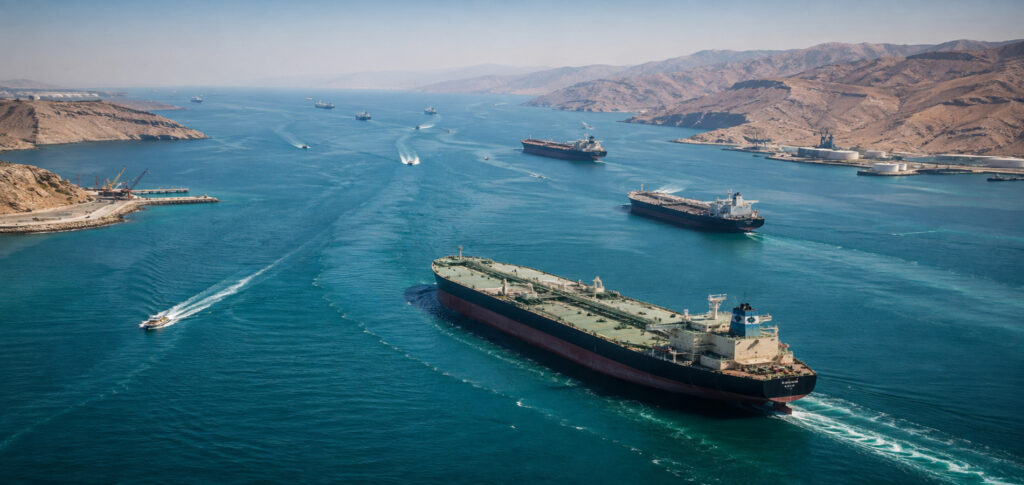
A proposed agreement between Iran and Oman could significantly change how ships enter the Persian Gulf through the Strait of Hormuz, according to regional sources familiar with the negotiations.
If approved, the arrangement could give Iran greater authority over inbound maritime traffic. Such a development would represent a major change in the management of one of the world’s most important shipping routes.
However, officials involved in the discussions say several key issues remain unresolved. No final agreement has been reached.
Iran Hormuz Deal Could Change Gulf Shipping
According to sources familiar with the negotiations, the proposed Iran Hormuz deal would allow Tehran to oversee vessels entering the Gulf through the Strait of Hormuz.
One regional official described the proposal as a significant concession to Iran. However, negotiators are still discussing what Tehran’s proposed authority would involve in practice.
Regional officials reportedly want Gulf states to supervise ship inspections and ensure that any transit fees remain voluntary rather than compulsory.
Another unresolved issue concerns Iran’s potential role in overseeing vessels leaving the Gulf through the strategic waterway.
Trump Says Hormuz Talks Are Progressing
US President Donald Trump has said negotiations are “moving along nicely” and suggested that the Strait of Hormuz could reopen fully soon.
Despite those comments, people familiar with the negotiations caution that important differences remain.
An Iranian official said Foreign Minister Abbas Araqchi is currently away on leave and indicated that no final agreement has been approved.
Another source described the negotiations as fragile and warned that political developments could quickly change the situation.
Oil Markets Watch the Strait Closely
The Strait of Hormuz carries a significant portion of global oil exports, making its security crucial to international energy markets.
Any restrictions on commercial traffic could affect crude supplies, shipping costs and insurance rates.
Oil prices have also responded to developments elsewhere in the region, including attacks on commercial shipping in the Red Sea. Continued insecurity could create additional uncertainty for traders and energy companies.
Transit Fees Remain a Major Dispute
One of the most difficult issues reportedly involves transit fees.
According to sources, Iran has proposed fees equivalent to 5% to 7% of cargo values for ships using the Strait of Hormuz.
Oman has reportedly suggested a lower rate of around 3%, while the United States opposes mandatory charges.
Negotiators are considering whether voluntary contributions could provide a compromise. However, shipping companies could still face uncertainty over how such a system would operate.
What the Iran Hormuz Deal Could Mean
If the proposal is approved, Iran could gain a more prominent role in managing maritime traffic entering the Persian Gulf.
For shipping companies, the key questions would include who controls inspections, whether fees are compulsory and how vessels would be monitored when entering and leaving the Gulf.
For global energy markets, the priority would be maintaining predictable and uninterrupted commercial traffic through the waterway.
No Final Agreement Yet
Despite reports of progress, officials familiar with the negotiations say important technical and political questions remain unresolved.
The proposed Iran Hormuz deal therefore remains under discussion rather than being a completed agreement.
Governments across the Gulf, shipping companies and energy markets will continue watching the negotiations closely because any change in the operation of the Strait of Hormuz could have consequences well beyond the Middle East.