
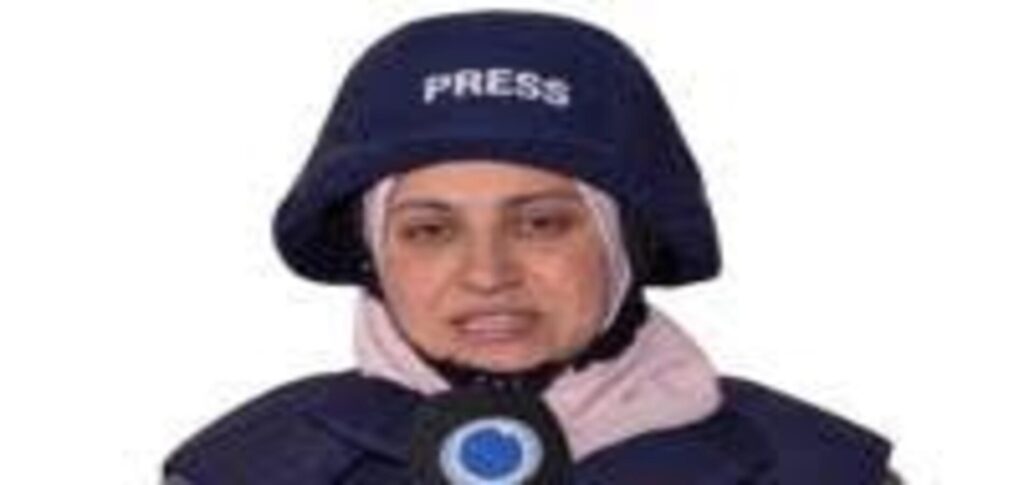
Naqaa Hamed detained after returning from a reporting assignment in the occupied West Bank, according to her sister and a journalist who was traveling with her.
Hamed was stopped by Israeli soldiers at the Tequ checkpoint near Bethlehem on Tuesday. Her sister, Fatima Bajes Salem, said Hamed had been taken into custody while returning from reporting on conditions faced by Palestinians.
Journalist Hamada Mansour, who was traveling with Hamed, also confirmed the arrest. He said soldiers stopped the group and questioned the reporters before allowing Hamed’s colleagues to leave.
Hamed Covered Settler Violence
Hamed has reported on violence by Israeli settlers against Palestinians in the West Bank.
Her recent reporting included events in Qusra, where residents were reportedly trapped inside their homes while food and other supplies could not reach them.
Mansour said Hamed was working on a reporting assignment for Turkish public broadcaster TRT when the soldiers detained her. He described her as a freelance journalist.
Several media reports also linked Hamed to Press TV, the Iranian English-language broadcaster. Press TV reported on her detention and identified her as its West Bank correspondent.
However, Mansour said Hamed had stopped working for Press TV about a month earlier and was working independently.
Israel Has Not Commented
Israeli authorities have not publicly explained why they detained Hamed.
However, Israel’s Ynet news site cited unidentified Israeli military sources as saying that Hamed is suspected of “cooperating with an enemy entity” and could also face an espionage investigation.
Those claims have not been independently confirmed. Israeli authorities had not issued a public comment on the case in the latest reports.
Hamed’s sister has called for her release. The detention has also drawn attention because Hamed holds US-Palestinian nationality and was returning from journalistic work in the West Bank.
Press Freedom Concerns
The detention comes amid continued scrutiny of journalists working in the occupied West Bank.
Reporters covering clashes, settler violence and other developments often work in difficult conditions. In Hamed’s case, her colleagues were reportedly allowed to leave after soldiers stopped the group, while she remained in custody.
For now, key questions about the reason for her detention remain unanswered.
Her family and colleagues are seeking clarity about her situation, while Israeli authorities have yet to provide a public explanation.