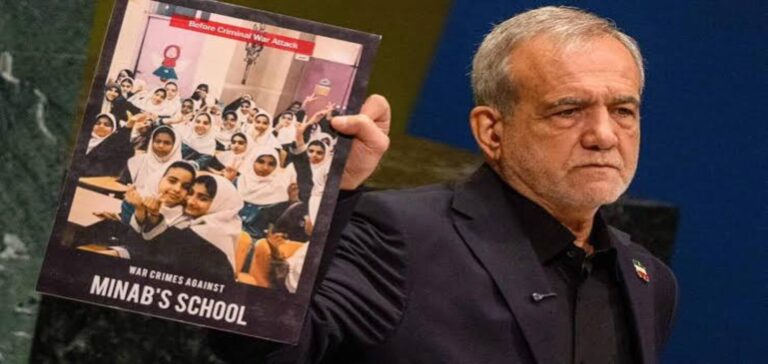

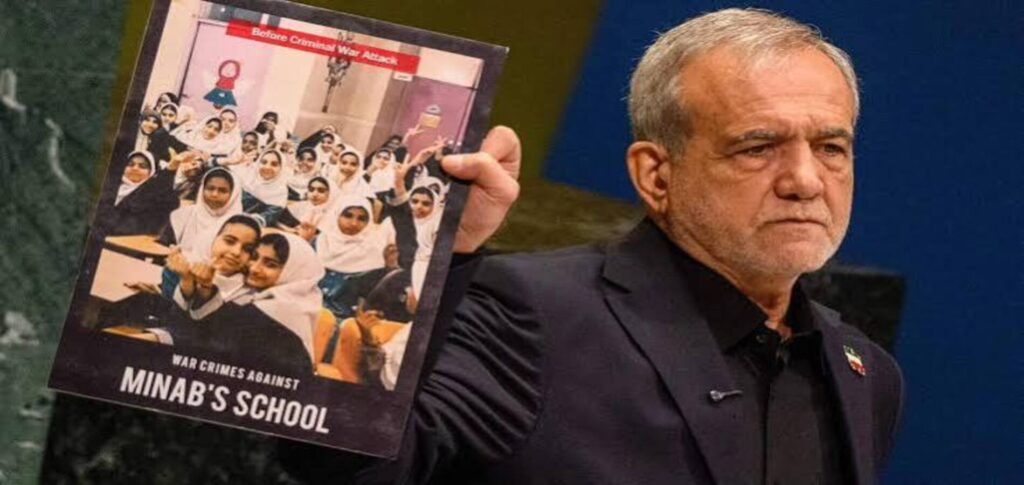
Iranian President Masoud Pezeshkian told the United Nations on Wednesday that Iran would not surrender to the United States, while insisting that Tehran still supports diplomacy.
His remarks came a day after US President Donald Trump warned in his own UN address that he could “annihilate” Iran if no peace agreement is reached. Trump also said Washington and Tehran were continuing to communicate through intermediaries.
The two speeches highlighted the tension surrounding the latest diplomatic efforts. US and Iranian officials held indirect contacts in New York this week, but neither side has publicly announced a major breakthrough.
Pezeshkian Defends Iran’s Position
Pezeshkian defended Iran’s military actions as defensive and again rejected claims that Tehran is seeking nuclear weapons.
He also said Iran remained open to diplomacy despite the ongoing conflict. Iranian officials have previously accused Washington of undermining negotiations through military action.
The latest contact between the two countries involved Iranian Foreign Minister Abbas Araqchi and US representatives Steve Witkoff and Jared Kushner communicating through mediators.
Trump said the discussions had been productive and suggested there was momentum toward a possible agreement. Iranian officials, however, have stressed that any diplomatic process would require an end to the war and what they describe as US aggression.
The reported contact was indirect rather than a face-to-face meeting.
Iran Warns Neighbours Over Flight Sanctions
A separate dispute has emerged over new US sanctions targeting Iran’s aviation sector.
Washington has said countries allowing Iranian civilian flights to operate could face secondary sanctions. Iranian officials have warned neighbouring countries against cooperating with those restrictions.
Mohsen Rezaei, secretary of Iran’s Supreme National Security Council, said Iran could take action against neighbouring countries if they prevent Iranian flights from operating.
The warning adds another potential source of tension between Tehran and countries across the region.
Iranian Hardliners Criticise Talks
The diplomatic contacts in New York have also faced criticism inside Iran.
Media outlets associated with Iranian hardliners questioned the decision to communicate with US officials. A commentary published by the semi-official Tasnim news agency criticised Araqchi’s contact with Witkoff and Kushner.
Iranian sources told Reuters that the delegation had been instructed not to hold direct meetings with American officials. The Supreme National Security Council was reportedly involved in setting the conditions for the delegation’s diplomatic contacts.
The dispute reflects the political pressure facing Iranian officials as they consider whether further negotiations with Washington are possible.
Oil Markets Watch Strait of Hormuz
The diplomatic activity has also affected energy markets. Oil prices recently moved lower as traders assessed the possibility of renewed US-Iran negotiations.
Brent crude remained around $100 a barrel after falling to its lowest level in almost two weeks earlier this week.
The Strait of Hormuz remains central to the energy crisis. The waterway normally carries a major share of global oil and liquefied natural gas shipments, making disruptions there a significant concern for international markets.
Recent attacks and security threats have disrupted shipping. A maritime security report also said a cargo ship was hit by projectiles in the strait, leaving casualties among its crew.
Despite the risks, shipping traffic through the waterway has increased in recent weeks. Producers and shipping companies continue to weigh the financial benefits of moving cargo against the security risks.
US-Iran Diplomacy Faces Major Test
The latest diplomatic contacts show that Washington and Tehran remain in communication despite the harsh rhetoric from both sides.
Trump has said he believes a settlement can eventually be reached, while Pezeshkian has maintained that Iran will not surrender.
For now, the two governments remain far apart on the conditions for ending the conflict. Their positions at the UN show that diplomacy is continuing, but the public statements from both sides indicate that major disagreements remain.