
The Trump Iran threat dominated the United Nations General Assembly as diplomats worked to find a way to end the conflict.
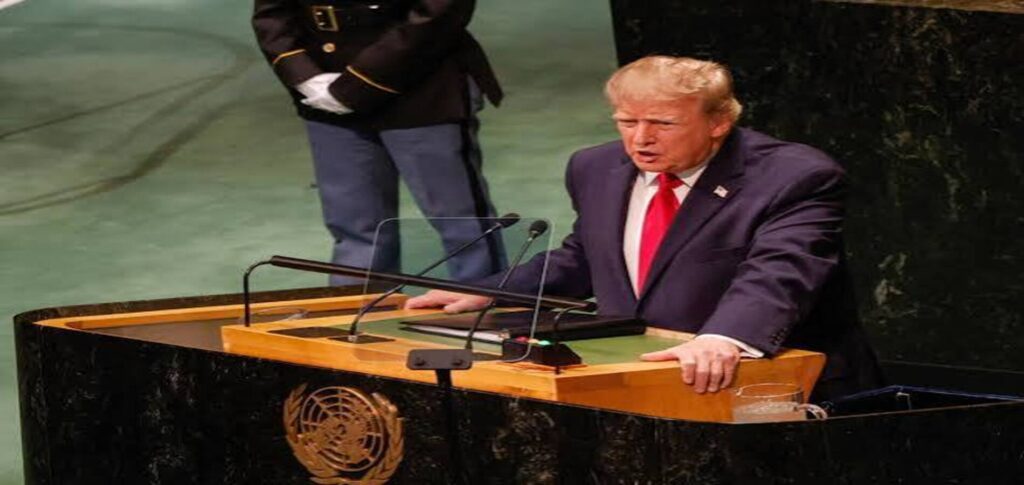
US President Donald Trump warned Tuesday that he could “annihilate” Iran if Tehran fails to reach a deal.
However, he also suggested that an agreement could still emerge. His comments came as US and Iranian officials held indirect talks through mediators in New York.
Trump Iran Threat Comes During UN Speech
Trump told world leaders that he faced a major decision over Iran.
He presented two possible paths. One involved reaching a deal that would allow Iran to rebuild. The other involved further military action.
The warning came during Trump’s address to the 81st UN General Assembly in New York.
Despite the harsh rhetoric, Trump later said US and Iranian representatives had held a lengthy meeting.
US envoy Steve Witkoff said mediators moved between the two sides during the discussions. He described the talks as potentially constructive.
US and Iran Remain Far Apart
The talks have not produced a clear agreement.
A senior Iranian official told Reuters on Wednesday that Washington and Tehran still have major differences. However, the official said diplomacy would continue.
Iran has made reopening the Strait of Hormuz part of its proposals.
Tehran has indicated that it could reopen the key shipping route if Washington eases military pressure and lifts its blockade on Iranian ports.
The Strait of Hormuz is a crucial route for global energy shipments.
Iran Rejects Trump’s Warning
Iranian officials rejected Trump’s threats.
Iran’s armed forces described his UN remarks as propaganda and said the country remained prepared to respond to military attacks.
Iranian President Masoud Pezeshkian also used his UN appearance to reject pressure from Washington.
The competing statements show that major differences remain between the two governments.
Strait of Hormuz Remains Central to Talks
The diplomatic effort also focuses on shipping through the Strait of Hormuz.
The waterway has become a major concern for Gulf countries and international energy markets.
Iran has suggested that commercial shipping could resume if the United States changes its military and economic measures.
Meanwhile, France has been working on a possible UN Security Council resolution aimed at protecting freedom of navigation through the strait.
Gulf Leaders Seek Regional Security
Trump also met leaders and senior officials from Gulf Cooperation Council countries in New York.
The discussions included the wider regional conflict and security concerns.
Gulf governments want safe shipping routes and greater stability. At the same time, they remain concerned about Iran’s influence across the region.
Qatar has also promoted discussions about a regional security framework involving Iran and Gulf states.
War Continues to Affect Oil Markets
The conflict has created major uncertainty for global energy markets.
The Strait of Hormuz is an important route for oil and gas shipments. Any prolonged disruption could therefore affect supplies and prices.
Saudi Arabia has also worked to restore alternative export routes through the Red Sea.
At the same time, fighting involving Iran-aligned forces in Yemen has added another layer to the regional crisis.
Diplomacy Continues Despite Military Threats
The latest talks show that Washington and Tehran are still exploring a diplomatic path.
However, neither side has indicated that a final agreement is close.
The Trump Iran threat remains part of Washington’s pressure campaign, while Iranian officials continue to demand changes to the US military and economic measures.
For now, the UN talks have opened another channel for diplomacy, but significant disagreements remain over how to end the conflict.