
Iran Hormuz Tolls: JD Vance Says Tehran Has No Plans to Charge Ships
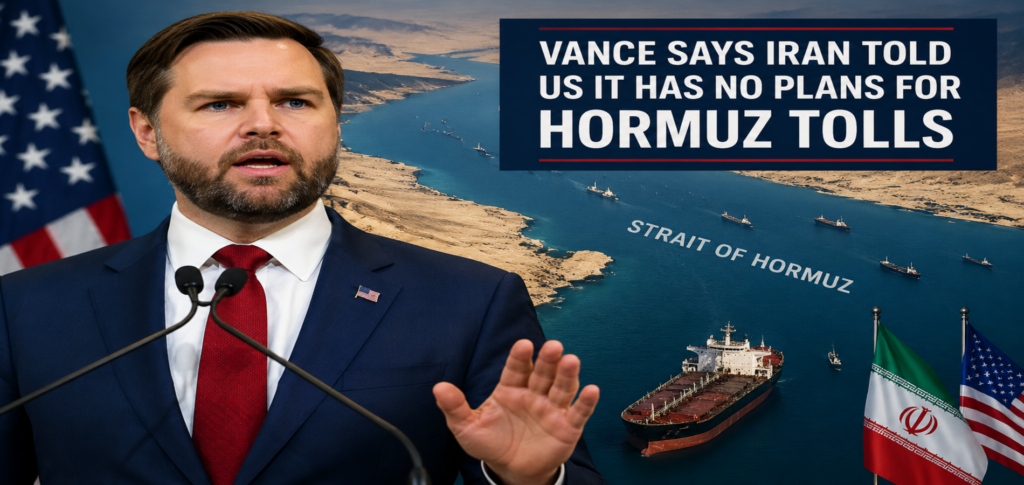
US Vice President JD Vance says Iran has told Washington that it has no plans to impose tolls on ships using the Strait of Hormuz, despite calls from some Iranian figures for such a measure.
Speaking to Fox News, Vance said some individuals within Iran have discussed charging vessels that pass through the strategically important waterway. However, he said Iranian officials assured the United States that Tehran does not intend to introduce shipping tolls.
The comments come as the Strait of Hormuz remains under close international scrutiny because of its importance to global energy supplies and maritime trade.
Iran Says It Will Not Impose Hormuz Tolls
Vance said Iranian officials have communicated their position to Washington regarding potential tolls.
He acknowledged that some voices within Iran have discussed the idea of charging ships that use the waterway. However, he said Tehran has told the United States that it does not currently plan to impose such fees.
The statement could provide some relief to shipping companies and energy traders concerned about additional costs or restrictions affecting commercial vessels.
Nevertheless, Washington remains cautious about Iran’s commitments.
Why the Strait of Hormuz Matters
The Strait of Hormuz is one of the world’s most important energy routes.
Large volumes of oil and natural gas move through the narrow waterway every day. Any disruption could therefore affect global energy supplies, shipping costs and fuel prices.
For this reason, discussion surrounding Iran Hormuz tolls has attracted attention from governments, energy companies and international shipping operators.
Even without a formal toll system, increased military activity or restrictions around the strait could create uncertainty for commercial vessels.
Vance also said Washington expects oil and gas exports from Gulf countries to return to levels seen before the war.
Vance Says US Will Verify Iran’s Actions
Despite Iran’s reported assurances, Vance stressed that the United States will closely monitor Tehran’s actions.
He said Washington would judge Iran based on what it does rather than simply relying on official statements.
That approach reflects the broader uncertainty surrounding US-Iran relations. Although both sides have discussed reducing tensions, disagreements over security, energy shipments and control of the Strait of Hormuz remain.
Any decision by Iran to restrict shipping or introduce new fees could quickly attract international attention.
Energy Markets Watch the Strait Closely
The possibility of Iran Hormuz tolls has raised concerns because additional charges could increase the cost of transporting energy through the region.
Oil and gas markets remain highly sensitive to developments around the Strait of Hormuz. Even reports of potential restrictions can influence expectations about future supplies and prices.
A stable shipping environment would help Gulf producers restore exports and provide greater certainty for international markets.
However, renewed military tensions could quickly reverse those gains.
What Happens Next
For now, US officials say Iran has no plans to impose tolls on vessels using the Strait of Hormuz.
That position could ease some immediate concerns among shipping companies and energy traders. However, Washington continues to approach Tehran’s commitments cautiously and is expected to monitor developments closely.
The future of maritime traffic through the strait will depend largely on Iran’s actions and the broader security situation in the Gulf.
If tensions remain under control, energy exports could gradually return to normal. But any new restrictions, military confrontation or change in Iran’s policy could once again place global shipping and energy markets under pressure.