US President Donald Trump has announced a fresh round of tariffs on several trading partners, including the European Union, while European leaders have approved another package of sanctions targeting Russia.
The two developments highlight the growing economic and geopolitical challenges facing the transatlantic alliance as Washington focuses on trade policy and Brussels maintains pressure on Moscow.
Trump Announces New Tariffs
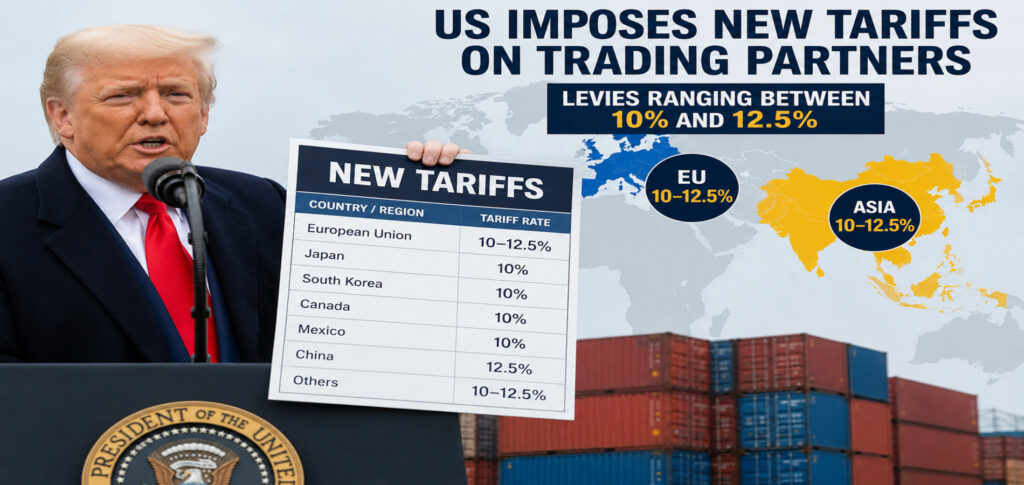
The White House announced new import tariffs affecting multiple trading partners, including the European Union.
The latest duties range from 10% to 12.5%, adding to existing trade tensions between Washington and several major economic partners.
The Trump administration says the measures are intended to protect American industries, strengthen domestic manufacturing and address what it considers unfair international trade practices.
The tariffs could affect a broad range of imported products and may lead to further negotiations between the United States and the European Union.
EU Raises Concerns Over Trade Measures
European lawmakers have responded cautiously to the latest US tariff announcements.
Bernd Lange, chair of the European Parliament’s Committee on International Trade, said European officials would assess the potential economic impact while continuing talks with Washington.
European leaders have repeatedly stressed the importance of maintaining open and rules-based trade between the United States and Europe.
However, the latest tariff measures could create additional pressure on businesses and consumers on both sides of the Atlantic.
EU Approves Another Russia Sanctions Package
While trade tensions with Washington continue, the European Union has also strengthened its economic pressure on Russia.
EU member states approved another package of sanctions after resolving disagreements that had delayed the agreement.
The measures are intended to restrict Russia’s ability to generate revenue and access goods and technologies that could support its military operations.
EU officials also agreed to certain adjustments involving energy shipments while tightening restrictions in other areas.
Ukraine Welcomes Continued Economic Pressure
Ukrainian officials welcomed the new sanctions, describing them as another step toward limiting Moscow’s ability to finance its war effort.
Kyiv has repeatedly urged Western governments to maintain coordinated economic pressure on Russia and expand restrictions on Russian financial institutions, strategic industries and international trade.
The latest EU measures therefore reinforce the broader Western sanctions campaign against Moscow.
Trade and Security Shape Transatlantic Relations
The simultaneous announcements underline the complicated economic and diplomatic environment facing the United States and Europe.
Washington is pursuing a more protectionist trade strategy through tariffs, while Brussels continues to use economic sanctions as a major foreign-policy tool against Russia.
These policies could have significant consequences for international trade, European-American economic relations and the wider geopolitical landscape.
Global Economic Tensions Continue
The latest Trump tariffs and EU Russia sanctions demonstrate how economic policy has become increasingly connected to national security and foreign policy.
For businesses, higher tariffs could increase costs and disrupt supply chains. For Russia, continued European sanctions could further restrict access to markets, technology and financial resources.
Both issues are likely to remain major priorities as governments attempt to protect domestic economies while responding to growing geopolitical challenges.