
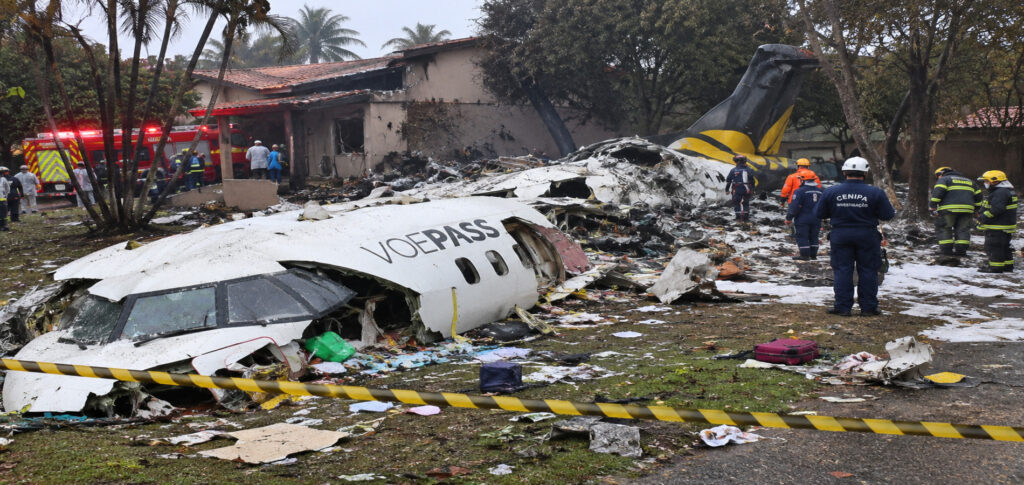
Brazilian investigators have concluded that severe icing, mechanical failures and pilot distractions combined to cause the deadly Voepass plane crash that claimed 62 lives in August 2024.
The findings were released by the Brazilian Air Force on Thursday, providing the most detailed explanation yet of the country’s deadliest aviation disaster since 2007.
Severe Icing Triggered Loss of Control
According to the official investigation, the Voepass ATR 72-500 was flying from Cascavel to São Paulo when it encountered severe atmospheric icing at approximately 17,000 feet.
The ice buildup caused the aircraft to lose lift before entering an unrecoverable flat spin. The plane eventually crashed into a residential area in Vinhedo, killing everyone on board.
Technical Problems Worsened the Emergency
Flight recorder data showed the pilots were aware of the dangerous ice accumulating on the aircraft.
However, investigators found that the aircraft’s de-icing system experienced repeated technical failures during the flight. The system was switched on and off multiple times during critical moments as the crew attempted to manage the worsening conditions.
The report also revealed that known mechanical issues involving the de-icing equipment had existed before the aircraft departed.
Investigators Criticise Airline Safety Culture
Officials said the investigation uncovered what they described as a culture of “normalizing deviations” within Voepass.
Investigators found that recurring maintenance concerns, including faults affecting the de-icing system, were tolerated instead of being fully resolved before flights.
The report suggested these practices increased the risks faced by the flight crew once severe weather developed.
Pilot Distractions Delayed Response
The investigation also found that the pilots were distracted by routine radio communications and administrative duties while dealing with repeated icing warnings.
As a result, the crew did not carry out corrective flight maneuvers quickly enough to prevent the aircraft from losing control.
Families Briefed Before Public Release
Brazilian authorities presented the investigation’s findings to the victims’ families before making the report public.
The conclusions are expected to influence future aviation safety measures and maintenance standards aimed at preventing similar accidents.