
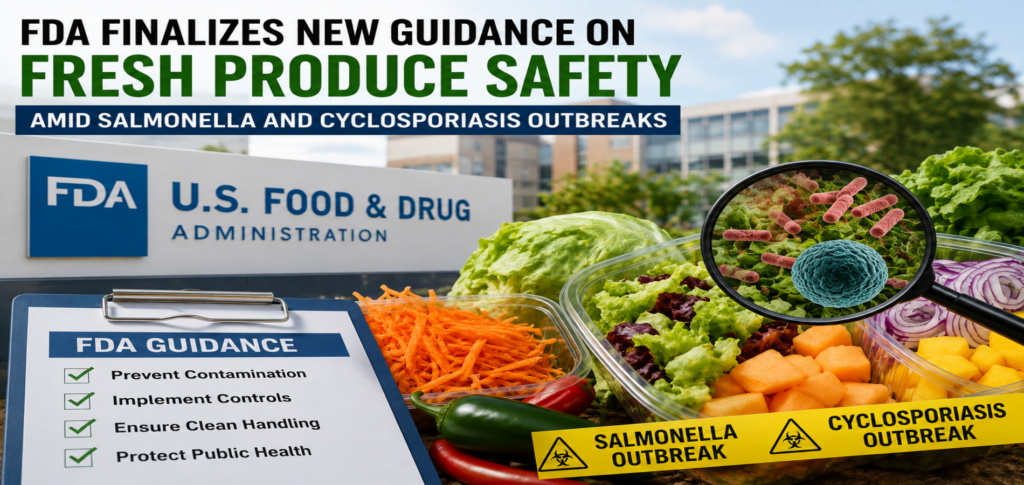
Fresh produce safety is receiving renewed attention after the U.S. Food and Drug Administration finalized new guidance for companies that prepare and package fresh fruits and vegetables. The move comes as health officials continue investigating Salmonella and cyclosporiasis outbreaks linked to produce consumed across the United States.
The guidance focuses on foods such as chopped lettuce, sliced cantaloupe, diced onions, shredded carrots, coleslaw mixes and fruit salads. Many of these products are eaten without cooking, which can increase the risk of foodborne illness when harmful pathogens contaminate them.
FDA Issues New Fresh Produce Safety Guidance
The FDA said produce can become contaminated with pathogens such as Salmonella and E. coli during growing, harvesting, packing or storage.
The new guidance targets manufacturers and processors that handle fresh-cut produce. It provides recommendations intended to reduce contamination risks and improve food safety practices.
Fresh-cut products require particular attention because processing can create additional opportunities for contamination. At the same time, consumers usually eat these foods raw.
As a result, they do not undergo cooking or another step that could destroy harmful bacteria and other pathogens.
Salmonella Outbreak Linked to Jalapeño Peppers
The new FDA guidance comes as officials investigate a multistate Salmonella Javiana outbreak associated with jalapeño peppers from Sinaloa, Mexico.
According to the information provided by health authorities, the outbreak had sickened at least 345 people across 27 states. Thirty-six people had required hospitalization, while no deaths had been reported.
Investigators identified several common exposures among patients. Mexican-style restaurants were frequently reported, with jalapeños among the ingredients commonly consumed.
Authorities continued traceback and laboratory investigations to determine the full extent of the outbreak.
Jalapeno Recall Adds to Food Safety Concerns
The investigation also prompted action involving jalapeno peppers distributed in the United States.
Taylor Fresh Foods issued a related recall in early August. Public health officials advised consumers and businesses not to eat, sell or serve recalled products.
Meanwhile, health agencies continued working to determine how the contamination occurred and where affected peppers were distributed.
The investigation highlights the difficulty of controlling pathogens when fresh produce moves through large distribution networks.
Cyclosporiasis Outbreak Also Raises Alarm
A separate cyclosporiasis outbreak has also raised concerns among U.S. health officials.
The parasite Cyclospora cayetanensis can cause intestinal illness. The outbreak has been primarily associated with iceberg lettuce from Taylor Farms operations in central Mexico.
According to the figures provided in the report, more than 6,300 laboratory-confirmed cases linked to the multistate cluster had been recorded across 15 states.
Michigan and Ohio were among the states reporting significant impacts. Hundreds of people were hospitalized, while two deaths were reported in Michigan among people with underlying health conditions.
Fresh Produce Safety Remains a Major Challenge
The two outbreaks demonstrate the challenges involved in protecting consumers from contaminated fresh produce.
Unlike many foods, fresh fruits and vegetables often reach consumers without a cooking process. Therefore, contamination can remain a concern from the farm through processing, transportation, restaurants and retail stores.
The FDA’s guidance emphasizes the importance of controlling contamination throughout the handling process.
Companies that prepare fresh-cut produce must pay close attention to sanitation, handling procedures and conditions that could allow pathogens to spread.
Health Officials Continue Monitoring Outbreaks
The CDC, FDA and state health departments continue to monitor foodborne illnesses and investigate possible sources.
Investigators use epidemiological information, laboratory testing and traceback efforts to identify connections between illnesses and specific foods.
When officials identify a contaminated product, recalls and public warnings can help prevent additional infections.
However, widespread distribution can make these investigations complicated. A single contaminated ingredient may reach consumers in multiple states and through different restaurants or retailers.
Consumers Urged to Follow Food Safety Advice
Consumers can also take steps to reduce their risk of foodborne illness.
They should follow official recall notices and avoid products that health authorities identify as contaminated. People should also wash their hands before handling food and keep fresh produce away from foods that could contaminate it.
Proper refrigeration and careful preparation can further reduce the risk of foodborne illness, although consumers should not rely on washing alone when authorities have issued a recall.
FDA Guidance Comes Amid Growing Concern
The FDA’s updated guidance arrives at a time when several produce-related investigations have placed renewed attention on fresh produce safety.
The Salmonella investigation involving jalapeños and the cyclosporiasis outbreak linked to lettuce show how quickly foodborne illnesses can affect consumers across multiple states.
For producers and processors, the new guidance provides additional direction on reducing contamination risks. For consumers, the outbreaks serve as another reminder that food safety remains important even when products appear fresh and ready to eat.