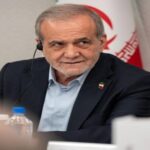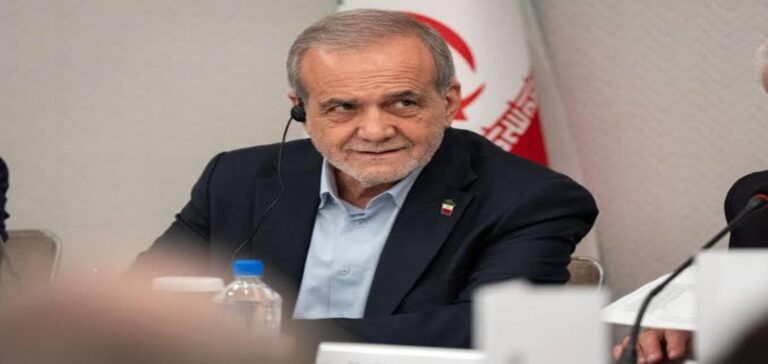

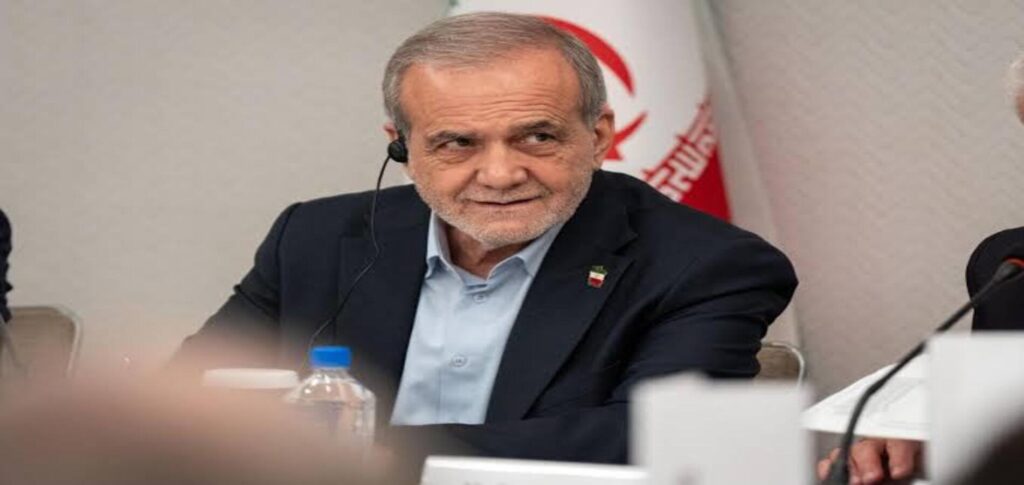
Iranian President Masoud Pezeshkian has said Middle Eastern countries do not need the United States to act as a regional “policeman” as tensions between Washington and Tehran continue.
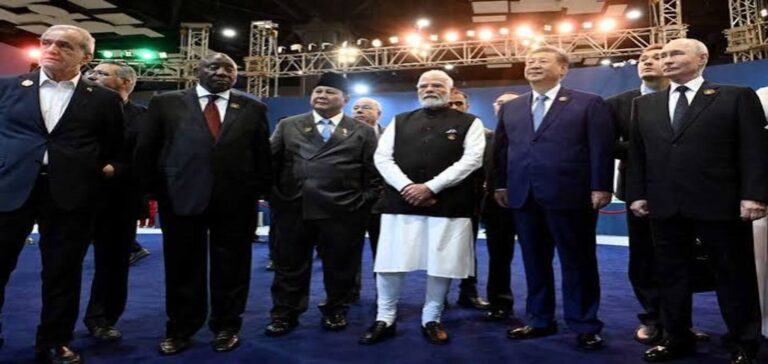
Pezeshkian made the remarks on Saturday during a meeting with Malaysian Prime Minister Anwar Ibrahim on the sidelines of the BRICS summit in India. According to Iran’s presidency, he argued that countries in the region should take responsibility for their own security.
“We do not need a regional policeman,” Pezeshkian said.
He added that the territorial integrity and security of the Middle East could only be protected by the countries and major players within the region.
Iran and US Clash Over Strait of Hormuz
The comments come amid an escalating conflict between Iran and the United States. The confrontation has also created major uncertainty around the Strait of Hormuz, one of the world’s most important shipping routes.
The waterway connects the Persian Gulf with the Gulf of Oman. Before the conflict, commercial vessels were able to pass through the strait relatively freely.
However, Iran has since imposed new requirements on ships seeking to cross the strategic waterway. Tehran has also considered introducing fees for vessels using the route.
The situation has raised concerns among international shipping companies and energy markets. The Strait of Hormuz is a critical route for global oil supplies, making any disruption potentially significant for the world economy.
Oil Prices Rise Above $100
The continuing tensions have also affected global energy markets. Oil prices climbed above $100 a barrel this week as concerns over supplies increased.
Iran and the United States have continued to challenge each other over control of the strategic waterway. Both sides have carried out military operations in the region during the conflict.
According to the supplied reports, Iranian forces have targeted vessels that fail to comply with Tehran’s requirements. The United States has also carried out strikes along Iran’s coastline in an effort to challenge its control of the strait.
The confrontation has therefore extended beyond direct attacks between the two countries. It has also created risks for international shipping, energy markets and regional stability.
Pezeshkian Says Peace Remains a Priority
Despite the ongoing conflict, Pezeshkian said Iran does not want the war to continue.
“Despite all the injustices suffered by our people, we neither desire war nor its continuation,” he said. “Peace remains our priority.”
His comments come as diplomatic and military tensions continue across the Middle East. Iran has maintained that regional countries should play the leading role in determining the region’s security arrangements.
For Tehran, reducing outside influence remains a key part of its regional position. Meanwhile, the United States continues to maintain a major military presence in the region.
The dispute over the Strait of Hormuz adds another layer of risk. Any prolonged disruption could affect oil supplies and international trade well beyond the Middle East.
As the conflict continues, Pezeshkian’s call for regional control reflects Iran’s broader argument that Middle Eastern security should be managed by the countries directly involved rather than by an outside power.