
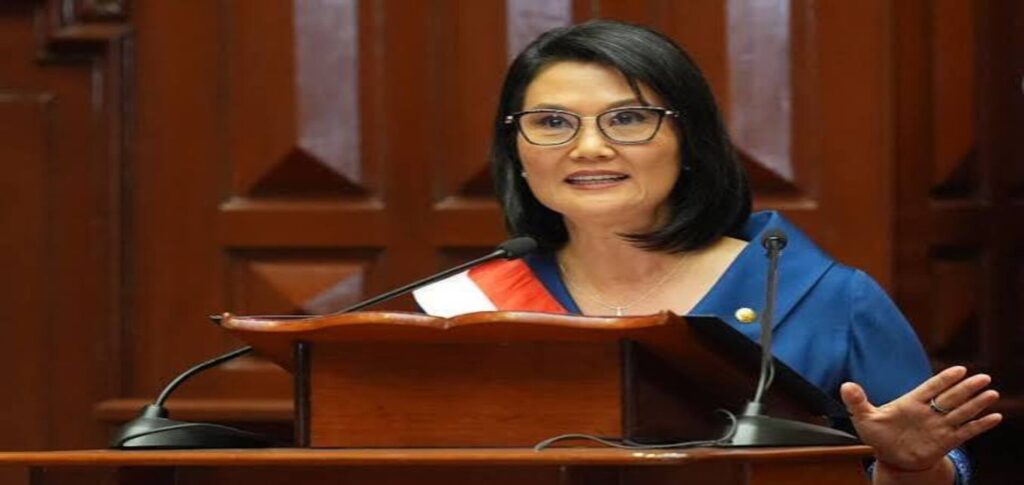
Keiko Fujimori officially took office as Peru’s president on Tuesday after securing a narrow victory in the June presidential runoff. Her win, decided by fewer than 50,000 votes, marks another political turning point for Peru and highlights the growing influence of conservative leadership across South America.
The 51-year-old leader now becomes Peru’s ninth president in just ten years, inheriting a country seeking political stability, stronger economic growth, and improved public security.
Narrow Election Victory Ends Months of Political Uncertainty
Keiko Fujimori defeated left-wing rival Roberto Sanchez in one of Peru’s closest presidential elections in recent history.
Although Sanchez challenged the results over alleged voting irregularities at overseas polling stations, Peru’s electoral authorities rejected the complaints and confirmed Fujimori’s victory.
Her inauguration officially ends months of political uncertainty following a highly competitive election campaign.
A Promise to Restore Stability
During her inauguration speech, Fujimori pledged to restore confidence in Peru’s institutions while addressing the country’s biggest challenges.
She emphasized that her administration would focus on:
-
- Fighting violent crime
-
- Strengthening the economy
-
- Expanding infrastructure projects
-
- Improving social services
- Preparing Peru for future climate emergencies
According to Fujimori, her government aims to reduce social inequality while encouraging private investment to boost national development.
Tough Approach to Crime
Crime and public safety formed the centerpiece of Fujimori’s campaign.
She promised to introduce tougher security measures inspired by El Salvador’s anti-gang policies, including plans to build a large maximum-security prison similar to the Cecot facility.
Fujimori also announced that Peru’s military would temporarily assist police in high-crime areas while judicial reforms would better protect judges handling organized crime cases.
Economic Growth and Social Investment
The new president pledged to stimulate economic growth through public-private partnerships and major infrastructure investments.
She also announced:
-
- A 15% increase in Peru’s minimum wage
-
- Expanded programs to fight child malnutrition
-
- Greater investment in rural communities
- Improved disaster preparedness ahead of possible El Niño weather events
Her administration hopes these measures will narrow the economic gap between Peru’s coastal regions and poorer Andean communities.
Political Support in Congress
Fujimori enters office with stronger legislative backing than many of her predecessors.
Her Popular Force party, together with its main political ally Popular Renovation, is expected to control around half of the seats in Peru’s Senate.
This parliamentary support could make it more difficult for opposition lawmakers to remove her from office, a fate that several recent Peruvian presidents have faced.
Opposition Continues to Protest
Despite the peaceful transfer of power, Fujimori’s inauguration was met with demonstrations outside Peru’s Congress.
Opposition groups demanded investigations into the deaths of protesters during the political unrest that followed the removal of former President Pedro Castillo in late 2022.
Critics are also urging the new government to repeal several laws they believe weaken efforts to combat organized crime and corruption.
South America’s Conservative Shift Continues
Fujimori’s victory reflects a broader political trend across Latin America.
Recent elections have brought several conservative leaders to power as voters increasingly prioritize public security, economic stability, and immigration control.
Political analysts say Peru has now joined a growing list of South American nations shifting toward center-right and conservative governments.
Peru Faces a New Political Chapter
With political instability dominating Peru for nearly a decade, Keiko Fujimori now faces enormous expectations.
Her success will largely depend on whether she can deliver stronger economic growth, reduce crime, unite a divided nation, and restore long-term confidence in Peru’s democratic institutions.