
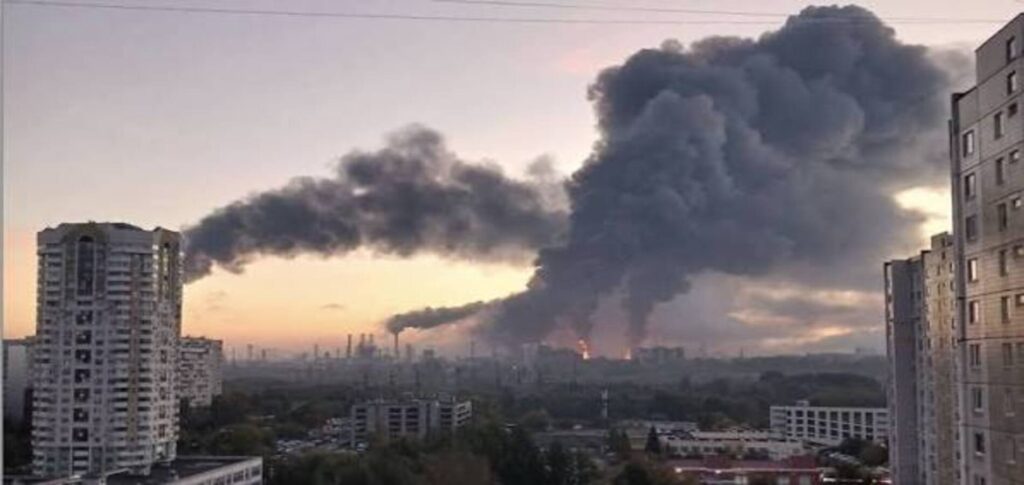
A major Moscow drone attack killed two people and damaged part of an oil refinery in the Russian capital region on Sunday, according to Russian authorities.
The attack came as Russia entered the final day of its parliamentary elections. Moscow Mayor Sergei Sobyanin said Russian air defenses had brought down more than 1,600 drones since Saturday, including about 450 that were heading toward Moscow.
Russian officials described the barrage as the largest drone attack reported against Moscow since the war in Ukraine began.
Moscow Drone Attack Hits Oil Refinery
Several drones reached the grounds of the Moscow oil refinery, according to Sobyanin.
He said one drone also struck an apartment building. Reuters witnesses reported hearing explosions in the capital and seeing smoke rising from the refinery site.
The authorities did not immediately provide detailed information about the damage at the refinery.
The facility has been targeted previously. It remains an important part of Moscow’s fuel infrastructure and processed 11.6 million metric tons of crude oil in 2024.
Two People Killed in Moscow Region
The wider Moscow region also suffered damage during the attack.
Authorities reported two deaths in separate locations. In the Ramenskoye district, officials evacuated about 400 people, including 70 children, from a 21-storey apartment building after a drone strike caused damage.
Several homes also sustained damage.
Residents described explosions, shattered windows and debris following the strikes.
Russia Says Drones Targeted Election
Sobyanin said the attack was deliberately timed to disrupt Russia’s parliamentary elections.
He described the assault as unprecedented and said the authorities had prevented it from achieving its alleged objective. However, Russia’s claim about the attackers’ motive has not been independently established.
The election began on September 18 and entered its final day on Sunday.
The Moscow attack therefore added another major security incident to an already tense voting period.
Ukraine Has Not Claimed the Wider Attack
Ukraine has not officially claimed responsibility for the broader drone barrage.
However, Ukrainian President Volodymyr Zelenskiy said Ukrainian long-range strikes had hit an important oil facility in the Moscow region.
Both Russia and Ukraine have repeatedly accused each other of attacking energy infrastructure during the war.
The latest strikes came despite US President Donald Trump’s earlier announcement that the two sides had agreed to stop targeting energy facilities. Attacks have continued despite that statement.
Russian Refineries Face Growing Pressure
The attack on the Moscow refinery comes as Ukrainian drone strikes continue to affect Russia’s oil-processing industry.
Several Russian refineries have reduced production or temporarily halted operations after recent attacks. Reuters reported this month that six major diesel-producing facilities accounted for about half of Russia’s diesel output, with several operating well below normal levels.
Those disruptions have contributed to tighter fuel supplies and higher prices in parts of Russia.
Moscow has also restricted some fuel exports as authorities attempt to stabilize the domestic market.
Energy Infrastructure Remains a Key Target
Oil refineries have become important targets in the wider conflict because they support transportation, industry and military logistics.
Damage to refining facilities can reduce supplies of gasoline, diesel and other petroleum products even when crude oil remains available.
The latest Moscow drone attack therefore carries significance beyond the immediate damage in the capital region.
It also comes as Russia’s energy sector faces repeated attacks on facilities across the country.
Russia and Ukraine Continue Long-Range Strikes
The latest barrage is part of a broader escalation in long-range attacks.
Russia has also continued launching drones and missiles against Ukrainian cities and infrastructure. On Sunday, Ukrainian authorities reported that a Russian drone attack in the Kyiv region killed four civilians, including three children.
Meanwhile, Ukraine has increasingly used long-range drones to strike Russian military and energy targets.
The attacks have added pressure to both countries as the war continues.
What Happens Next?
The full extent of the damage from Sunday’s Moscow drone attack will become clearer as emergency teams inspect affected sites.
For Russia, the incident also highlights the growing challenge of protecting major cities and energy infrastructure from long-range drone attacks.
For Ukraine, strikes against Russian energy facilities remain part of its broader effort to put pressure on Russia’s war capabilities.
The latest attack shows that, despite diplomatic efforts to limit strikes on energy infrastructure, the conflict continues to threaten critical facilities on both sides.