

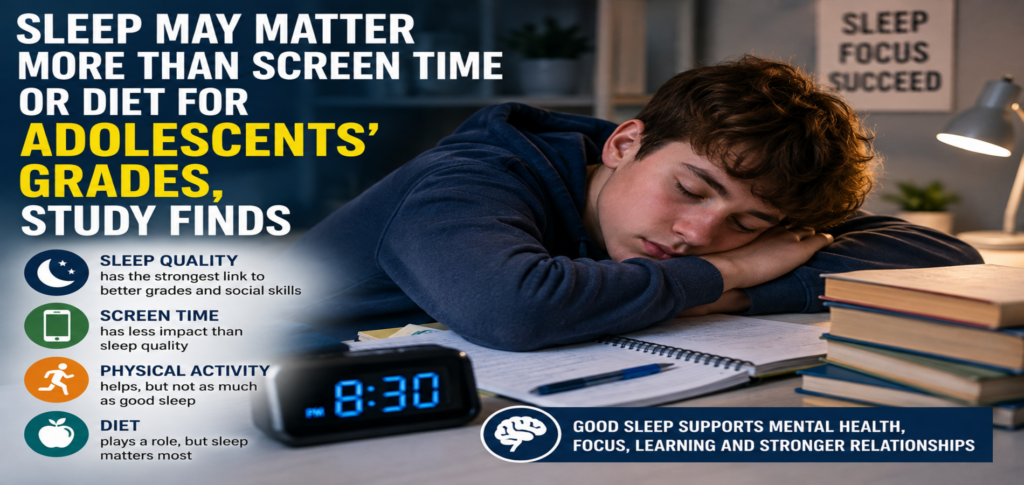
Sleep quality may play a bigger role in teenager academic performance and social lives than screen time, exercise or diet, according to new research.
The findings highlight the importance of healthy sleep routines for adolescents, particularly those experiencing symptoms of anxiety, depression or other mental health challenges.
Researchers found that sleep may be one of the main factors connecting early mental health symptoms with poorer performance at school and difficulties in social relationships.
Sleep Stands Out Among Lifestyle Factors
The study examined four lifestyle factors: sleep quality, screen time, physical activity and diet.
Researchers looked at how these factors affected the relationship between mental health symptoms and academic and social outcomes among children aged 10 to 13.
They analysed data from more than 6,000 participants for academic performance and more than 7,000 for social problems.
Children and adolescents who showed symptoms of depression, anxiety or psychotic-like experiences generally performed worse academically and experienced more social difficulties.
However, the researchers found that lifestyle habits, particularly sleep quality, explained much of this connection.
We expected sleep to be important, but we didn’t expect it to stand out so clearly above other lifestyle factors, particularly screen time,said Jason Smucny, the study first author at the University of California, Davis.
Poor Sleep Can Affect School Performance
The researchers identified several reasons why sleep may have such a strong influence on adolescents’ academic lives.
Poor sleep can contribute to daytime tiredness, attention problems and weaker executive functioning. These abilities play an important role in learning, concentration and completing schoolwork.
When teenagers do not get enough quality sleep, they may find it harder to focus in class, remember information and manage daily academic demands.
The study suggests that improving sleep quality could therefore help reduce some of the difficulties associated with early mental health symptoms.
Sleep Also Affects Social Relationships
The impact of sleep extends beyond school performance.
Researchers found that sleep disruptions may contribute to social withdrawal and irritability. These changes can make it more difficult for adolescents to maintain healthy relationships with friends and family.
The findings suggest that sleep may be an important pathway through which mental health symptoms affect everyday life.
“These findings point to sleep quality as an important factor through which early symptoms of mental health conditions translate into reduced academic performance,†the researchers said.
Parents Can Help Improve Sleep Habits
Tara Niendam, the study’s senior author, said parents, educators and clinicians often focus on symptoms such as anxiety and depression.
However, families are also concerned about how those symptoms affect everyday activities, including school performance, friendships and other challenges.
The researchers believe sleep is one practical area families can address.
While it won’t solve every mental health challenge, healthy sleep routines are a practical way to support a child’s emotional well-being and day-to-day functioning,Niendam said.
Sleep May Be More Important Than Screen Time
The findings do not suggest that screen time, diet or physical activity are unimportant.
Instead, the research indicates that sleep quality may have a particularly strong relationship with academic and social outcomes in adolescents experiencing mental health symptoms.
The researchers say the results highlight the value of paying closer attention to sleep when supporting young people.
For families, maintaining consistent sleep schedules and creating healthy bedtime routines may provide a practical way to support teenagers overall well-being, school performance and relationships.