
Argentina’s opposition is facing a leadership dispute as Peronist groups prepare for the country’s 2027 presidential election.
Former President Cristina Fernández de Kirchner remains a central figure in the movement. However, her continued influence has complicated efforts to develop new leadership.
Fernández is serving a six-year sentence under house arrest following a corruption conviction. Argentina’s Supreme Court upheld the conviction and barred her from holding public office.
Argentina Opposition Divided Over Cristina Fernández
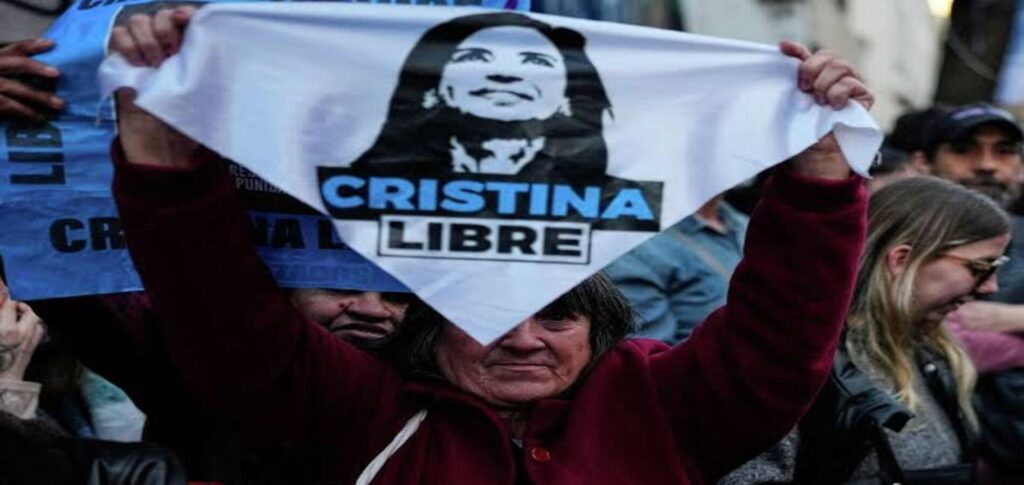
Supporters continue to gather outside Fernández’s Buenos Aires home. They chant in support of her political return while she remains under house arrest.
Fernández has challenged her conviction before the U.N. Human Rights Committee. However, a favorable finding from the committee would not automatically restore her eligibility to run for office.
Argentine courts would still need to address her disqualification.
Her supporters view the case as political persecution. Critics, meanwhile, point to the corruption conviction and her record in government.
As a result, Fernández remains a deeply divisive figure within Argentine politics.
Kicillof Seeks a New Direction
Buenos Aires province Governor Axel Kicillof has emerged as one of the figures associated with a possible generational shift within Peronism.
Kicillof served as Fernández’s economy minister from 2013 to 2015. However, the two later disagreed over the movement’s leadership.
Political scientist María Esperanza Casullo told the Associated Press that Fernández is no longer Peronism’s undisputed leader. At the same time, she retains enough influence to make it difficult for another leader to consolidate control.
Kicillof has also avoided formally launching a presidential campaign.
“This is a year for building, not for candidacies,” he told the Associated Press.
Economic Pressure Shapes Argentina’s Politics
Economic conditions are also influencing the political debate.
President Javier Milei’s government has introduced major spending cuts and pursued a market-oriented economic program.
According to the Associated Press, annual inflation has fallen from nearly 300% in 2024 to just over 30% in 2026. However, many Argentines continue to face higher household costs and weaker purchasing power.
The economic pressure has given Peronist leaders an opportunity to focus on public services, education and workers’ rights.
Kicillof recently told supporters in Avellaneda that the opposition needs to build a broader national alternative rather than simply oppose Milei’s policies.
Peronists Debate Their Next Step
The movement’s challenge is now both organizational and political.
Some Peronists continue to support Fernández’s leadership. Others want to build a broader coalition around newer figures.
Juan Grabois, an opposition lawmaker, has called for reconciliation between Fernández and Kicillof ahead of the 2027 election.
That debate could shape how the Argentina opposition presents itself to voters.
Meanwhile, Milei remains focused on defending his economic program and preparing for his reelection campaign.
Argentina’s 2027 Election Takes Shape
The presidential election is scheduled for October 2027.
For now, Peronist leaders are working to define their platform and leadership rather than formally settle the presidential nomination.
The coming months could therefore bring further negotiations between Fernández’s supporters, Kicillof’s camp and other opposition groups.
The central question for the Argentina opposition is how it will organize its leadership and policy agenda before voters choose among competing candidates in 2027.