
African leaders are once again pressing for reform of the UN Security Council, saying countries from the continent should have permanent representation in the body that makes key decisions on global peace and security.
The issue has returned to the spotlight during the 2026 United Nations General Assembly in New York. Several African leaders have highlighted the continent’s absence from the council’s permanent membership as wars and other global crises continue to shape international diplomacy.
The Security Council has 15 members. The United States, Russia, China, France and the United Kingdom hold the five permanent seats and have veto power. The General Assembly elects the remaining 10 members for two-year terms. African countries currently hold three of those elected seats.
Africa Says Representation Can No Longer Wait
African leaders have argued that the continent should have a stronger role in decisions that directly affect its countries and people.
Kenyan President William Ruto raised the issue during his address to the General Assembly on Wednesday. He pointed to Africa’s 54 UN member states and said the continent still has no permanent voice on the Security Council.
Ruto also questioned how the UN can maintain a principle of equal sovereignty while five countries retain permanent power over questions of war and peace.
African governments have made similar arguments for years. The African Union’s position calls for at least two permanent Security Council seats for African countries, along with additional non-permanent representation. The UN has also documented the continent’s demand for two permanent and two additional non-permanent seats.
The debate has gained further attention as the international community deals with conflicts involving Russia and Ukraine, Israel and Hamas, and the wider Middle East.
US Previously Supported Two African Seats
The United States announced in 2024 that it supported creating two permanent Security Council seats for African countries.
The announcement came under former President Joe Biden. Then-US Ambassador to the UN Linda Thomas-Greenfield said Washington wanted a council that better reflected the world’s current demographics and security challenges.
However, the US proposal did not include veto power for the new African permanent members. The existing five permanent members would retain their veto authority under that proposal.
The African Union’s position has called for any permanent African members to receive the same rights and privileges as other permanent members, including veto power if the veto remains part of the council’s structure.
African Leaders Also Seek a Voice on AI
The push for greater representation extends beyond traditional security issues.
African leaders have also called for developing countries to have a meaningful role in decisions about artificial intelligence, critical minerals and energy resources.
Botswana President Duma Boko said developing countries should help establish the standards and safeguards governing new technologies. He linked the issue to the resources that support the global technology industry.
The argument reflects a broader concern among African governments. They want international institutions to give developing countries a greater role in shaping rules that could affect their economies, workers and public services.
UN Secretary-General António Guterres has also called for reform of global institutions and has highlighted Africa’s lack of permanent representation on the Security Council. Earlier in 2026, he described the absence of permanent African seats as indefensible.
Reform Debate Continues at the UN
For African governments, the Security Council reform debate is about gaining a permanent role in decisions that affect global peace and security.
The current council structure dates back to the period immediately after World War II. African leaders argue that the world’s political and economic landscape has changed significantly since then.
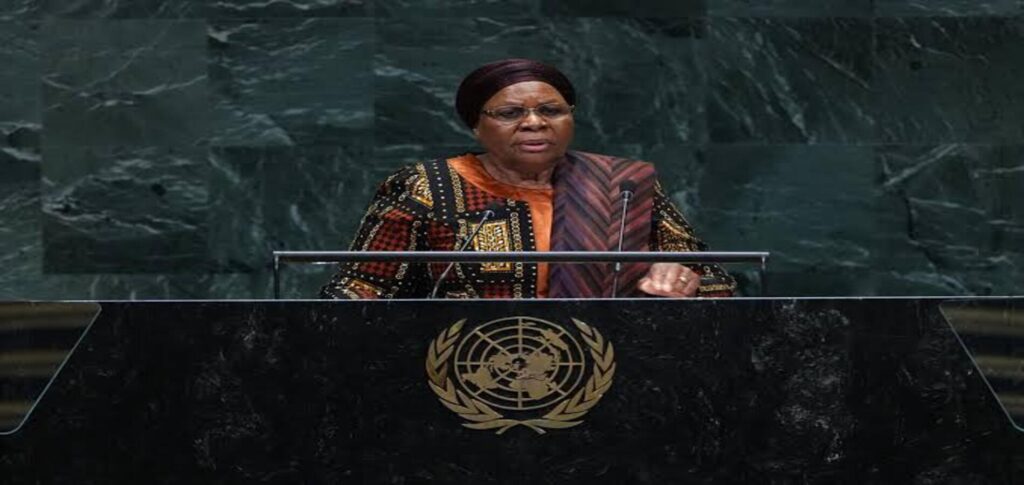
Namibian President Netumbo Nandi-Ndaitwah said during the General Assembly that African countries have spent too long negotiating over the issue.
For now, however, changing the Security Council’s membership requires broad agreement among UN member states and amendments to the UN Charter. The renewed demands at this year’s General Assembly show that African governments intend to keep the issue high on the international agenda.